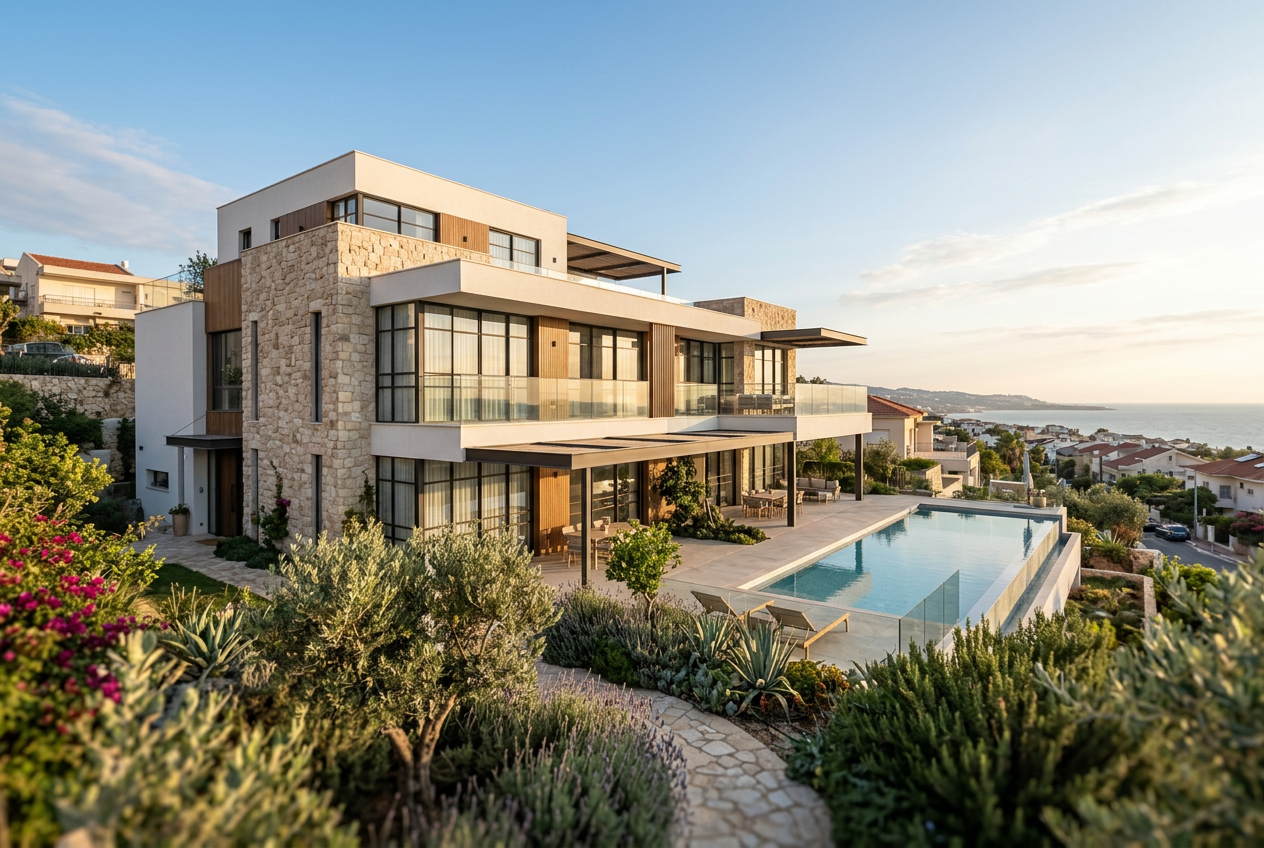

Fresh air ventilation is the single most overlooked system in residential construction across Israel — and it directly impacts your health, sleep quality, and indoor comfort. Even homes equipped with top-tier VRF and VRV air conditioning systems simply recirculate the same stale indoor air, heating or cooling it without ever replacing it. Marshanski Build, with 25 years of luxury construction experience in Israel, integrates controlled fresh air systems into every high-end project — because truly luxurious living starts with the air you breathe.
What Is Fresh Air Ventilation — And Why Don’t Most Homes Have It?
Fresh air ventilation is a controlled system that introduces filtered outdoor air into your home — either directly into rooms or through your existing HVAC infrastructure — while simultaneously exhausting stale indoor air. This creates a continuous cycle of air exchange that removes CO₂, volatile organic compounds (VOCs), humidity buildup, and airborne pollutants.
The reason most homes in Israel lack this feature is straightforward: standard construction practices treat air conditioning as the sole climate solution. VRF (Variable Refrigerant Flow) and VRV (Variable Refrigerant Volume) systems — even the most advanced units from Daikin, Mitsubishi, or Toshiba — are designed to condition existing room air. They cool it or heat it, but they never replace it. You’re essentially breathing the same recycled air for hours, days, and weeks on end.
In a typical Israeli home, windows remain sealed during summer months (May through October) to maintain cooling efficiency. That’s roughly 150–180 days per year where indoor air goes unchanged. Research published by the Harvard T.H. Chan School of Public Health found that improved ventilation and fresh air supply can boost cognitive function by up to 61% and improve sleep quality scores by 25–30%.

How Fresh Air Systems Actually Work
A properly designed fresh air system operates under controlled conditions — it doesn’t simply open a vent to the outside. The process involves several key stages:
- Air intake: Fresh outdoor air is drawn in through dedicated ducts, separate from your cooling/heating system.
- Filtration: The incoming air passes through multi-stage filters (HEPA, activated carbon, or electrostatic) that remove dust, pollen, pollution particles, and allergens.
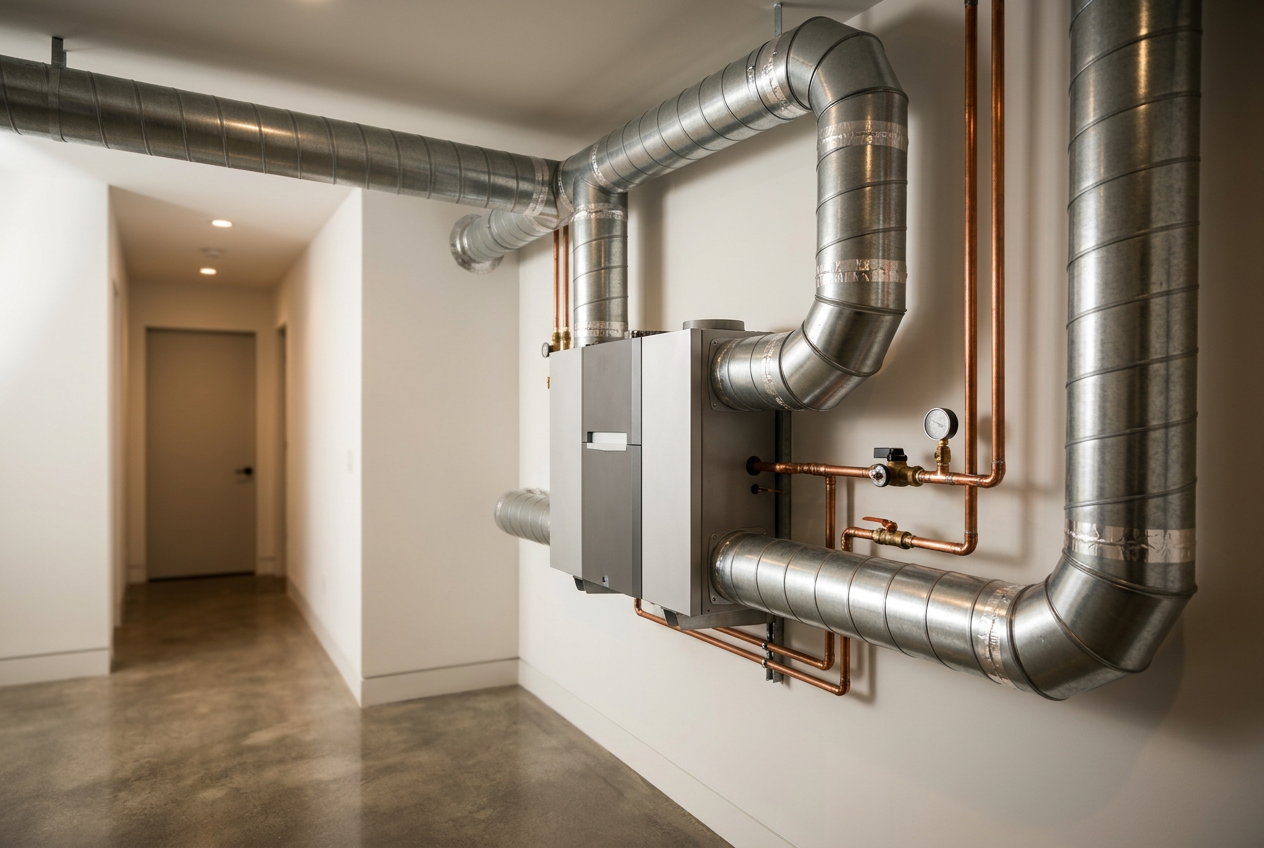
- Temperature conditioning: An energy recovery ventilator (ERV) or heat recovery ventilator (HRV) pre-conditions the incoming air using the outgoing air’s temperature — reducing energy waste by 70–80%.
- Distribution: Clean, temperature-adjusted air is delivered into living spaces through dedicated diffusers or integrated into the existing HVAC ductwork.
- Exhaust: Stale indoor air is simultaneously extracted, maintaining balanced pressure and preventing drafts.
The entire process is sensor-driven. CO₂ sensors, humidity monitors, and air quality detectors trigger the system to increase or decrease fresh air volume based on real-time conditions. In a well-designed luxury home, occupants never feel a draft, hear a sound, or notice a temperature shift — they simply breathe cleaner air.
Why Standard Israeli Construction Ignores Fresh Air
Israeli building codes (the Israeli Standard 1001 series) set minimum ventilation requirements, but these standards are largely met through operable windows and bathroom exhaust fans — not mechanical fresh air systems. For standard construction budgets of ₪8,000–₪12,000 per square meter, adding a dedicated fresh air system isn’t prioritized.
The cost of integrating a full ERV/HRV fresh air system into a luxury home typically ranges between ₪80–₪150 per square meter of living space — a fraction of the overall construction budget for projects at the ₪25,000+ per square meter level that Marshanski Build specializes in. Yet even among high-end contractors, many skip this system simply because they lack the knowledge to properly integrate it with other building systems.
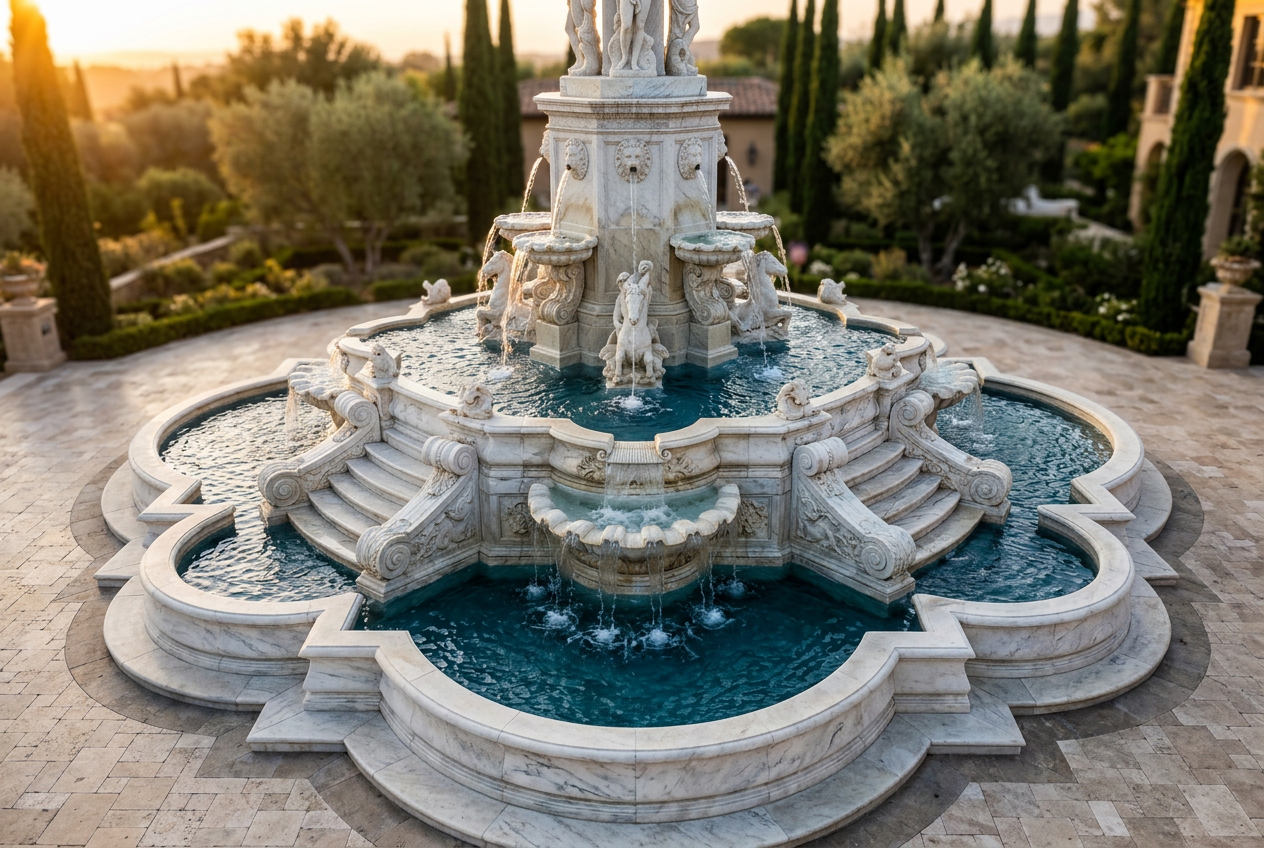
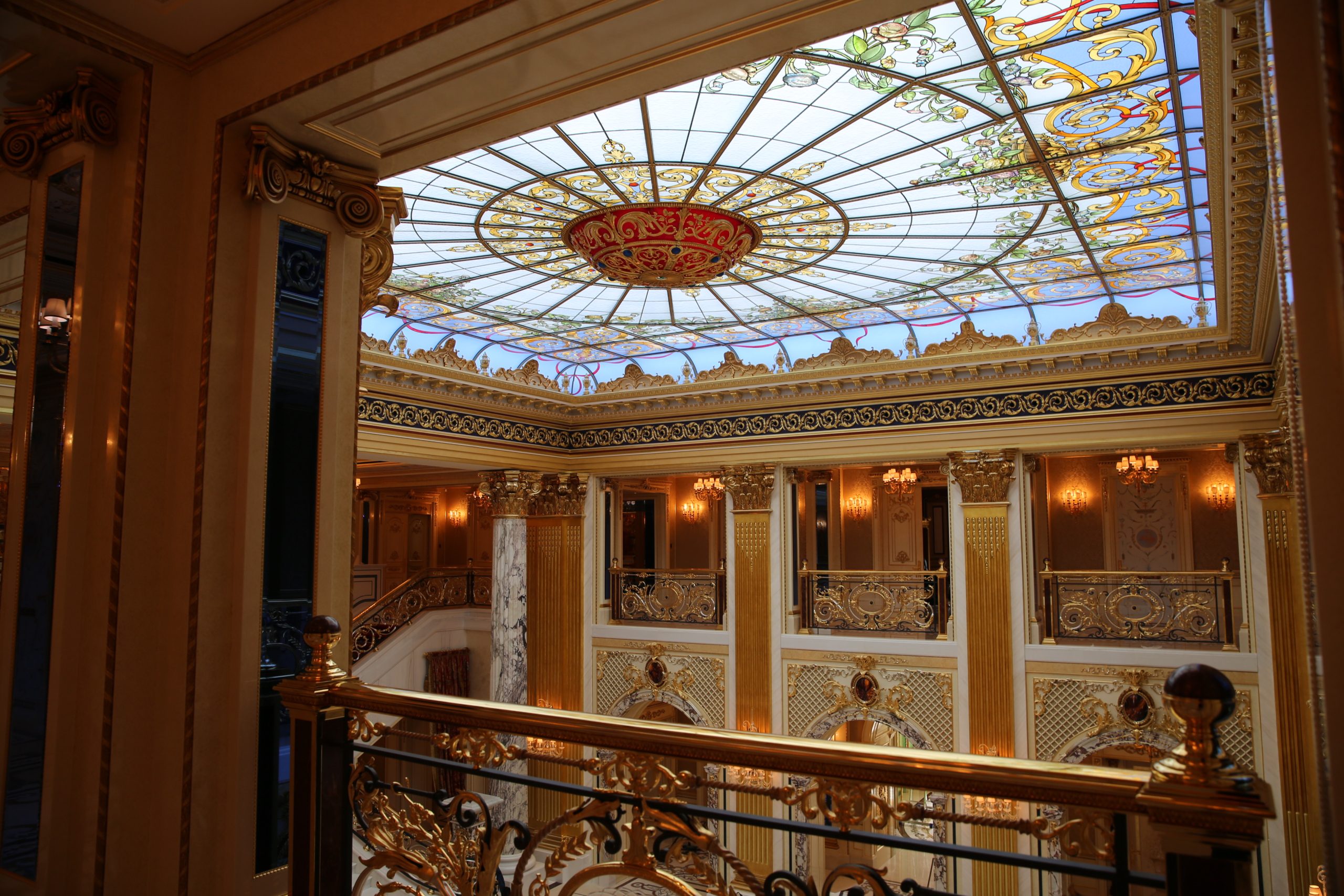
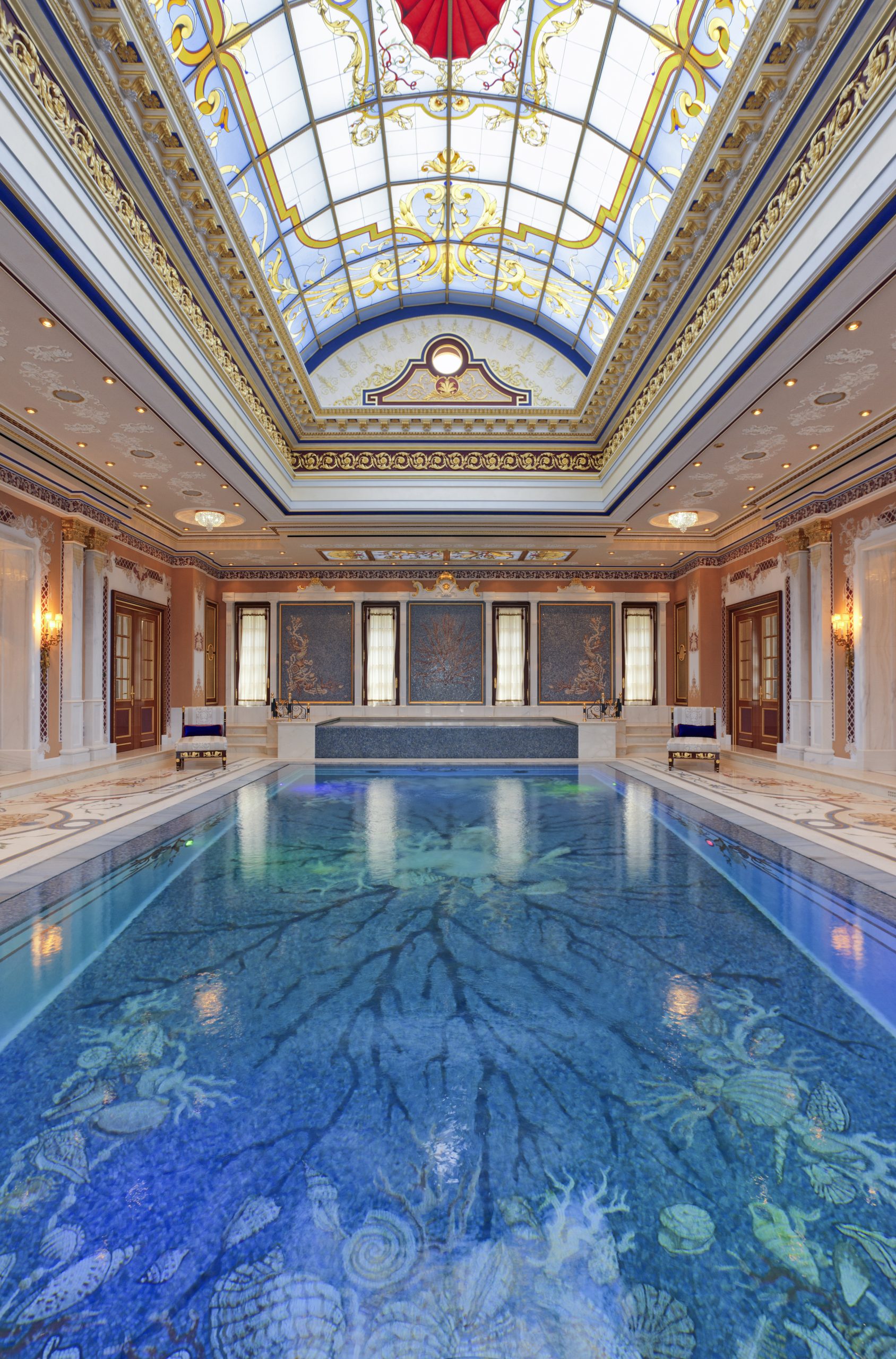
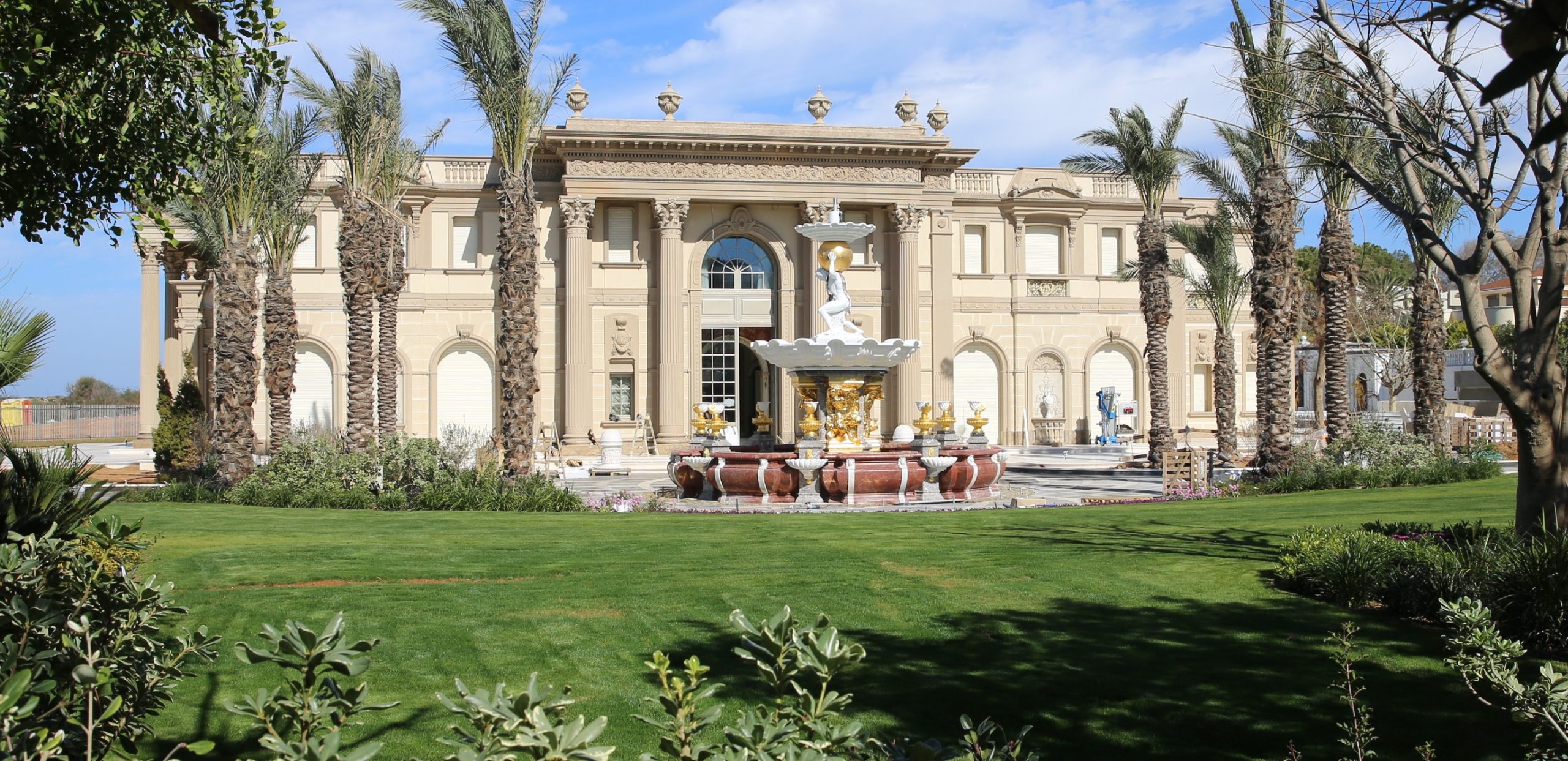
This is where experience matters. Marshanski Build, led by Amit Marshanski for over 25 years, has constructed some of Israel’s most expensive private residences — including the country’s largest home at 6,000 square meters, built in the style of the Hermitage in St. Petersburg. At that scale, synchronizing fresh air with 40+ integrated building systems is not optional — it’s essential.
The Health and Comfort Benefits of Fresh Air in Your Home
The impact of proper fresh air ventilation extends far beyond comfort. Here are the measurable benefits:
Better Sleep Quality
A 2017 study from the Technical University of Denmark demonstrated that participants sleeping in bedrooms with lower CO₂ levels (achieved through fresh air ventilation) experienced 60% fewer sleep disturbances and reported feeling significantly more rested. In sealed Israeli homes running split AC units overnight, CO₂ levels regularly exceed 2,000 ppm — far above the recommended 800 ppm threshold.
Reduced Allergens and Pollutants
Indoor air can be 2–5 times more polluted than outdoor air, according to the U.S. Environmental Protection Agency. Cooking fumes, cleaning product residues, furniture off-gassing, and pet dander accumulate in recirculated air. A fresh air system with HEPA filtration captures 99.97% of particles down to 0.3 microns, delivering genuinely clean air.
Moisture and Mold Prevention
Controlled air exchange maintains optimal humidity levels (40–60% relative humidity), preventing condensation on windows and walls — a common issue in Israeli coastal cities like Herzliya, Caesarea, and Tel Aviv. This directly protects the building’s waterproofing and finish details, which Marshanski Build designs for long-term preservation and maintenance.
Energy Efficiency
Counterintuitively, a fresh air system with heat recovery actually reduces overall energy consumption. By recovering 70–80% of the thermal energy from exhaust air, the HVAC system works less to condition incoming air — resulting in lower electricity bills despite the additional equipment.
Integrating Fresh Air Into Luxury Home Design
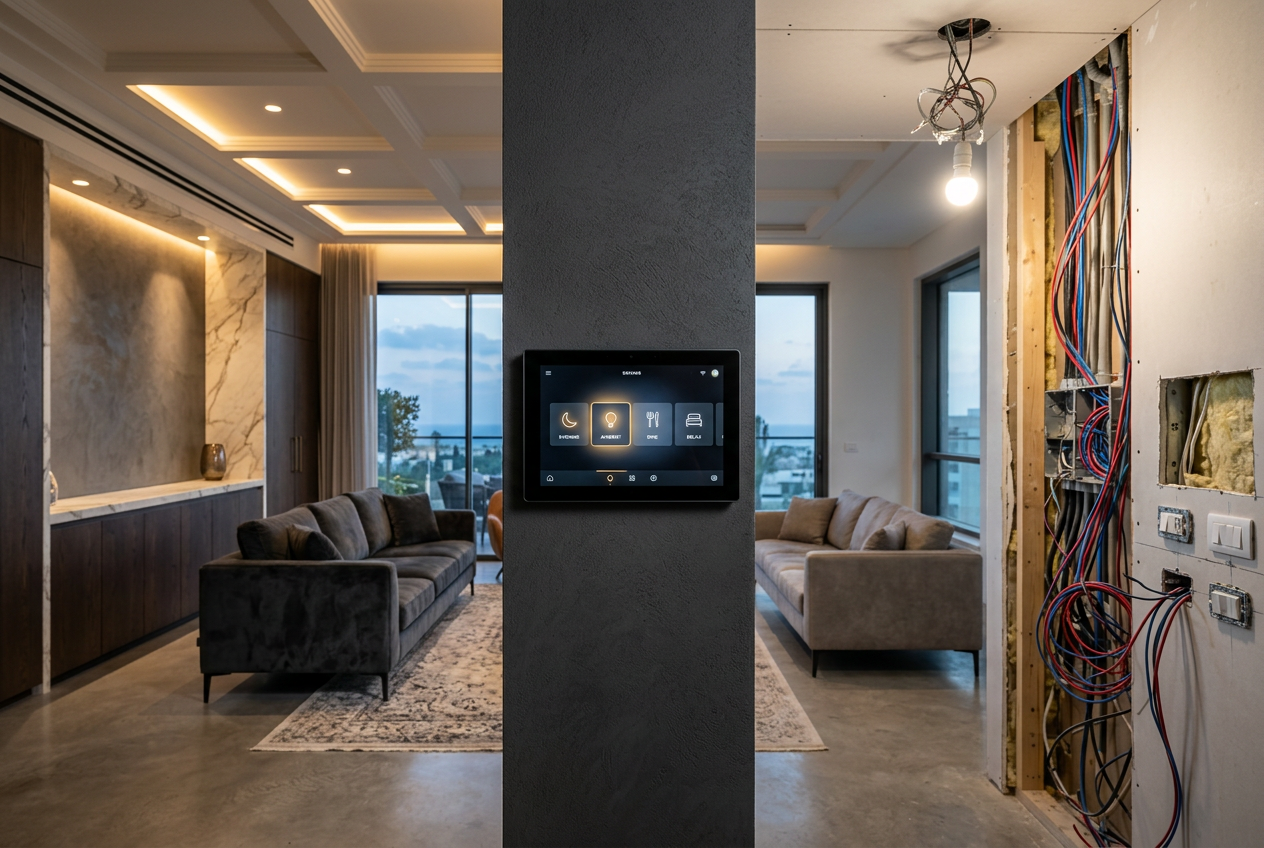
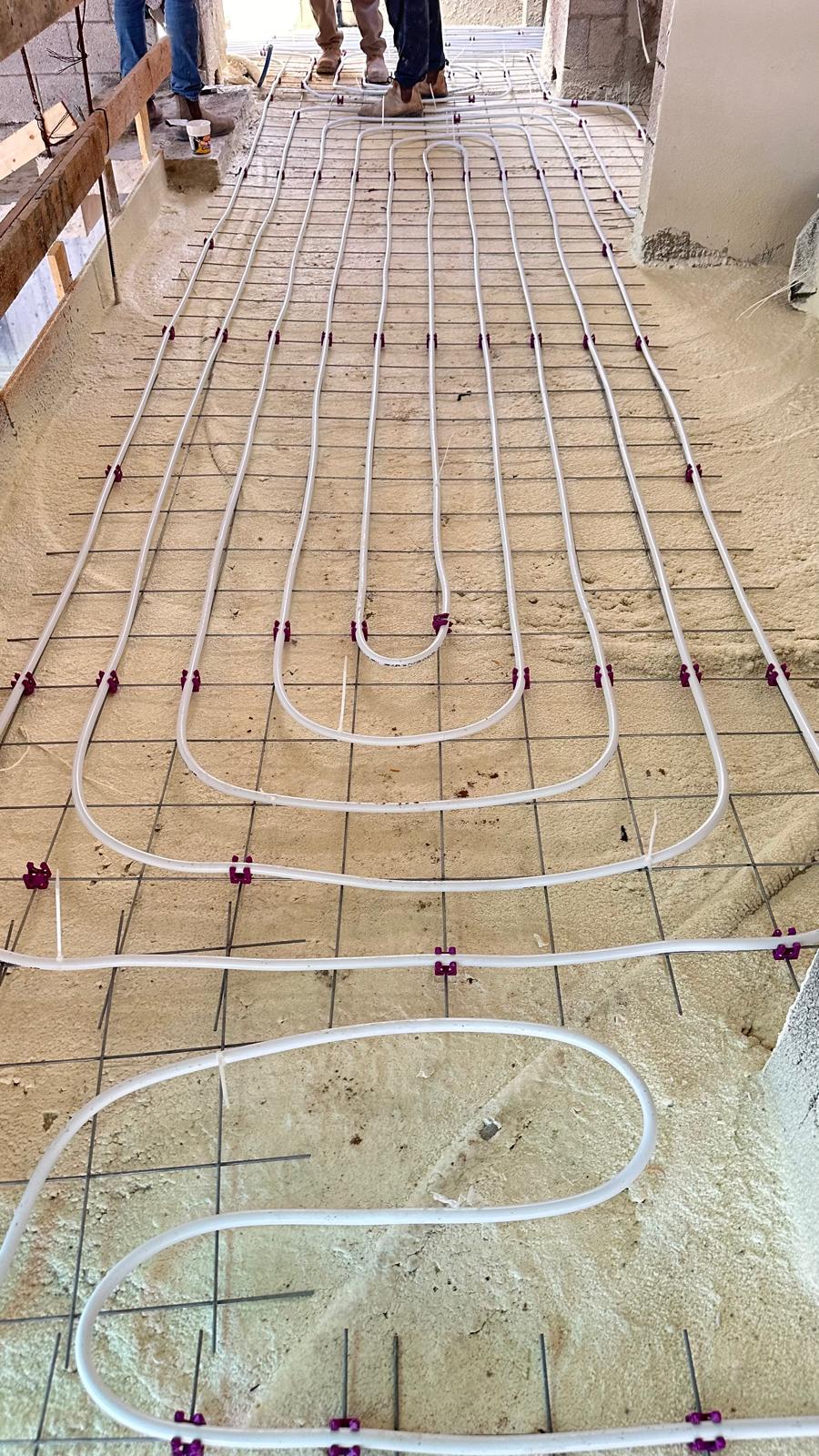
Proper fresh air integration must happen during the design phase — not as an afterthought. The system requires dedicated duct routes, mechanical room space for ERV/HRV units, and coordination with structural, electrical, and HVAC consultants. In a luxury home with underfloor heating, a pool climate system, a home theater, a wine cellar, and smart home automation, the fresh air system must communicate with all of these.
This is precisely the kind of systems synchronization that separates experienced luxury builders from standard contractors. Marshanski Build’s project management methodology ensures that every system — from waterproofing to ventilation to security — is planned holistically, with long-term building performance as the guiding principle.

What to Ask Your Builder About Fresh Air
If you’re planning a high-end home in Israel, these questions will reveal whether your builder understands fresh air systems:
- Is fresh air ventilation included in the HVAC specification? If it’s not mentioned, it doesn’t exist in the plan.
- What type of energy recovery system is proposed? ERV systems are generally better for Israeli climates due to humidity management.
- Where are the fresh air intake points located? They must be positioned away from exhaust vents, garbage areas, and street-level pollution.
- How is the system integrated with the building automation? CO₂ and humidity sensors should drive the system automatically.
- What filtration grade is specified? Minimum MERV 13 for general use; HEPA (MERV 17+) for bedrooms and sensitive areas.
Frequently Asked Questions
Can I add a fresh air system to an existing home?
Yes, but it’s significantly more complex and expensive than integrating during new construction. Retrofit projects require new ductwork routes, which often means opening ceilings and walls. For major renovations, it’s an ideal time to include fresh air ventilation in the scope.
Does fresh air ventilation replace air conditioning?
No. Fresh air systems and air conditioning serve different functions. AC controls temperature; fresh air controls air quality and oxygen levels. Both systems work together — the fresh air system feeds pre-conditioned outdoor air into the space, while the AC maintains the desired temperature.
How much does a fresh air system cost in a luxury home?
For a high-end residential project in Israel, expect to invest ₪80–₪150 per square meter for a fully integrated ERV/HRV fresh air system with premium filtration. For a 500 sqm home, that’s approximately ₪40,000–₪75,000 — a small fraction of the total construction budget.
Is fresh air ventilation noisy?
A properly designed system operates below 25 dB in living spaces — quieter than a whisper. Acoustic attenuation is achieved through insulated ductwork, low-speed fan motors, and strategic placement of mechanical equipment away from bedrooms and living areas.
Why don’t most contractors in Israel offer fresh air systems?
Most residential contractors in Israel lack experience with advanced ventilation design. Fresh air integration requires coordination across multiple disciplines — HVAC, structural, electrical, and automation — which is standard practice for specialized luxury builders like Marshanski Build but uncommon in standard residential construction.
Breathe Better, Live Better
The air inside your home is the one thing you consume more than anything else — roughly 11,000 liters per day. In a sealed, air-conditioned Israeli home without fresh air ventilation, that means 11,000 liters of recycled, CO₂-laden, pollutant-accumulating air every single day. For a home built at luxury standards, this is an unacceptable compromise.
If you’re planning a luxury home in Israel and want every detail — including the air you breathe — to reflect true quality, contact Marshanski Build. With 25 years of experience building Israel’s finest private residences, Amit Marshanski and his team integrate fresh air systems as a standard feature in every project — because luxury isn’t just what you see, it’s what you breathe.