

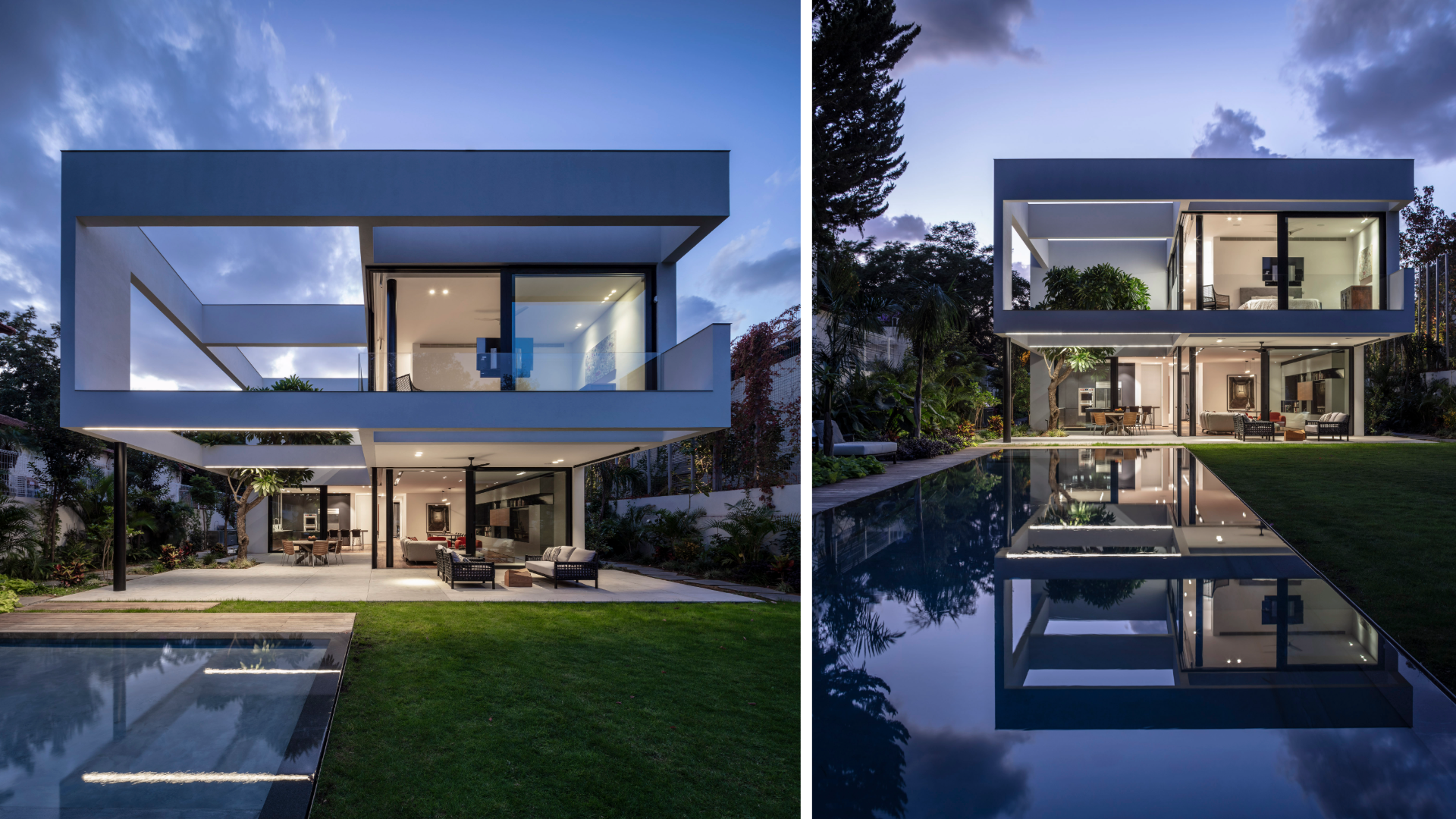
Luxury home renovation is chosen over demolition and rebuilding for three primary reasons: preserving historic building lines (kavei binyan) that cannot be replicated under a new permit, maintaining unique architectural heritage, and honoring deep sentimental value the family holds toward the property. Although a comprehensive luxury renovation typically costs 30%–50% more than building from scratch at the same finish level, owners of high-end properties in Israel opt for it to protect advantages that simply cannot be achieved any other way.
Building Lines: The Advantage That Never Comes Back
The most practical — and most financially significant — reason to renovate a luxury home instead of tearing it down is the preservation of building lines (kavei binyan). When a structure was built under an older urban building plan (TBA — Tochnit Binyan Ir), it benefits from setback distances, building percentages, and height allowances that may no longer exist under current regulations.
The moment walls come down, those historical rights evaporate. A new permit must comply with today’s codes — and that can mean losing dozens of square meters, a forced change in the home’s position on the lot, or the elimination of an entire floor. For properties valued between NIS 15–50 million and above, such a loss is simply unacceptable.
This is why many owners choose to keep the structural shell intact — even if nearly everything inside is stripped and rebuilt — to maintain the benefits of the original TBA. It’s a strategic decision, not an emotional one.

Preserving Unique Architecture
The second reason owners choose luxury renovation over demolition is the architecture itself. Certain homes — particularly in areas like Kfar Shmaryahu, Herzliya Pituach, and Savyon — were designed by prominent architects in styles that are no longer produced. Bauhaus-era residences, Tuscan-style villas, and structures with proportions that cannot be replicated carry irreplaceable design value.
These homeowners appreciate the original architectural envelope but want everything inside upgraded: smart electrical systems, modern plumbing, world-class waterproofing, and underfloor heating systems designed for luxury living. Renovation allows a seamless marriage between the historic architectural shell and the technology and comfort standards of 2026.
Marshanski Build, specializing in luxury property construction across Israel for 25 years under the leadership of Amit Marshanski, handles these challenges routinely. Integrating advanced systems into existing structures demands deep engineering knowledge and field experience that standard contractors simply lack.
Sentimental Value: The Home a Family Won’t Let Go
The third reason is entirely emotional — and entirely legitimate. Some homes have housed generations, hosted decades of holidays, and witnessed children’s first steps. Demolishing such a structure feels to its owners like erasing memories.
In these cases, homeowners request that the exterior shell be preserved — and sometimes specific interior elements such as staircases, stone arches, or original cladding — while everything else is renovated to current luxury standards. The result is a home that feels brand-new inside while retaining its soul.
Luxury Renovation: More Expensive, More Complex, More Expertise Required
Let’s be direct: renovating a luxury home is more expensive than building new. The industry consensus in Israel places the additional cost of a comprehensive luxury renovation at 30%–50% above new construction at the same finish level. The reasons are clear:
- Engineering adaptations: Every new system — electrical, plumbing, HVAC, heating — must be fitted into a structure that wasn’t designed for it.
- Structural surprises: Behind old walls, teams discover waterproofing failures, foundation issues, or infrastructure that needs complete replacement.
- Planning compromises: An existing building is not a blank page. Rooms, openings, and columns are in locations that aren’t always optimal for the new design.
- Longer timelines: A comprehensive luxury home renovation takes an average of 18–24 months, compared to 14–18 months for new construction of similar scope.
When the cost per square meter in a luxury renovation project starts at NIS 25,000 and reaches NIS 35,000–40,000/sqm at the highest levels, the decision to renovate must be well-justified. If none of the three reasons above apply, building from scratch is almost certainly the better choice.
What a Luxury Renovation Demands from the Contractor
High-end renovation requires capabilities that not every construction company offers:
- Precise structural diagnosis: Before any work begins, thorough structural, waterproofing, and geotechnical assessments are needed to understand the existing building’s condition.
- System planning within constraints: Installing smart home systems, underfloor heating, and central air conditioning inside a structure not designed for them requires meticulous coordination among all trades.
- International-grade waterproofing and finishes: In renovation, waterproofing and finish details matter even more than in new construction — because the interfaces between old and new materials demand extraordinary care.
- International supplier management: Unique finish materials, imported flooring, and specialty stone require a global supplier network and import expertise.
Marshanski Build, which has constructed the most expensive homes in Israel — including a 6,000 sqm residence styled after the Hermitage in St. Petersburg — brings the same experience and management standards to renovation projects. The company’s distinctive approach, with long-term thinking about maintenance and building preservation for decades ahead, is especially critical in renovation work — where mistakes are costlier and irreversible.

When Demolition and Rebuilding Is the Right Call
Not every case justifies renovation. If there’s no building-line advantage, the architecture isn’t uniquely valuable, and there’s no sentimental attachment — new construction will almost always be the right choice. It offers:
- Complete design freedom without the constraints of an existing structure
- Lower costs relative to the final result
- Waterproofing and foundations built from zero, with no problematic old-new interfaces
- More predictable timelines and budgets
For a detailed comparison between renovation and new construction costs, read our comprehensive timeline and cost comparison guide. And for a full breakdown of luxury construction pricing in Israel, see our cost of building a luxury home guide.
Frequently Asked Questions
Why is luxury home renovation more expensive than building new?
Renovation requires adapting new systems to an existing structure, solving unforeseen structural problems, and accepting planning compromises. The additional cost typically ranges between 30% and 50% above new construction at the same finish level.
When should you keep the existing structure instead of demolishing it?
When the building benefits from historic building lines that can’t be replicated under a new permit, when the architecture is unique and worth preserving, or when the family has deep sentimental attachment. If none of these conditions apply, building new is usually the better option.
How long does a comprehensive luxury home renovation take in Israel?
A comprehensive luxury property renovation takes an average of 18–24 months, compared to 14–18 months for new construction of similar scope. Duration depends on the property’s size, system complexity, and the condition of the existing structure.
What are building lines (kavei binyan) and why do they matter?
Building lines define the permitted distances between a structure and lot boundaries, allowable building percentages, and maximum height — as set by the local urban plan (TBA). Older buildings constructed under previous plans often enjoy more generous conditions than current codes allow. Demolishing the structure forfeits those conditions permanently.
How do you choose the right contractor for a luxury renovation?
Select a contractor with proven experience in luxury properties, the ability to manage international suppliers, expertise in high-grade waterproofing and finishes, and transparent financial management. A company like Marshanski Build, with 25 years of experience and a high BDO rating, represents the standard required for this level of work.
Conclusion: Luxury Renovation Is a Strategic Decision, Not Just an Emotional One
Renovating a luxury home is neither the easy solution nor the cheap one — but when the right reasons exist, it is the correct one. Preserving building lines, protecting unique architecture, and honoring sentimental value are the justifications that make the additional investment worthwhile.
If you’re weighing a comprehensive luxury renovation versus rebuilding from scratch and want a professional assessment from the team that built the most expensive homes in Israel — contact Marshanski Build for an initial consultation.