


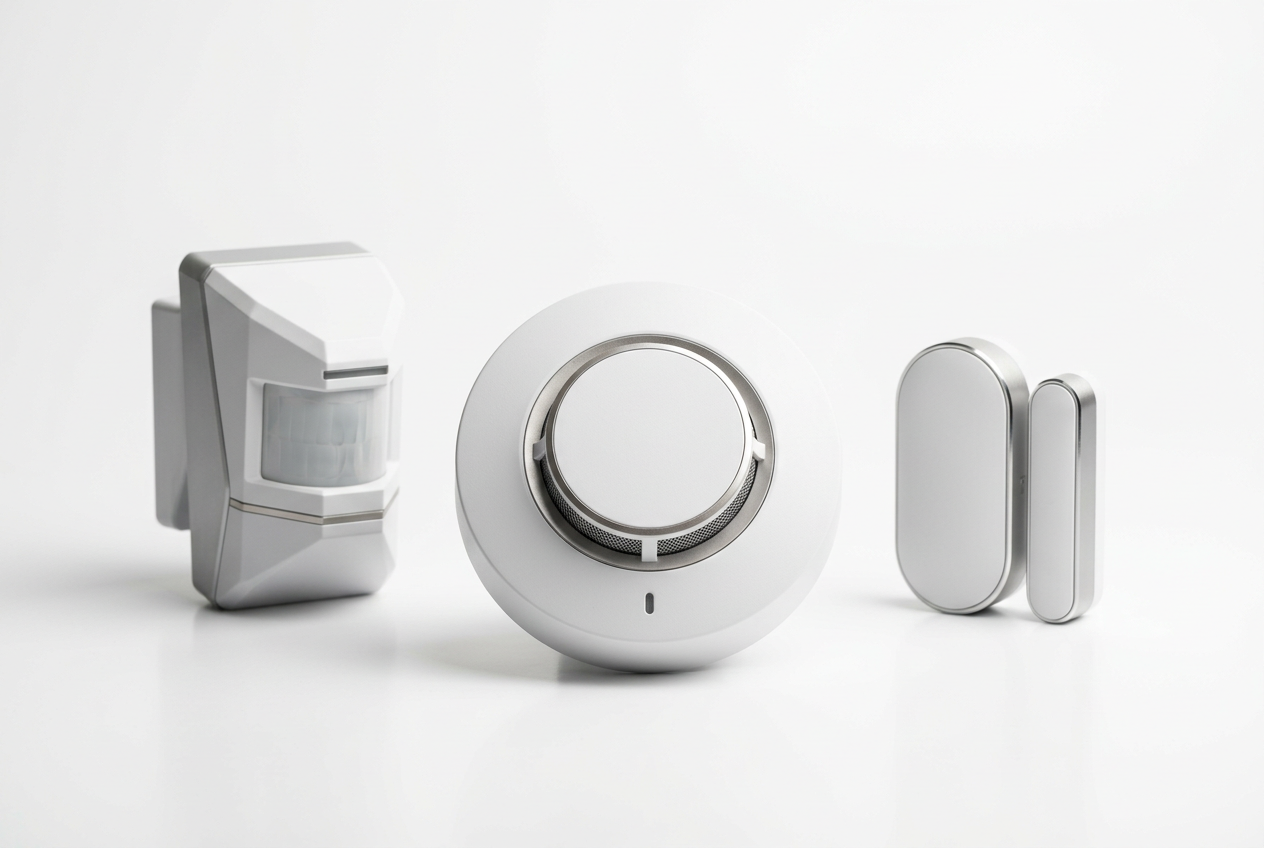
A properly planned home alarm system should be built in concentric security circles — three distinct layers that work together to detect, delay, and alert against intrusion. This multi-layer approach, starting from the outer perimeter and moving inward, provides early detection at the property boundary, breach alerts at doors and windows, and interior motion coverage as a final safeguard. When integrated with a camera system, these three circles create a comprehensive security envelope that protects your home and family around the clock.
Why Alarm System Planning Matters During Construction
Most homeowners think about alarm systems as an afterthought — something to install after the house is finished. This is a costly mistake. According to Israel Police statistics, approximately 40,000 burglary incidents are reported annually in Israel, with residential properties being the primary target. Planning your alarm system during the construction phase saves up to 30–40% in installation costs compared to retrofitting, because wiring can be routed through walls before plaster and finishing work begin.
At Marshanski Build, specializing in luxury home construction in Israel, we integrate alarm system planning into the architectural design from day one. This means conduit pathways, sensor placement, and control panel locations are all determined before the first wall goes up — ensuring a cleaner installation and far more reliable system performance.
The Three Security Circles: Understanding Multi-Layer Alarm Design
A professional home alarm system is structured in three concentric circles, each serving a distinct security function. Think of it as defense in depth — if one layer is bypassed, the next layer catches the threat. Here is how each circle works:
Circle 3: The Outer Perimeter — Early Detection
The outermost security circle covers your gates, fences, garden, and yard. This is your early warning system — its entire purpose is to alert you that someone has entered your property before they reach the building itself. Technologies used in this layer include:
- Perimeter beam sensors — infrared beams installed along fence lines that trigger when broken
- Gate contact sensors — magnetic contacts on entrance gates that detect unauthorized opening
- Outdoor motion detectors — weatherproof PIR sensors covering driveways and garden paths
- Ground vibration sensors — detect climbing or cutting attempts on fences
This circle gives homeowners critical extra minutes to respond. In luxury properties with larger grounds — common in areas like Kfar Shmaryahu, Savyon, and Caesarea — the outer perimeter circle is especially important because the distance between the fence and the home can be significant.
Circle 2: Building Envelope — Doors and Windows
The second circle protects every opening in the home’s shell — entry doors, windows, sliding doors, skylights, and any other point where someone could physically breach the building. This layer uses:
- Magnetic door/window contacts — detect when a door or window is opened
- Glass break sensors — acoustic or shock sensors that trigger when glass is shattered
- Roller shutter sensors — monitor the position and integrity of external shutters
- Door frame vibration detectors — sense forced entry attempts before the door actually opens
Planning this circle during construction is critical. Sensor wiring needs to reach every window and door frame, which is far simpler when walls are still open. In a typical 250-square-meter home with 20–30 openings, planning these runs in advance can save an entire day of installation labor and avoid unsightly external cable routing.
Circle 1: Interior Protection — The Last Line of Defense
The innermost circle covers the interior public areas of the home — hallways, staircases, living rooms, and the spaces between floors. If an intruder somehow bypasses the outer perimeter and the building envelope, interior motion detectors will catch movement inside the home. Key components include:
- Dual-technology motion sensors (PIR + microwave) — reduce false alarms while ensuring reliable detection
- Staircase sensors — covering vertical movement between floors
- Hallway curtain detectors — creating invisible detection barriers at key chokepoints
- Panic buttons — strategically placed in bedrooms and safe rooms
This circle is designed so that even if Circles 2 and 3 are disabled or circumvented, no one can move through the home’s common areas undetected. For multi-story homes, ensuring coverage on every floor and every staircase is essential.
Integrating Your Alarm System with Security Cameras
An alarm system without cameras is only half the picture — literally. Integrating the alarm with a CCTV camera system transforms reactive alerts into visual verification. When a sensor in any of the three circles triggers, the linked camera immediately begins recording and can send live video to your phone or to a monitoring center.
This integration provides several key advantages:
- Visual verification — security companies can see what triggered the alarm before dispatching, reducing false alarm responses by up to 80%
- Evidence recording — video footage from the moment of detection is invaluable for police investigations
- Smart alerts — modern systems use AI-based analytics to distinguish between a person, an animal, and a moving branch, sending you only relevant notifications
- Remote monitoring — view any camera feed in real time from anywhere in the world via smartphone
During construction, we run both alarm and camera cabling through the same conduit routes, ensuring full coverage with minimal wall disruption. Camera positions are planned to cover every zone that the alarm sensors protect — creating a seamless layered security system.
Alert Types and Notification Strategy
Planning the type of alert each circle generates is just as important as placing the sensors. Not every trigger should produce the same response. A well-designed alarm system uses a tiered notification approach:
- Circle 3 (outer perimeter) — silent push notification to homeowner + camera activation. No siren. This allows you to check the feed and determine if it’s a delivery person, a neighbor, or a genuine threat.
- Circle 2 (doors/windows) — audible local alarm + immediate notification to monitoring center + camera recording. This is a serious breach attempt.
- Circle 1 (interior) — full siren activation + police dispatch + strobe lights + video recording from all cameras. Someone is inside the home.
This graduated response prevents alarm fatigue (where homeowners start ignoring alerts because of too many false alarms) while ensuring maximum response when a real intrusion occurs.
Planning Alarm Systems Into New Construction: A Step-by-Step Approach
- Security consultation during design phase — A security specialist reviews architectural plans and identifies vulnerable points, sensor locations, and cable routes.
- Conduit installation during rough construction — Electrical conduits for alarm and camera wiring are embedded in walls, ceilings, and floors alongside standard electrical work.
- Control panel and power supply placement — The main alarm panel is positioned in a secure, central location with battery backup and cellular communication.
- Sensor and camera installation during finishing — Devices are mounted and connected after painting and finishing, ensuring a clean, invisible installation.
- System programming and testing — Every sensor, camera, and alert pathway is tested individually and as part of the full integrated system.
For homeowners exploring the full scope of what goes into building a luxury property, understanding how security systems fit into the broader cost breakdown and budget planning for luxury homes in Israel is essential. Alarm system infrastructure typically represents 2–4% of total construction costs but delivers outsized value in safety and property value.
Wired vs. Wireless: Which Is Right for New Construction?
When building from scratch, wired alarm systems are almost always the better choice. They offer superior reliability, no battery replacement headaches, immunity to wireless jamming attacks, and a longer lifespan. Wireless systems have their place — particularly in renovations where opening walls is impractical — but for new construction, hardwired infrastructure is the professional standard.
If you’re weighing the decision between building new versus renovating an existing home, keep in mind that new construction gives you the unique opportunity to install a fully wired, fully integrated security system at a fraction of the retrofit cost.
How Marshanski Build Approaches Home Security
Marshanski Build, led by owner Amit Marshanski, treats security infrastructure as a non-negotiable element of luxury home construction. Every project includes a dedicated security planning phase where the three-circle methodology is applied to the specific property layout, terrain, and client requirements. From high-end construction standards to smart home integration, security is woven into the DNA of every build.
Our approach ensures that your alarm system isn’t just functional — it’s invisible, elegant, and perfectly matched to the design language of your home.
Frequently Asked Questions
How many security layers should a home alarm system have?
A professional home alarm system should have three layers (circles): the outer perimeter covering gates and fences, the building envelope covering all doors and windows, and the interior zone covering hallways and common areas between floors. This multi-layer approach ensures redundant protection even if one layer is bypassed.
Is it cheaper to install an alarm system during construction or after?
Installing during construction is significantly cheaper — typically 30–40% less expensive than retrofitting. Pre-construction planning allows wiring to be embedded inside walls and ceilings, avoiding external cable runs and reducing labor time substantially.
Should I choose a wired or wireless alarm system for a new home?
For new construction, wired systems are strongly recommended. They provide greater reliability, are immune to wireless signal jamming, require no battery replacements, and have a longer operational lifespan. Wireless systems are better suited for renovation projects where running new cables through existing walls isn’t practical.
Why is camera integration important for an alarm system?
Integrating cameras with your alarm system enables visual verification of alerts, reducing false alarm dispatches by up to 80%. It also provides real-time remote viewing, recorded evidence for investigations, and AI-powered smart alerts that distinguish between genuine threats and harmless triggers like animals.
What percentage of construction budget should go to a home alarm system?
For a luxury home in Israel, alarm and security infrastructure typically accounts for 2–4% of total construction costs. This includes sensors, cameras, wiring, control panels, and professional monitoring setup — a small investment relative to the property value it protects.
Secure Your Home From the Ground Up
A properly planned alarm system isn’t an accessory — it’s a fundamental part of your home’s infrastructure. By designing security in three concentric circles and integrating it with camera systems from the earliest construction phase, you get a system that’s more effective, more reliable, and more cost-efficient than anything added after the fact.
To learn more about integrating professional security planning into your new home build, contact Amit Marshanski, owner of Marshanski Build, for a personal consultation. Visit marshanski.com or reach out directly to discuss your project.