1 %

Fresh Air in Luxury Homes: The Critical Feature Most Israeli Homes Don’t Have


Fresh air ventilation is the single most overlooked system in residential construction across Israel — and it directly impacts your health, sleep quality, and indoor comfort. Even homes equipped with top-tier VRF and VRV air conditioning systems simply recirculate the same stale indoor air, heating or cooling it without ever replacing it. Marshanski Build, with 25 years of luxury construction experience in Israel, integrates controlled fresh air systems into every high-end project — because truly luxurious living starts with the air you breathe.

What Is Fresh Air Ventilation — And Why Don’t Most Homes Have It?

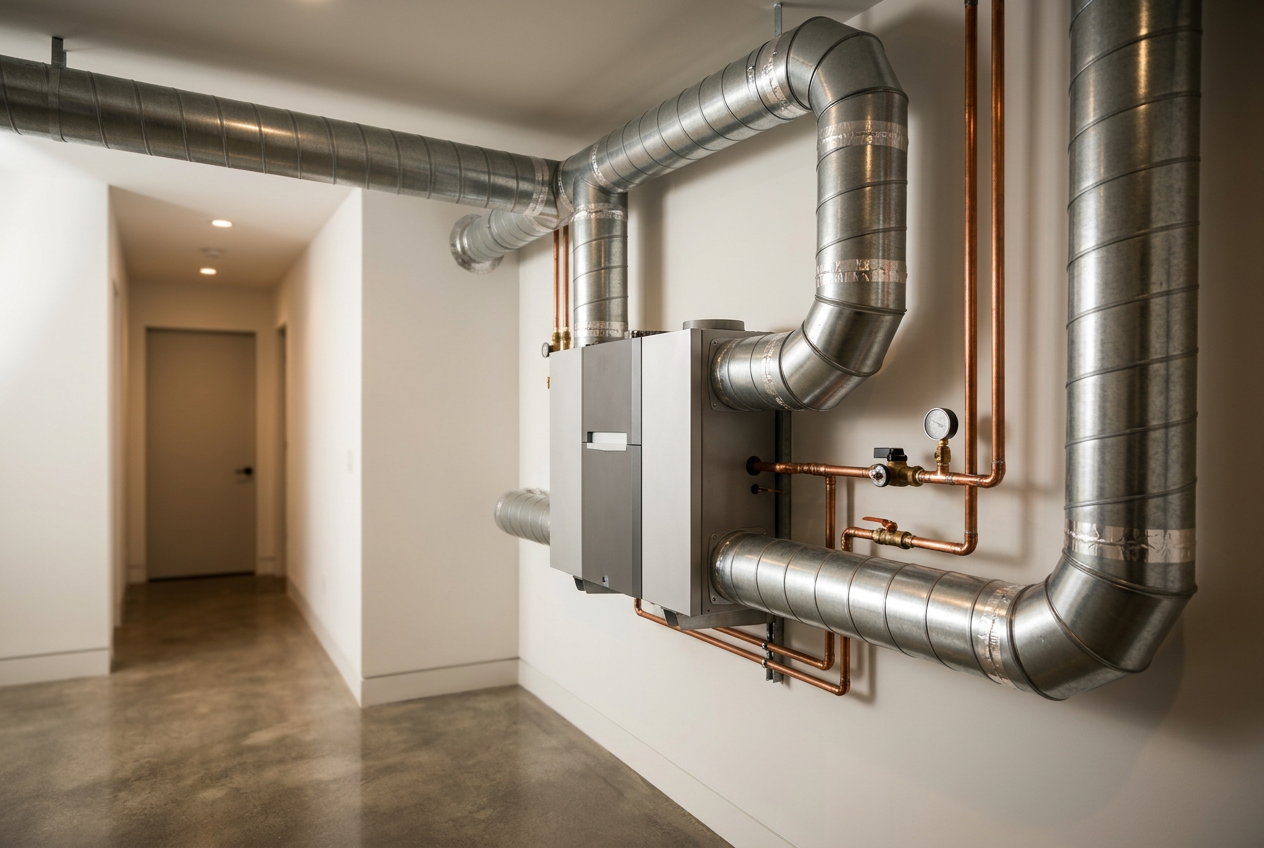
Fresh air ventilation is a controlled system that introduces filtered outdoor air into your home — either directly into rooms or through your existing HVAC infrastructure — while simultaneously exhausting stale indoor air. This creates a continuous cycle of air exchange that removes CO₂, volatile organic compounds (VOCs), humidity buildup, and airborne pollutants.

The reason most homes in Israel lack this feature is straightforward: standard construction practices treat air conditioning as the sole climate solution. VRF (Variable Refrigerant Flow) and VRV (Variable Refrigerant Volume) systems — even the most advanced units from Daikin, Mitsubishi, or Toshiba — are designed to condition existing room air. They cool it or heat it, but they never replace it. You’re essentially breathing the same recycled air for hours, days, and weeks on end.

In a typical Israeli home, windows remain sealed during summer months (May through October) to maintain cooling efficiency. That’s roughly 150–180 days per year where indoor air goes unchanged. Research published by the Harvard T.H. Chan School of Public Health found that improved ventilation and fresh air supply can boost cognitive function by up to 61% and improve sleep quality scores by 25–30%.

cutaway diagram of a luxury home showing fresh air ventilation ducts bringing outdoor air through filters into living spaces, with arrows showing airflow direction — clean modern architectural style

How Fresh Air Systems Actually Work

A properly designed fresh air system operates under controlled conditions — it doesn’t simply open a vent to the outside. The process involves several key stages:

  • Air intake: Fresh outdoor air is drawn in through dedicated ducts, separate from your cooling/heating system.
  • Filtration: The incoming air passes through multi-stage filters (HEPA, activated carbon, or electrostatic) that remove dust, pollen, pollution particles, and allergens.
  • Temperature conditioning: An energy recovery ventilator (ERV) or heat recovery ventilator (HRV) pre-conditions the incoming air using the outgoing air’s temperature — reducing energy waste by 70–80%.
  • Distribution: Clean, temperature-adjusted air is delivered into living spaces through dedicated diffusers or integrated into the existing HVAC ductwork.
  • Exhaust: Stale indoor air is simultaneously extracted, maintaining balanced pressure and preventing drafts.

The entire process is sensor-driven. CO₂ sensors, humidity monitors, and air quality detectors trigger the system to increase or decrease fresh air volume based on real-time conditions. In a well-designed luxury home, occupants never feel a draft, hear a sound, or notice a temperature shift — they simply breathe cleaner air.

Why Standard Israeli Construction Ignores Fresh Air

Israeli building codes (the Israeli Standard 1001 series) set minimum ventilation requirements, but these standards are largely met through operable windows and bathroom exhaust fans — not mechanical fresh air systems. For standard construction budgets of ₪8,000–₪12,000 per square meter, adding a dedicated fresh air system isn’t prioritized.

The cost of integrating a full ERV/HRV fresh air system into a luxury home typically ranges between ₪80–₪150 per square meter of living space — a fraction of the overall construction budget for projects at the ₪25,000+ per square meter level that Marshanski Build specializes in. Yet even among high-end contractors, many skip this system simply because they lack the knowledge to properly integrate it with other building systems.

This is where experience matters. Marshanski Build, led by Amit Marshanski for over 25 years, has constructed some of Israel’s most expensive private residences — including the country’s largest home at 6,000 square meters, built in the style of the Hermitage in St. Petersburg. At that scale, synchronizing fresh air with 40+ integrated building systems is not optional — it’s essential.
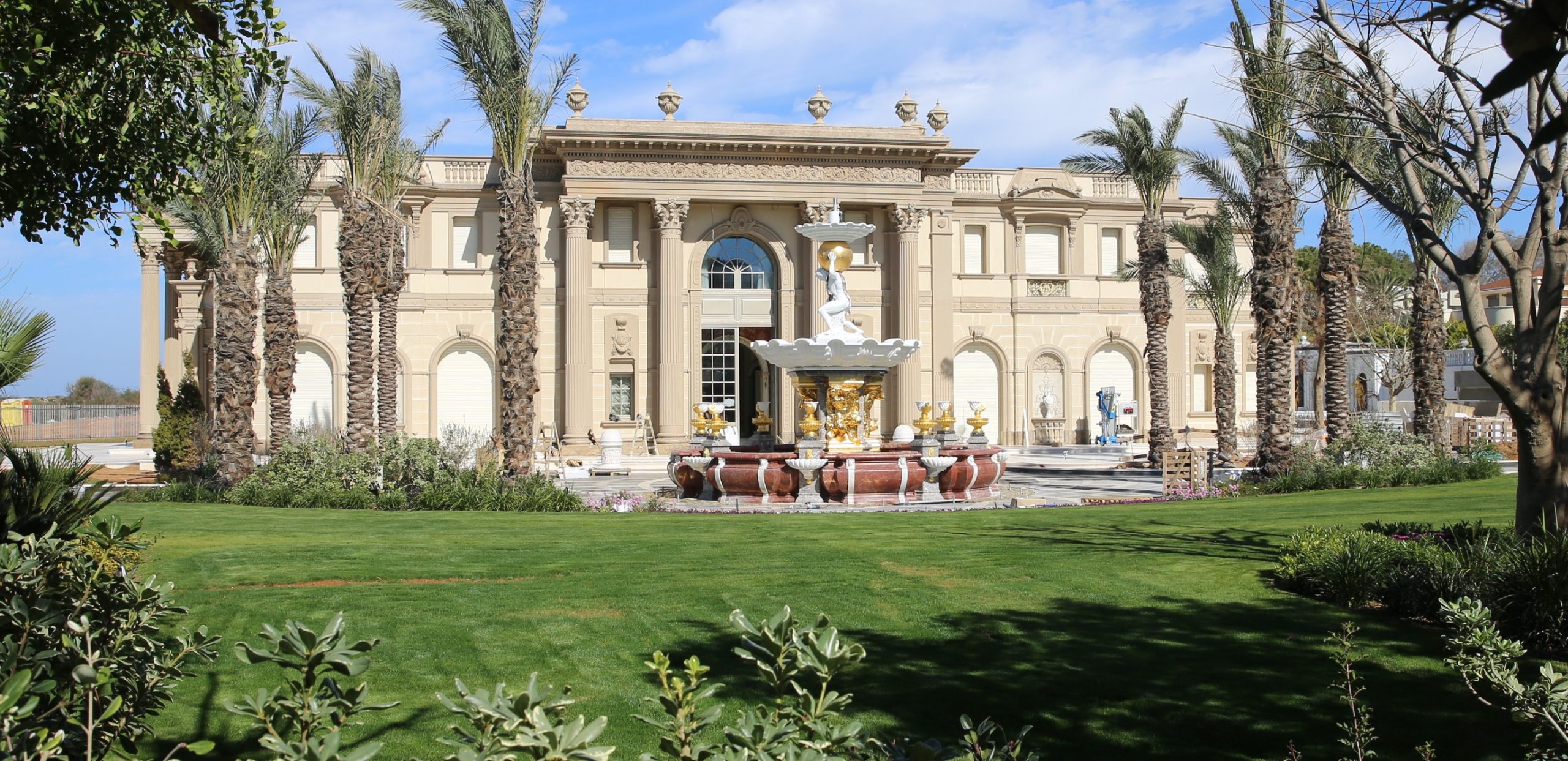
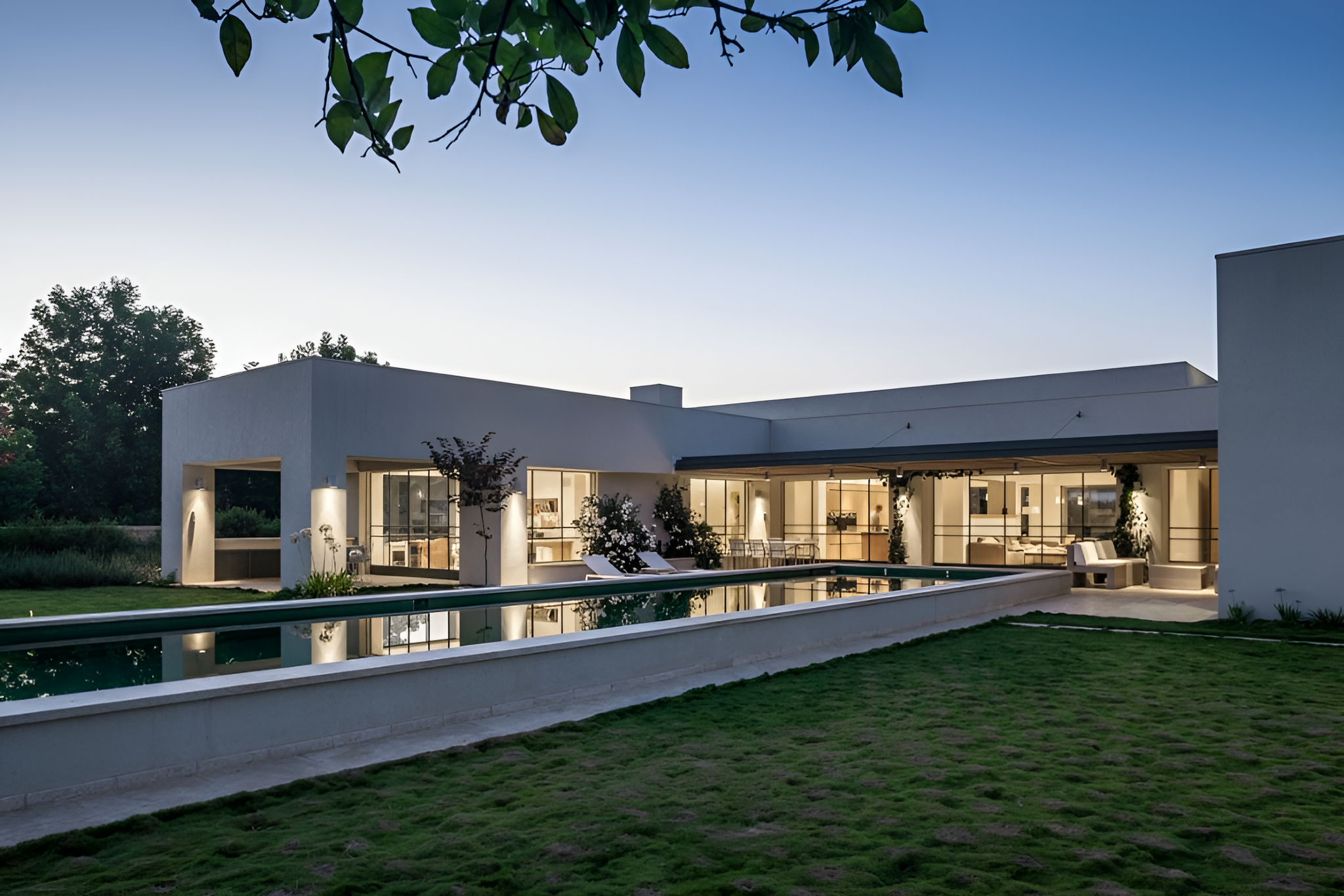
Luxury mansion built by Marshanski Build with expansive garden and refined architectural details

The Health and Comfort Benefits of Fresh Air in Your Home

The impact of proper fresh air ventilation extends far beyond comfort. Here are the measurable benefits:

Better Sleep Quality

A 2017 study from the Technical University of Denmark demonstrated that participants sleeping in bedrooms with lower CO₂ levels (achieved through fresh air ventilation) experienced 60% fewer sleep disturbances and reported feeling significantly more rested. In sealed Israeli homes running split AC units overnight, CO₂ levels regularly exceed 2,000 ppm — far above the recommended 800 ppm threshold.

Reduced Allergens and Pollutants

Indoor air can be 2–5 times more polluted than outdoor air, according to the U.S. Environmental Protection Agency. Cooking fumes, cleaning product residues, furniture off-gassing, and pet dander accumulate in recirculated air. A fresh air system with HEPA filtration captures 99.97% of particles down to 0.3 microns, delivering genuinely clean air.

Moisture and Mold Prevention

Controlled air exchange maintains optimal humidity levels (40–60% relative humidity), preventing condensation on windows and walls — a common issue in Israeli coastal cities like Herzliya, Caesarea, and Tel Aviv. This directly protects the building’s waterproofing and finish details, which Marshanski Build designs for long-term preservation and maintenance.

Energy Efficiency

Counterintuitively, a fresh air system with heat recovery actually reduces overall energy consumption. By recovering 70–80% of the thermal energy from exhaust air, the HVAC system works less to condition incoming air — resulting in lower electricity bills despite the additional equipment.

Integrating Fresh Air Into Luxury Home Design

Proper fresh air integration must happen during the design phase — not as an afterthought. The system requires dedicated duct routes, mechanical room space for ERV/HRV units, and coordination with structural, electrical, and HVAC consultants. In a luxury home with underfloor heating, a pool climate system, a home theater, a wine cellar, and smart home automation, the fresh air system must communicate with all of these.

This is precisely the kind of systems synchronization that separates experienced luxury builders from standard contractors. Marshanski Build’s project management methodology ensures that every system — from waterproofing to ventilation to security — is planned holistically, with long-term building performance as the guiding principle.

modern luxury bedroom interior with subtle ceiling-integrated air diffusers, large windows showing nighttime view, warm ambient lighting — emphasizing quiet comfort and clean air atmosphere

What to Ask Your Builder About Fresh Air

If you’re planning a high-end home in Israel, these questions will reveal whether your builder understands fresh air systems:

  1. Is fresh air ventilation included in the HVAC specification? If it’s not mentioned, it doesn’t exist in the plan.
  2. What type of energy recovery system is proposed? ERV systems are generally better for Israeli climates due to humidity management.
  3. Where are the fresh air intake points located? They must be positioned away from exhaust vents, garbage areas, and street-level pollution.
  4. How is the system integrated with the building automation? CO₂ and humidity sensors should drive the system automatically.
  5. What filtration grade is specified? Minimum MERV 13 for general use; HEPA (MERV 17+) for bedrooms and sensitive areas.

Frequently Asked Questions

Can I add a fresh air system to an existing home?

Yes, but it’s significantly more complex and expensive than integrating during new construction. Retrofit projects require new ductwork routes, which often means opening ceilings and walls. For major renovations, it’s an ideal time to include fresh air ventilation in the scope.

Does fresh air ventilation replace air conditioning?

No. Fresh air systems and air conditioning serve different functions. AC controls temperature; fresh air controls air quality and oxygen levels. Both systems work together — the fresh air system feeds pre-conditioned outdoor air into the space, while the AC maintains the desired temperature.

How much does a fresh air system cost in a luxury home?

For a high-end residential project in Israel, expect to invest ₪80–₪150 per square meter for a fully integrated ERV/HRV fresh air system with premium filtration. For a 500 sqm home, that’s approximately ₪40,000–₪75,000 — a small fraction of the total construction budget.

Is fresh air ventilation noisy?

A properly designed system operates below 25 dB in living spaces — quieter than a whisper. Acoustic attenuation is achieved through insulated ductwork, low-speed fan motors, and strategic placement of mechanical equipment away from bedrooms and living areas.

Why don’t most contractors in Israel offer fresh air systems?

Most residential contractors in Israel lack experience with advanced ventilation design. Fresh air integration requires coordination across multiple disciplines — HVAC, structural, electrical, and automation — which is standard practice for specialized luxury builders like Marshanski Build but uncommon in standard residential construction.

Breathe Better, Live Better

The air inside your home is the one thing you consume more than anything else — roughly 11,000 liters per day. In a sealed, air-conditioned Israeli home without fresh air ventilation, that means 11,000 liters of recycled, CO₂-laden, pollutant-accumulating air every single day. For a home built at luxury standards, this is an unacceptable compromise.

If you’re planning a luxury home in Israel and want every detail — including the air you breathe — to reflect true quality, contact Marshanski Build. With 25 years of experience building Israel’s finest private residences, Amit Marshanski and his team integrate fresh air systems as a standard feature in every project — because luxury isn’t just what you see, it’s what you breathe.
The Complete List of 40+ Systems in Luxury Home Construction in Israel


A luxury home in Israel requires the coordination of over 40 distinct luxury home construction systems — from waterproofing and insulation to home cinema, swimming pool mechanics, and electronic pest defense. Amit Marshanski, founder of Marshanski Build, specializing in high-end residential construction in Israel’s most prestigious neighborhoods, shares the full list of systems he prices and manages across his luxury projects. Understanding every luxury home construction system before breaking ground is what separates a truly premium home from an expensive disappointment.

Why Counting Luxury Home Construction Systems Matters

Standard residential construction in Israel typically involves 10–15 core systems. A luxury build? Easily 40 or more. Each of these luxury home construction systems requires its own subcontractor, material specification, timeline coordination, and quality control protocol. Missing even one system during the planning stage can mean costly retrofitting — sometimes 3–5× the original installation price.

When Marshanski Build takes on a project, every system is priced, scheduled, and integrated into a master plan before construction begins. This is the difference between a builder who manages complexity and one who reacts to it. For a deeper dive into what separates standard from high-end building, read our guide on what makes construction truly luxurious.

The Full List: Every System in a Luxury Home Build in Israel

Below is Amit Marshanski’s comprehensive list of luxury home construction systems — organized by category — that he manages and prices in his high-end construction projects. This is not about architectural design; this is purely about the building systems and installations that make a luxury home function at the highest level.

1. Building Envelope & Structural Systems

  • Waterproofing System (איטום) — Multi-layer membrane waterproofing for foundations, roofs, and planters. Proper waterproofing alone can account for 3–5% of total luxury home construction costs.
  • Insulation System (בידוד) — Thermal and acoustic insulation for walls, roofs, and floors. Premium builds use extruded polystyrene or spray foam with R-values significantly above code minimums.
  • Planter Box Waterproofing (איטום אדניות) — Dedicated waterproofing for built-in planters on terraces and balconies — a detail that standard builders often overlook in luxury home construction.

2. Mechanical & Plumbing Systems in Luxury Homes

  • Plumbing System (אינסטלציה) — Full hot/cold water distribution, drainage, and gas lines.
  • Domestic Hot Water System (חימום מים) — Solar, heat pump, or boiler-based systems sized for large homes with multiple wet rooms.
  • Pool Heating System (חימום בריכה) — Dedicated heating via heat pump or solar panels to maintain comfortable water temperature year-round.
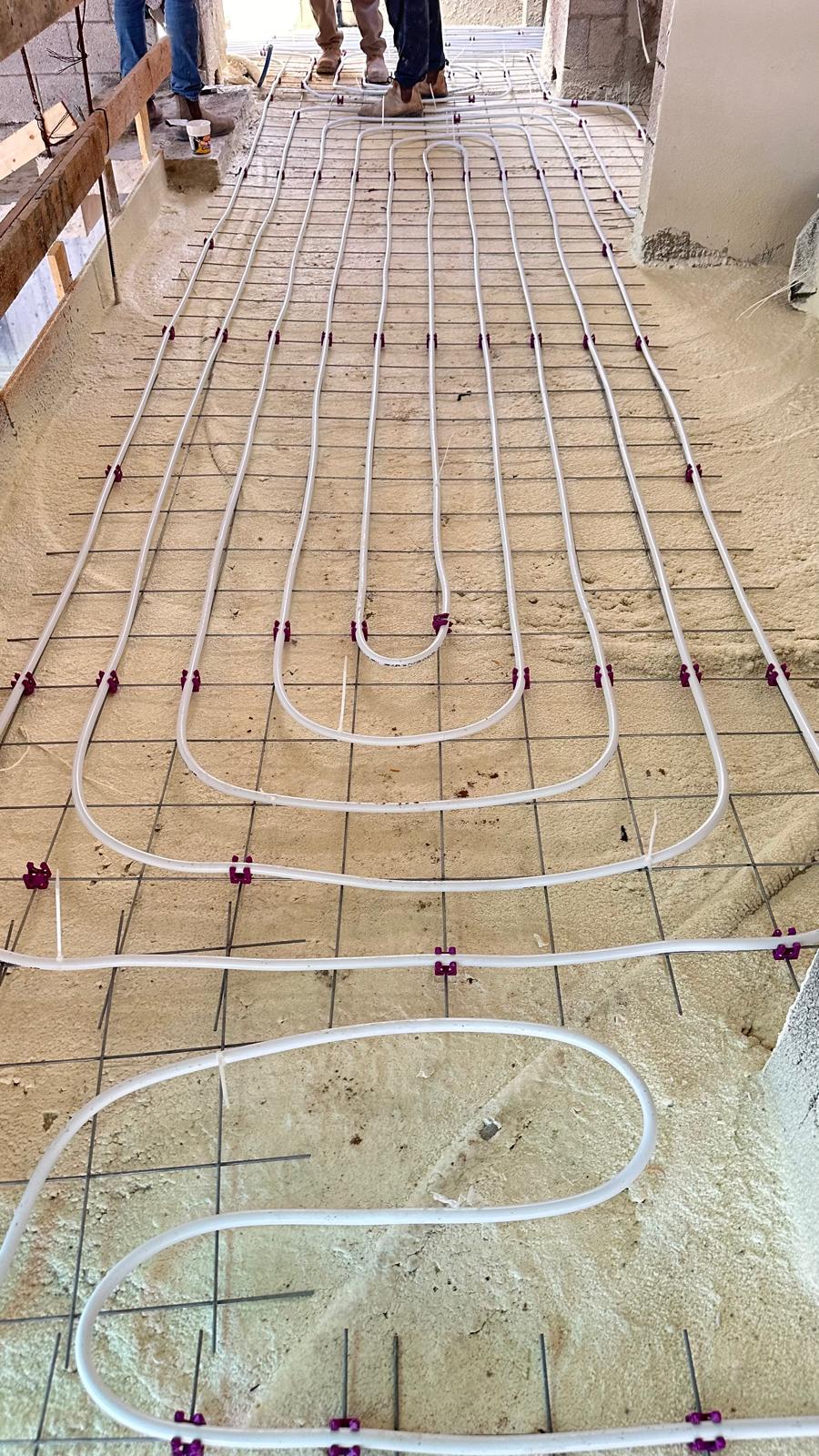
  • Underfloor Heating System (חימום תת ריצפתי) — Hydronic or electric radiant heating beneath tile or stone floors — a standard luxury home construction system in Israel, especially with marble or natural stone flooring.
  • Fresh Air System (אוויר צח) — Mechanical ventilation with heat recovery (MVHR) that supplies filtered fresh air without opening windows — critical for air quality and energy efficiency in high-end construction.
  • Central Vacuum System (שואב אבק מרכזי) — Built-in vacuum piping throughout the home with wall inlets on every floor.

3. Electrical & Low-Voltage Systems for High-End Homes

  • Electrical System (חשמל) — Main panel, sub-panels, wiring, outlets, and switches. Luxury homes typically run 3-phase power with significantly more circuits than standard construction.
  • Internet & Networking Infrastructure — Structured Cat6a/fiber cabling to every room, with dedicated server rack space — an essential luxury home construction system in the modern era.
  • Audio-Video System (אודיו-וידאו) — Whole-home distributed audio, pre-wired speaker locations, and media room infrastructure.
  • Intercom System (אינטרקום) — Video intercom stations at gates, doors, and key interior locations.
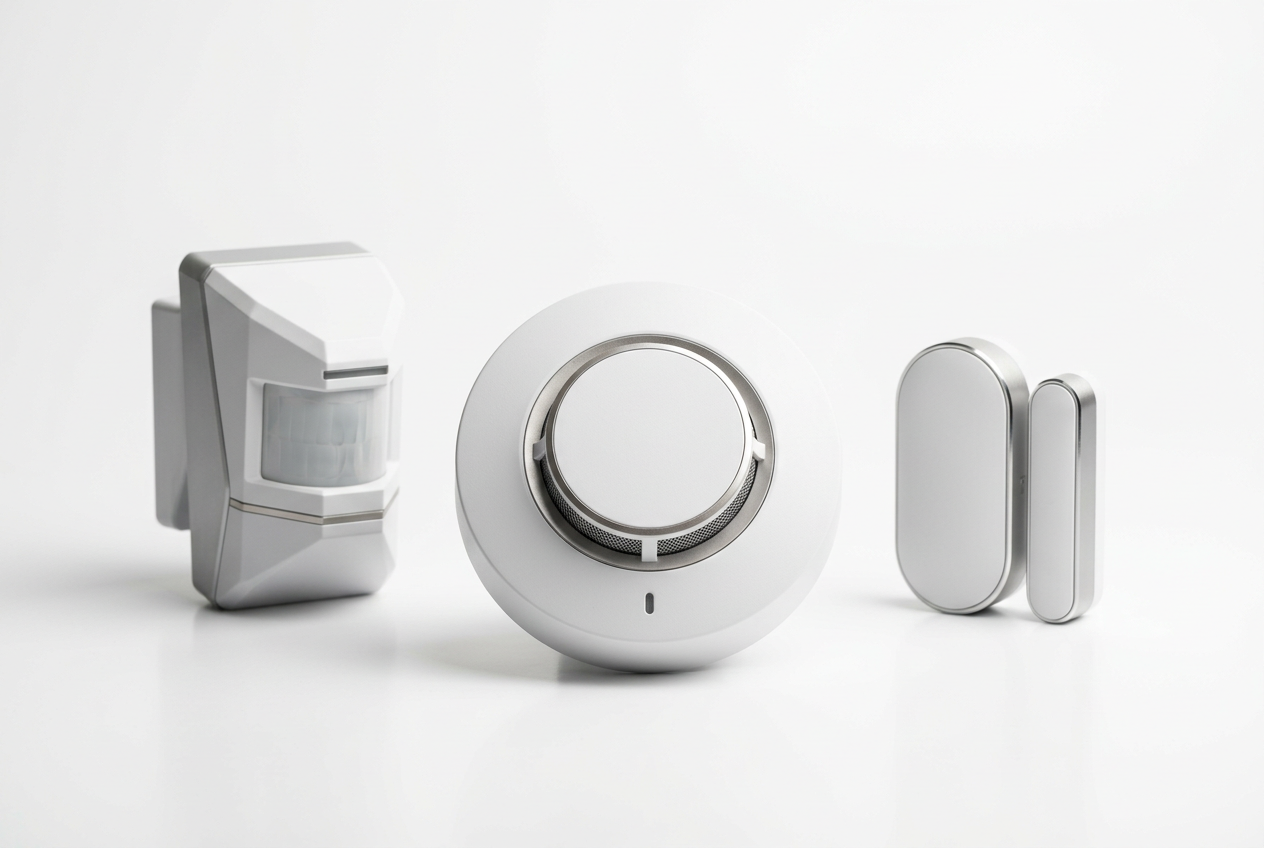
  • Smoke Detection (גילוי עשן) — Hardwired smoke and heat detectors throughout, often integrated into the smart-home system.
  • Flood Sensors (גלאי הצפה) — Water leak detectors in every wet room, laundry area, and mechanical room — connected to automatic shut-off valves.

4. Security Systems in Luxury Home Construction

  • Alarm System (אזעקה) — Perimeter and interior motion detection, door/window sensors, and 24/7 monitoring connectivity.
  • CCTV Camera System (מצלמות) — High-resolution IP cameras covering the full perimeter and key interior zones. Most luxury homes in Israel install 16–32 cameras.
  • Electronic Perimeter Defense — Bat Systems (הגנה אלקטרונית / עטלפים) — Invisible beam or fence-top detection systems that alert before an intruder reaches the building itself.

5. Doors, Windows & Opening Systems

  • Minimal Frame Window & Door Systems (מערכות מינימל) — Ultra-slim aluminum or steel profiles for floor-to-ceiling glass — the hallmark of contemporary Israeli luxury architecture. Premium systems like Vitrocsa or Keller cost ₪3,000–₪8,000 per square meter.
  • Interior Doors (דלתות פנים) — Custom-height (often 2.6–3.0 m) flush doors with concealed hinges.
  • Entry Door (דלת כניסה) — Oversized, often pivot-style, with multi-point locking and custom finishes.
  • Parking Gate (שער חנייה) — Automated sliding or swing gate with motor, safety sensors, and remote access.
  • Perimeter Gates (שערים) — Pedestrian and vehicle gates integrated with the intercom and security systems.

6. Flooring & Surface Systems

  • Interior Flooring (ריצופי פנים) — Natural stone, large-format porcelain, or engineered hardwood. For detailed comparisons, see our post on luxury flooring options in Israel.
  • Exterior Flooring (ריצופי חוץ) — Non-slip stone or porcelain for terraces and pool surrounds.
  • Wet Room Flooring (ריצופים חדרים רטובים) — Specialized tiles with proper falls, waterproof substrates, and underfloor heating compatibility.
  • Interlocking Pavers (ריצוף משתלבות) — For driveways, parking areas, and pedestrian pathways.
  • Decking (דקים) — Composite or hardwood decking for pool areas, garden zones, and terraces.

7. Interior Finishing Systems in Luxury Construction

  • Kitchen (מטבח) — Custom cabinetry, stone countertops, integrated appliances, and specialized lighting. A high-end kitchen in Israel typically costs ₪150,000–₪500,000+.
  • Walk-In Closets (חדרי ארונות) — Custom-fitted wardrobes with integrated lighting, drawers, and display cases.
  • Interior Lighting Design (תאורת פנים) — Architectural lighting including recessed, linear, accent, and decorative fixtures — typically 80–150 fixtures in a luxury home.
  • Railings (מעקות) — Glass, steel, or wrought iron railings for staircases, balconies, and terraces.
  • Custom Staircases (מדרגות) — Feature staircases in stone, steel, wood, or a combination — a major design element in luxury home construction.

8. Outdoor & Lifestyle Systems

  • Swimming Pool (בריכת שחייה) — Concrete shell, filtration, heating, lighting, and automated chemical dosing.
  • Retractable Pool Cover / Rising Floor (מתקן מתרומם לבריכה) — A hydraulic floor that rises to transform the pool into a terrace — one of the most impressive luxury home construction systems in ultra-high-end projects.
  • Landscaping & Irrigation (גינון) — Automated irrigation systems, mature tree planting, lawn installation, and hardscape elements.
  • Water Features (אלמנטים מים — מפלים, מזרקות) — Waterfalls, fountains, and reflecting pools with dedicated pump and lighting systems.
  • Exterior Lighting (תאורת חוץ) — Landscape lighting, pathway lights, façade uplighting, and security lighting.

9. Specialty Rooms & Entertainment Systems

  • Home Gym (חדר כושר) — Reinforced flooring, dedicated HVAC, mirrors, and audio system pre-wiring.
  • Home Cinema (חדר קולנוע) — Acoustic treatment, projector/screen infrastructure, tiered seating platforms, and soundproofing — a dedicated cinema room typically adds ₪200,000–₪600,000 to the luxury home construction budget.

How Luxury Home Construction Systems Add Up: Budget Perspective

When Marshanski Build prices a luxury project, the systems alone — excluding the structural shell and land — can represent 50–65% of total construction costs. That’s why a detailed line-by-line estimate matters more than a single per-square-meter price. For a comprehensive breakdown of how these costs come together, explore our cost of building a luxury home in Israel guide.

Here’s a rough cost allocation across system categories for a typical 500+ sqm luxury home in Israel:

System Category % of Total Build Cost
Mechanical & plumbing systems 12–18%
Electrical & low-voltage systems 8–12%
Flooring & surfaces 8–15%
Security systems 3–5%
Kitchen & closets 5–10%
Pool & outdoor systems 8–15%
Specialty rooms 3–8%

Why System Integration Is the Real Challenge in Luxury Home Construction

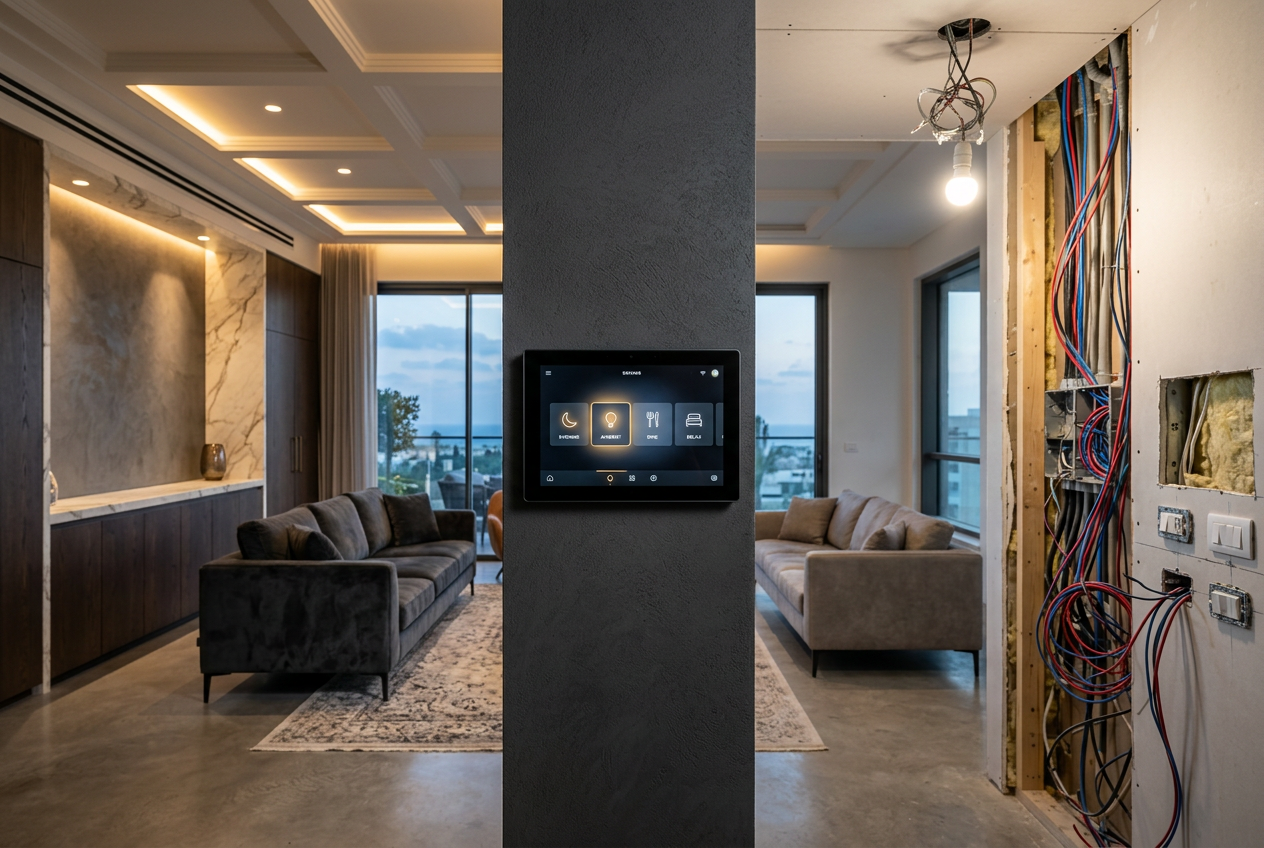
Listing 40+ luxury home construction systems is one thing. Making them work together is another. The underfloor heating must coordinate with the flooring type. The fresh air system must integrate with the alarm zones. The smart-home controller must communicate with lighting, audio, security, and HVAC simultaneously.

At Marshanski Build, Amit Marshanski personally oversees the integration of all systems — ensuring that subcontractors don’t work in silos and that every pipe, wire, and duct is exactly where it needs to be before walls close up. This coordination is what prevents the nightmare scenario of opening finished walls to fix clashes — a scenario that costs luxury homeowners in Israel hundreds of thousands of shekels every year.

Frequently Asked Questions About Luxury Home Construction Systems

How many building systems does a luxury home in Israel require?

A typical luxury home involves 40 or more distinct building systems, compared to 10–15 in standard residential construction. These luxury home construction systems span mechanical, electrical, security, finishing, and outdoor lifestyle categories — each requiring specialized subcontractors and coordination.

What is the most expensive system in luxury home construction?

The swimming pool and its associated systems (heating, filtration, retractable cover) often represent one of the largest single-system costs, ranging from ₪300,000 to over ₪1,000,000. Kitchen installations and minimal-frame window systems also rank among the top expenses in luxury home construction.

Why is system integration so important in high-end construction?

With 40+ luxury home construction systems sharing the same walls, floors, and ceilings, poor coordination leads to clashes — pipes hitting ducts, wires crossing heating loops. Fixing these after finishing can cost 3–5× the original installation price, making upfront integration planning essential.

What systems are unique to luxury construction in Israel?

Systems like retractable pool floors, electronic perimeter defense (bat systems), central vacuum, whole-home audio-video, fresh air ventilation (MVHR), and home cinema acoustic treatment are rarely found in standard Israeli construction. These luxury home construction systems are what distinguish a truly high-end build.

How does Marshanski Build manage all these systems on a single project?

Amit Marshanski creates a master system integration plan before construction begins, with every luxury home construction system priced, scheduled, and mapped. He personally coordinates between subcontractors to ensure zero clashes and on-time completion across all 40+ systems.

What happens if a system is missed during the planning stage?

Missing a system during planning often means retrofitting after construction — which can cost 3–5× the original installation price. For example, adding a central vacuum or fresh air system after walls are closed requires demolishing finished surfaces, rerouting existing systems, and repairing the damage.

Ready to Build? Get the Full System Estimate for Your Luxury Home

If you’re planning a luxury home in Israel, you deserve a builder who knows every system — and prices each one transparently. Marshanski Build provides detailed, line-by-line estimates covering all 40+ luxury home construction systems so there are no surprises during construction. Contact Amit Marshanski directly through marshanski.com to schedule a consultation and receive a comprehensive project assessment.

Landscape Architect for Luxury Home: Why Every Project Over 400sqm Needs One


For any residential construction project on a plot larger than 400 square meters with above-average investment, hiring a landscape architect for a luxury home is not an indulgence — it’s a necessity. According to Amit Marshanski, founder of Marshanski Build, the added value a landscape architect brings relative to the investment is clear and measurable, impacting everything from the garden design and the home’s ground-level positioning (the “zero level”) to the relationship between the house’s main living areas and the surrounding environment.

The 400 Square Meter Rule: When a Landscape Architect for a Luxury Home Becomes Essential

Not every construction project requires a landscape architect. For smaller plots or standard-budget builds, the building architect can usually handle basic outdoor planning. But once a plot exceeds 400 sqm and the homeowner is investing above the market average — typically ₪8,000–₪15,000+ per square meter of built area — the complexity of outdoor spaces in a luxury home demands dedicated expertise.

Amit Marshanski, who has overseen dozens of high-end private home projects in areas like Kfar Shmaryahu, Savyon, and Herzliya Pituach, puts it simply: a landscape architect’s involvement on qualifying luxury home projects isn’t optional. The return on investment is evident the moment you step outside the front door.

What Does a Landscape Architect Actually Do in a Luxury Home Project?

Many homeowners confuse landscape architecture with gardening. They’re fundamentally different disciplines. A landscape architect shapes the entire outdoor experience of a luxury home — and critically, influences decisions about the building itself. Here’s what their involvement covers in a high-end residential project:

1. Setting the Luxury Home’s Ground Level (The “Zero Point”)

One of the most consequential decisions in any luxury home build is determining where the home sits relative to the natural terrain. The ground-level height (known in Hebrew as “גובה ה-00”) affects drainage, accessibility, views, privacy, and the home’s visual presence on the street. A landscape architect works alongside the building architect to optimize this elevation — a decision that’s nearly impossible to reverse once foundations are poured.

2. Positioning Living Spaces Relative to the Surroundings

The relationship between a luxury home’s primary living areas — the kitchen, living room, master suite — and the outdoor environment is what separates a truly premium property from a merely expensive one. A landscape architect evaluates sun orientation (Israel gets roughly 300+ days of sunshine annually), prevailing wind patterns, neighboring structures, and existing vegetation to ensure that indoor-outdoor flow feels natural and intentional.

3. Garden Design and Planting Strategy for Luxury Properties

On a 400+ sqm luxury home plot, the garden isn’t just decorative. It’s a living system that provides privacy screening, microclimate management, seasonal interest, and usable outdoor rooms. A professional landscape architect selects plant species suited to Israeli soil and climate conditions, plans irrigation infrastructure, and creates layered planting schemes that mature beautifully over 5–10 years rather than looking overgrown within 2.

4. Pool Placement and Elevation Integration

Swimming pool design on luxury home properties involves far more than choosing a shape. The pool’s position relative to the house, its elevation relative to the garden, the surrounding terrace materials, and the visual sightlines from indoor spaces all need careful coordination. A landscape architect ensures the pool feels like an integrated element of the overall property composition — not an afterthought dropped into the backyard.

5. Managing Elevation Changes and Terracing

Israeli topography, particularly in the Sharon and central regions, frequently involves sloped or uneven plots. Retaining walls, stepped terraces, sunken courtyards, and raised garden beds all require structural and aesthetic coordination. Studies show that well-executed grade changes designed by a skilled landscape architect can increase a luxury home’s perceived value by 10–15% compared to flat, unresolved outdoor spaces.

The Cost of a Landscape Architect vs. The Value They Create for Luxury Homes

Landscape architect fees for a luxury home project in Israel typically range from ₪50,000 to ₪150,000, depending on plot size and complexity. On a project where total construction costs may run ₪5–10 million or more, this represents roughly 1–3% of the total budget.

What does that investment protect? Consider the alternative: repositioning a pool after construction costs 5–10x more than getting it right in the design phase. Regrading a garden that drains toward the house instead of away from it can cost hundreds of thousands. And the intangible cost of living in a luxury home where the outdoor spaces feel disconnected or poorly resolved affects daily quality of life for years.

As Marshanski Build has seen across its portfolio, properties with professional landscape architecture consistently appraise higher, sell faster, and — most importantly — deliver a living experience that justifies the original investment. For a deeper look at how construction budgets break down, see our guide on the cost of building a luxury home in Israel.

When Can You Skip the Landscape Architect on a Home Project?

Transparency matters. Not every project needs this level of outdoor planning:

  • Plots under 400 sqm — The outdoor space is typically limited enough that the building architect and a skilled garden designer can handle it.
  • Standard-budget builds — If the overall project investment is at or below market average, the budget may not support the level of outdoor execution a landscape architect would design.
  • Apartment renovations — Balcony and terrace upgrades rarely require a full landscape architecture engagement (though rooftop gardens on penthouses can be an exception).

For everything above these thresholds, especially on the premium plots Marshanski Build typically works with, the landscape architect is a core team member from day one — alongside the building architect, structural engineer, and interior designer. Understanding what makes construction truly luxurious means recognizing that the outdoor environment is half the luxury home property.

How Marshanski Build Integrates Landscape Architecture into Luxury Home Projects

At Marshanski Build, specializing in luxury home construction across Israel’s most prestigious neighborhoods, landscape architecture integration happens at the earliest design stages — not after the house is built. Amit Marshanski coordinates directly with leading landscape architects to ensure alignment between the building’s architectural language and its outdoor environment.

This collaborative approach means that decisions about floor levels, window placement, outdoor access points, and material selections are made with full awareness of the landscape plan. The result is a luxury home where stepping from the living room to the garden, from the pool terrace to the dining area, feels completely seamless.

For homeowners weighing whether to build new or renovate an existing property, the landscape factor is often decisive. Older luxury homes on large plots frequently have outdated or neglected outdoor spaces that a comprehensive redesign by a landscape architect can transform. Read more in our comparison of building new versus renovating existing homes in Israel.

Frequently Asked Questions About Landscape Architects for Luxury Homes

Do I need a landscape architect for a luxury home on a plot under 400 square meters?

Generally no. For smaller plots, a building architect combined with a skilled garden designer can manage the outdoor spaces effectively. The landscape architect becomes essential when plot size, budget level, and design complexity exceed standard thresholds — which most luxury home projects do.

How much does a landscape architect cost for a luxury home in Israel?

Fees typically range from ₪50,000 to ₪150,000 depending on plot size and project complexity. This usually represents 1–3% of the total construction budget on a high-end luxury home project — a modest investment relative to the value created.

At what stage should a landscape architect join a luxury home project?

As early as possible — ideally during the initial design phase before the building’s ground level and floor plan are finalized. Decisions about the luxury home’s elevation, room orientation, and access points all depend on the landscape plan.

Can a building architect handle landscape design for a luxury home?

Building architects can address basic outdoor layout, but landscape architecture is a separate discipline involving horticultural knowledge, grading expertise, irrigation systems, and long-term planting strategies that most building architects don’t specialize in. For a luxury home, the complexity demands a dedicated specialist.

Does hiring a landscape architect increase luxury home property value?

Yes. Well-executed landscape architecture on luxury home properties can increase perceived and appraised value by 10–15%. Beyond financial returns, it significantly improves daily living quality and the home’s street presence.

Ready to Plan Your Luxury Home with the Right Landscape Architect?

If you’re building a luxury home on a plot of 400 square meters or more and investing in premium-quality construction, hiring a landscape architect is one of the best decisions you’ll make. Marshanski Build brings together the full team of specialists — from architecture to landscape to construction execution — ensuring your luxury home is designed and built as a unified whole. Contact Marshanski Build today to discuss your project and learn how integrated planning delivers results you’ll appreciate for decades.

The Technical Engineering Behind Israel’s Largest and Most Beautiful Fountain — 112 Pumps, Italian Marble & the Full Construction Story


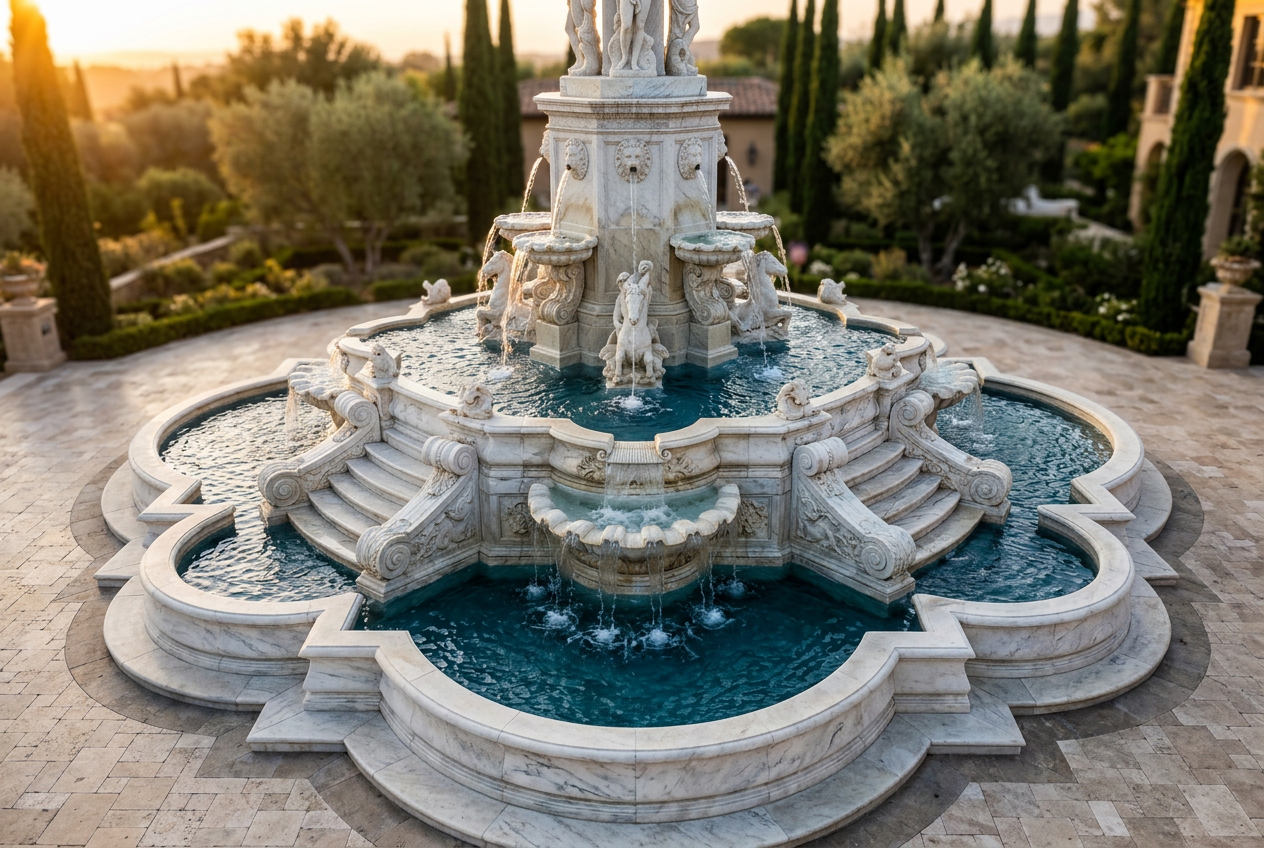
The largest fountain in Israel is a project unlike anything ever built in the country. Amit Marshanski Construction carried out the technical engineering and construction of a circular fountain made of Italian marble and metal, standing 9 meters tall, powered by 112 pumps, with an underground reservoir holding 120 cubic meters of water and a cannon that shoots water jets to a height of 20 meters. This project reflects unprecedented technical expertise, integrating water systems, electrical infrastructure, control systems, and musical programming — all under professional Israeli management.

The Largest Fountain in Israel — Architectural Design Worthy of a European Palace

The architectural design of the largest fountain in Israel was created by the renowned Italian architect Cristiano Mateh Ferem — one of Europe’s leading architects specializing in fountain design and monumental water projects. Cristiano Mateh Ferem drew inspiration from Europe’s historic fountains — blending Italian classical aesthetics with modern engineering innovation.

Visually, this is a magnificent fountain — circular and striking, crowned with a bronze sculpture of Apollo holding the globe. All the marble was imported directly from Italy and combined with custom-fabricated metal components. The result is a fountain that looks as though it was taken straight from a Renaissance palace courtyard — yet stands in the heart of Israel.

The largest fountain in Israel — a magnificent fountain designed by Cristiano Mateh Ferem and built by Marshanski Construction

But the real challenge wasn’t the design — it was the technical engineering and hands-on execution. That’s where Amit Marshanski Construction stepped in, taking full responsibility for the engineering design, material procurement, coordination with international suppliers, and on-site construction. Marshanski didn’t design the fountain — they turned an architectural presentation into a working reality.

112 Pumps and a 120-Cubic-Meter Reservoir — The Technical Heart of Israel’s Largest Fountain

Beneath the largest fountain in Israel lies an underground reservoir with a capacity of 120 cubic meters of water, serving as the “heart” of the entire hydraulic system. The reservoir feeds 112 pumps of various types — some driving delicate jets, others producing symmetrical water arches, and some powering the upper cannon that shoots water to an impressive height of 20 meters.

Most pumps are equipped with inverters (variable frequency drives), allowing precise control over water volume and pressure — raising and lowering jet intensity in real time, synchronized to the rhythm of the music. Each pump is connected to a dedicated controller, and all controllers are linked to a central computer running advanced software that manages the water “choreography.” This is a musical fountain of the highest caliber ever built in Israel.

112-pump and inverter system in Israel's largest fountain — a musical fountain built by Marshanski Construction

The water system, industrial electrical panel, and musical choreography programming were executed by a specialized German company — one of the world’s leading firms in advanced musical fountain technology. The combination of German engineering and Israeli execution produced a result that rivals the most famous fountains in Europe.

Building a Large Fountain in Israel — Project Management That Demands Unique Expertise

Managing a large fountain construction project in Israel of this scale requires far more than “hiring contractors.” Amit Marshanski personally managed the entire international supply chain — marble from Italy, water and control systems from Germany, a bronze sculpture imported separately, and local subcontractors for concrete, waterproofing, and electrical work. Coordinating all parties required precise timing and complete technical control.

One of the central challenges in building the largest fountain in Israel was waterproofing. An underground reservoir holding 120 cubic meters requires a flawless waterproofing system — even the smallest crack could lead to severe structural damage. Marshanski Construction, renowned for delivering some of the finest waterproofing and finishing details in the world, applied the same exacting standards here that they bring to their luxury homes. The waterproofing was designed with a long-term vision — not just for the fountain to work on day one, but to continue operating flawlessly for decades.

Another challenge was the industrial electrical panel. This is an industrial-scale panel — dozens of circuits, controllers, inverters, and relays that all must operate in perfect harmony. A single wiring error could burn out a pump costing thousands of euros. Marshanski personally oversaw the installation, ensuring every connection met the strictest international standards.

High-end waterproofing and finishing in the construction of Israel's largest fountain — Marshanski Construction

Why Marshanski Construction Built the Largest Fountain in Israel — World-Class Technical Execution

A project like the largest fountain in Israel illustrates an insight Amit Marshanski has been emphasizing for 25 years: in construction at the highest level, technical execution is what separates architectural vision from physical reality. A MAIN architect of all project and for funtain Cristiano Mateh Ferem’s draw the perfect fountain, whit deep technical knowledge — in plumbing, electrical, control systems, waterproofing, and international logistics — the drawing stays on paper.

Amit Marshanski Construction, specializing in building luxury properties in Israel with construction budgets starting at NIS 25,000 per square meter and above, brings the same level of professionalism to special elements like grand fountains, spas, and complex water systems. The ability to source suppliers and subcontractors abroad, manage international logistics, and ensure every component arrives and is installed correctly — that’s exactly what distinguishes high-end managed construction from standard building.

What Makes a Fountain “The Largest and Most Beautiful Fountain in Israel”?

Three core elements make this project the largest fountain in Israel — and one of the most impressive ever built in the country:

  • Imported materials of the highest quality: Authentic Italian marble, bronze, custom-fabricated metal — materials that make no compromises on aesthetics or durability over decades.
  • Advanced musical fountain technology: 112 pumps with inverters, a central control computer, and German software that synchronizes water with music in real time — a musical fountain of world-class caliber.
  • Professional execution by Marshanski Construction: Top-tier waterproofing, precision industrial electrical work, and international project management that left nothing to chance.

Whether in luxury home construction in Israel or extraordinary projects like building grand fountains, the difference lies in the same place: in the technical details no one sees — but everyone feels.

Cristiano Mateh Ferem’s Design Meets Israeli Execution — International Collaboration on the Largest Fountain in Israel

Amit Marshanski is proud to say this project is Israeli in execution. True, the marble came from Italy, the programming from Germany, and the architectural design was created by the legendary architect Cristiano Mateh Ferem — but the management, technical engineering, construction, and integration of all systems were carried out by Israeli hands. This is the approach that defines Marshanski Construction on every project: take the best the world has to offer and execute it at a quality level that rivals anything, anywhere.

This capability — working with international suppliers, understanding technical specifications in multiple languages, managing shipping and international logistics while maintaining timelines — is one of Marshanski Construction’s most significant advantages. It’s the same capability that comes through in importing luxury finishing materials for private homes in Israel.

The largest fountain in Israel — designed by Cristiano Mateh Ferem and built by Amit Marshanski Construction

Frequently Asked Questions About the Largest Fountain in Israel (FAQ)

How many pumps does the largest fountain in Israel have?

The largest fountain in Israel operates with 112 pumps of various types. Most pumps are equipped with inverters that allow precise control of pressure and water volume in real time, synchronized with music — making it a world-class musical fountain.

How tall is the largest fountain in Israel, and how high do the water jets reach?

The largest fountain in Israel stands 9 meters tall. At its top, a water cannon shoots jets to a height of 20 meters. Beneath the fountain lies an underground reservoir with a capacity of 120 cubic meters of water that feeds all 112 pumps.

Who designed the largest fountain in Israel architecturally?

The architectural design of the largest fountain in Israel was created by the legendary Italian architect Cristiano Mateh Ferem, who brings extensive experience in designing monumental fountains and grand water projects across Europe. The technical engineering, project management, and actual construction were carried out by Amit Marshanski Construction from Israel.

What materials is the largest fountain in Israel made from?

The largest fountain in Israel is built entirely from imported Italian marble and custom-fabricated metal. It is crowned with a bronze sculpture of Apollo holding the globe. The water systems, controls, and programming were supplied by a German company specializing in advanced musical fountains.

How much does it cost to build a large musical fountain in Israel?

A large fountain construction project in Israel of this scale involves imported materials from Italy, advanced control systems from Germany, and professional workmanship at an international level. Projects like these are part of luxury properties where construction costs start at NIS 25,000 per square meter and above. For an accurate estimate, it’s recommended to contact Marshanski Construction directly.

Who built the largest fountain in Israel?

The construction, technical engineering, and project management of the largest fountain in Israel were carried out by Amit Marshanski Construction — an Israeli company with 25 years of experience in luxury projects, in collaboration with international suppliers from Italy and Germany. The architectural design was created by Cristiano Mateh Ferem.

Is the largest fountain in Israel a musical fountain?

Yes. The largest fountain in Israel is an advanced musical fountain — 112 pumps with inverters connected to a central control computer and German software that synchronizes water movement with music in real time. It is the most advanced musical fountain ever built in Israel.

Want to Build an Extraordinary Luxury Project?

Amit Marshanski Construction, with 25 years of experience in luxury projects across Israel, specializes in the technical execution of complex projects — private homes, ground-level residential developments, and special elements like grand fountains, spas, and water systems. If you have a vision that demands deep engineering knowledge and uncompromising execution — contact the Marshanski team and let’s turn it into reality.

Lighting Consultant vs. Electrical Consultant: Key Differences for Luxury Home Planning


When planning a luxury home, understanding the difference between a lighting consultant vs electrical consultant is critical. A lighting consultant and an electrical consultant serve two entirely different functions in residential construction, even though both disciplines involve electricity. The electrical consultant is responsible for voltage distribution, electrical panels, and code-compliant power infrastructure, while the lighting consultant is essentially a designer — shaping atmosphere, light quality, and fixture selection throughout each room. As Amit Marshanski of Marshanski Build puts it: “These are two completely separate fields. The only thing they share is that both are connected to electricity.”

Why People Confuse a Lighting Consultant vs Electrical Consultant

The confusion between a lighting consultant vs electrical consultant is understandable. Both professionals deal with wires, circuits, and switches. Many electrical consultants in Israel market themselves as lighting designers, blurring the line for homeowners who are planning a build or renovation for the first time.

But the skill sets are fundamentally different. An electrical consultant holds engineering credentials focused on power systems, load calculations, and safety standards. A lighting consultant, on the other hand, draws from interior design, color temperature science, and human-centric lighting principles. According to industry data, proper lighting design can account for 15–25% of a home’s overall atmosphere and perceived value, making it a critical investment — not an afterthought.

When these roles are merged into a single person who lacks true lighting design expertise, the result is often technically correct but emotionally flat spaces — rooms that have enough light but none of the warmth, drama, or layered quality that defines a luxury home.

What Does an Electrical Consultant Do? Role and Responsibilities

An electrical consultant (יועץ חשמל) is a licensed engineer whose responsibilities center on the infrastructure that powers your home. Understanding this role is key to grasping the lighting consultant vs electrical consultant distinction. Their scope includes:

  • Voltage distribution planning — determining how electrical loads are split across circuits to prevent overloads and ensure efficiency.
  • Electrical panel design — specifying the main panel and sub-panels, circuit breaker sizing, and safety disconnects.
  • Compliance with Israeli Electrical Authority (IEC) standards — ensuring all wiring, grounding, and installation meets safety codes (including SI 61 regulations).
  • Coordination with mechanical systems — sizing circuits for HVAC, underfloor heating, elevator systems, pool equipment, and smart-home infrastructure.
  • Emergency and backup power planning — planning generator hookups, UPS systems, and load-shedding protocols.

In a typical luxury home of 400–600 sqm, the electrical plan alone can include 80–120 individual circuits, each requiring precise calculation. This is pure engineering — no aesthetic decisions are involved.

What Does a Lighting Consultant Do? Role and Responsibilities

A lighting consultant (יועץ תאורה) operates in an entirely different realm — and this is where the lighting consultant vs electrical consultant gap becomes most apparent. Their work is closer to that of an interior designer or architect than to an engineer. Key responsibilities include:

  • Defining the mood and atmosphere of each space — warm and intimate for bedrooms, bright and functional for kitchens, dramatic for living areas.
  • Selecting light fixtures — choosing between recessed downlights, cove lighting, pendant fixtures, wall washers, and accent spotlights based on the design language of the home.
  • Specifying color temperature — typically between 2700K (warm) and 4000K (cool white), with different temperatures for different rooms. A luxury residence often uses 3 or more distinct color temperatures across its spaces.
  • Lux-level calculations — determining exactly how much light each area needs. A kitchen workspace might require 500 lux, while a hallway needs only 100 lux.
  • Layered lighting design — combining ambient, task, and accent lighting to create depth and visual interest in every room.
  • Integration with smart-home control systems — programming dimming scenes, circadian lighting schedules, and home automation protocols.

The lighting consultant determines how you experience a room. They are the reason a space feels inviting rather than clinical, cozy rather than dark.

Lighting Consultant vs Electrical Consultant: Where These Two Roles Must Coordinate

Despite being distinct disciplines, the electrical consultant and lighting consultant must work in close coordination during the planning phase. Understanding how the lighting consultant vs electrical consultant collaboration works is essential for a successful project. Their partnership typically follows this sequence:

Step 1: The Lighting Consultant Creates the Design

The lighting plan comes first. The lighting consultant defines fixture locations, circuit groupings for dimming zones, power requirements for each fixture, and control-system specifications. This plan is fundamentally a design document.

Step 2: The Electrical Consultant Engineers the Infrastructure

The electrical consultant then translates the lighting plan into technical reality — routing wiring, assigning circuits, sizing transformers for low-voltage fixtures, and ensuring the electrical panel can handle the specified loads alongside all other systems in the home.

Step 3: Joint Review and Coordination

Both consultants review the combined plans to eliminate conflicts. For example, a lighting consultant may specify a fixture in a location where the electrical consultant identifies structural interference. These coordination meetings typically happen 2–3 times during the design phase of a luxury home construction project.

When this coordination breaks down — or when one person tries to fill both roles without proper training — homeowners end up with compromised results.

Real-World Consequences of Ignoring the Lighting Consultant vs Electrical Consultant Difference

Amit Marshanski has seen numerous projects where the distinction between a lighting consultant vs electrical consultant was ignored. Common problems include:

  • Uniform, flat lighting — every room lit with the same recessed downlights at the same color temperature, creating a commercial rather than residential feel.
  • Insufficient dimming zones — because the electrical consultant didn’t plan separate circuits for each lighting layer.
  • Incorrect fixture placement — lights positioned based on electrical convenience rather than visual impact.
  • Wasted budget on expensive fixtures — installed without the supporting infrastructure to use their full capabilities (such as DALI or DMX dimming protocols).
  • Lack of smart lighting integration — missed opportunities for automated scenes, circadian schedules, and energy savings.

In luxury construction, lighting represents roughly 8–12% of the total interior finishing budget. Mismanaging this investment by skipping a dedicated lighting consultant is a significant — and visible — mistake.

Lighting Consultant vs Electrical Consultant: Cost Comparison in Israel

Understanding the cost differences between a lighting consultant vs electrical consultant helps homeowners budget effectively:

  • Lighting consultant fees — for a luxury home of 300–600 sqm in Israel, expect ₪15,000–₪50,000 depending on complexity and scope. This covers the design plan, fixture specifications, and coordination with the electrical consultant and interior designer.
  • Electrical consultant fees — typically range from ₪10,000–₪35,000 for a comparable luxury project. This includes the complete electrical infrastructure plan, panel design, and code-compliance documentation.
  • Combined value — together, hiring both professionals costs ₪25,000–₪85,000, a fraction of the total construction budget that delivers outsized returns in quality and livability.

These are separate line items in your project budget, and each one is a worthwhile investment when building a high-end home.

How Marshanski Build Handles Lighting and Electrical Planning

At Marshanski Build, specializing in high-end residential construction in Israel, both consultants are engaged independently from the earliest design stages. The company’s approach to the lighting consultant vs electrical consultant dynamic ensures that the lighting design serves the architectural vision while the electrical infrastructure supports it flawlessly.

This separation of roles is especially critical in projects involving luxury-grade construction, where every detail — from the warmth of hallway lighting to the precision of kitchen task lights — contributes to the overall quality of the home.

Whether you’re building from scratch or undertaking a major renovation project, insisting on separate lighting and electrical consultants is one of the smartest decisions you can make.

Frequently Asked Questions About Lighting Consultant vs Electrical Consultant

Can one person serve as both lighting consultant and electrical consultant?

Technically, some professionals offer both services, but it is not recommended. The lighting consultant vs electrical consultant distinction exists for good reason: electrical consulting requires engineering expertise in power systems and code compliance, while lighting consulting demands design skills, knowledge of color science, and aesthetic sensibility. Combining them almost always means one discipline suffers. Always hire them separately.

At what stage of construction should I hire a lighting consultant?

A lighting consultant should be brought in during the architectural design phase — before electrical plans are finalized. This allows the lighting design to inform the electrical layout rather than being constrained by it. Ideally, engage the lighting consultant within the first 20% of the design timeline.

How much does a lighting consultant cost for a luxury home in Israel?

Fees vary based on project size and complexity. For a luxury home of 300–600 sqm, lighting consultation typically costs between ₪15,000 and ₪50,000. This is separate from fixture procurement and installation costs. The investment pays for itself through a more cohesive, livable result.

Does the electrical consultant need to approve the lighting plan?

Yes. The electrical consultant must verify that the lighting plan’s power requirements are compatible with the home’s electrical infrastructure. This includes confirming circuit capacity, transformer sizing for low-voltage systems, and compatibility with dimming and control protocols. This is a crucial point in the lighting consultant vs electrical consultant workflow.

What happens if I skip the lighting consultant entirely?

Without a dedicated lighting consultant, the electrical contractor or interior designer typically selects fixtures and placements based on general rules of thumb. The result is functional but lacks the layered, atmospheric quality that defines luxury spaces. Rooms feel generic rather than intentionally designed.

What is the main difference between a lighting consultant and an electrical consultant?

The main difference between a lighting consultant vs electrical consultant is their focus: a lighting consultant is a designer who shapes ambiance, selects fixtures, and plans light layering for aesthetic and functional purposes. An electrical consultant is an engineer who designs the power infrastructure — panels, circuits, wiring, and code compliance. Both deal with electricity, but their expertise, training, and deliverables are completely different.

Do I need both a lighting consultant and an electrical consultant for a renovation?

Yes, if your renovation involves significant changes to lighting or room layouts. Even in a renovation, the lighting consultant vs electrical consultant roles remain distinct. The lighting consultant ensures your updated spaces feel right, while the electrical consultant confirms the existing infrastructure can support the new design — or specifies the upgrades needed.

Plan Your Luxury Home the Right Way

The distinction between a lighting consultant vs electrical consultant is not a technicality — it directly impacts how your home looks, feels, and functions every single day. These are two separate professions, two separate skill sets, and two separate line items in your project budget.

If you’re planning a luxury home build or renovation in Israel, contact Amit Marshanski at Marshanski Build to ensure every aspect of your project — including lighting and electrical coordination — is handled by the right professionals. Reach out through marshanski.com to start the conversation.

Movable Pool Floor Systems: Types, Benefits & When You Actually Need One


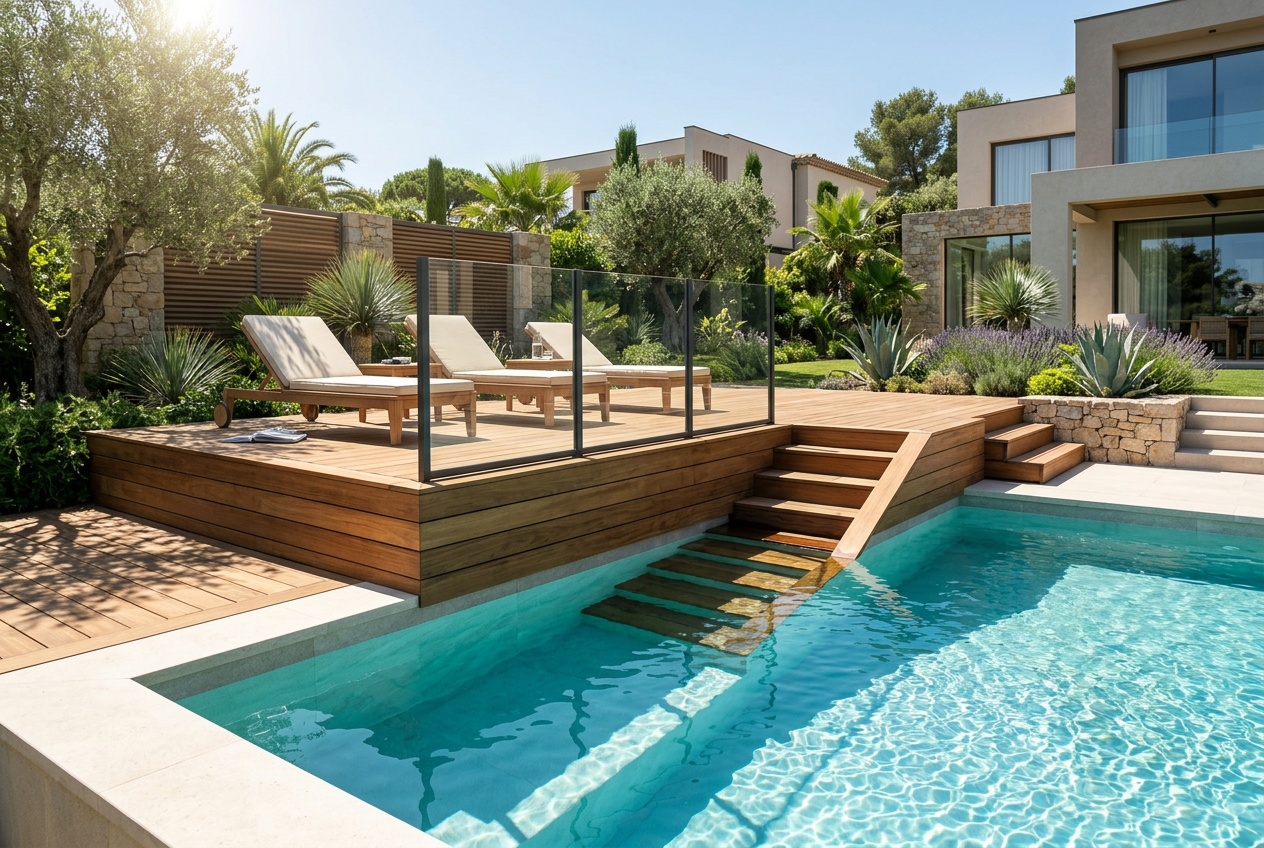
A premium, state-of-the-art movable pool floor allows you to raise the pool floor at the push of a button — transforming it into a dry surface for entertaining, adjusting the depth for children, and eliminating drowning hazards when the pool isn’t in use. In 2026, this is one of the most sought-after technological solutions in the world of private swimming pools.

Why Do You Even Need a Movable Pool Floor?

In three words: safety, space, and flexibility. These are the three main reasons homeowners invest in a movable pool floor system, and each one alone justifies the investment.

Safety — The Number One Reason

An open pool is a constant hazard, especially in homes with young children. According to child safety organizations, drowning is the leading cause of death among children under age 4, and private pools are one of the primary risk zones. A movable pool floor raised to ground level seals the pool completely — no exposed water, no danger. This is a safety solution far superior to a fence or a soft cover, because it creates a stable surface you can stand on and even use for activities.

Converting Pool Square Footage into Usable Ground Space

When the floor is raised to its maximum height, the pool area becomes a flat, stable surface. A 50 m² pool turns into 50 m² of activity space — you can host a party on it, set up tables and chairs, and even use the area as an outdoor entertainment zone. In luxury properties with limited space, the ability to “double” your yard area is a significant advantage that directly impacts property value.

Adjustable Depth for Children

You don’t always need to raise the floor all the way up. A movable pool floor lets you set any desired depth — so a deep pool of 1.80 m becomes a shallow 40 cm wading area suitable for toddlers at the push of a button. No need to build a separate children’s pool, and no need to compromise on pool depth for adults.

Technical cross-section of a luxury pool with a movable floor system in three positions — floor down (full pool), floor at mid-level (child-safe depth), and floor up (flat surface at ground level)

Types of Movable Pool Floor Systems

Several types of systems are available on the market, imported from Europe (mainly Spain, Germany, and Belgium) and also manufactured locally in Israel. The differences between them relate to the lifting mechanism, precision level, load-bearing capacity, and maintenance costs.

Telescopic / Hydraulic Piston System

This is the most common system in high-end luxury properties. The mechanism is based on hydraulic pistons or telescopic cylinders installed at the bottom of the pool, supporting the floor from all sides. The advantages:

  • High precision — the floor rises and lowers uniformly, without tilting or vibrations
  • High load-bearing capacity — advanced systems support up to 250 kg/m², allowing events with dozens of people on the surface
  • Long service life — with proper maintenance, a telescopic system lasts 20 years or more
  • Quiet operation — raising and lowering is nearly silent

The main drawback is cost — this is the most expensive system, requiring precise planning from the pool’s initial concrete pouring stage.

Chain-Driven System

This system uses heavy-duty steel chains driven by electric motors. The chains are connected to anchor points on the floor and raise it synchronously.

  • High mechanical strength — the chain is durable over time and provides good stability
  • Relatively simple maintenance — chain components can be replaced without fully dismantling the system
  • Mid-range cost — less expensive than telescopic systems, more expensive than cable systems

The drawback — noise levels are higher than telescopic systems, and periodic lubrication of the chains is required.

Cable System

This is the oldest and most well-known system. Steel cables are attached to the pool floor and raised using a winch. This is the technology I recommend least — it appears outdated, is less precise, and can create unevenness in the floor height.

  • Lower cost — this is its primary advantage
  • Simple installation — also suitable for existing pools (retrofit)

The drawbacks are significant: cables stretch over time, precision is low, and there’s a risk of floor tilting if one cable stretches more than the others. In a luxury property that demands flawless execution, this is a compromise not worth making.

Private luxury pool in the courtyard of an Israeli villa with a partially raised floor — half dry surface with lounge chairs and half blue water, surrounded by natural stone paving and Mediterranean vegetation

Comparison Summary of the Three Systems

Criterion Telescopic Chain-Driven Cable
Precision Very High High Medium-Low
Load Capacity Up to 250 kg/m² Up to 200 kg/m² Up to 150 kg/m²
Noise Level Low Medium Medium-High
Cost (50 m² pool) 500,000–850,000 ILS 650,000–950,000 ILS 500,000–750,000 ILS
Lifespan 20+ years 15–20 years 10–15 years

When Should You Plan for a Movable Pool Floor?

The short answer: at the architectural design stage. A movable pool floor system requires early planning of technical pits, electrical and plumbing connections, and special depths in the pool’s concrete shell. Adding such a system to an existing pool is possible but costs 30%–40% more and limits the available technology options.

Situations where a movable pool floor is almost essential:

  • Homes with young children — safety alone justifies the investment
  • Small lots — when every square meter counts, the ability to convert the pool into usable space is critical
  • Homes for entertaining — homeowners who host events will gain flexible entertainment space
  • Indoor pools — in pools located inside the house, the ability to “make the pool disappear” completely transforms the character of the space

Synchronizing the System with Home Systems

One of the biggest challenges in installing a movable pool floor is integrating it with other home systems. The filtration system, the combined pool heating and underfloor heating system, drainage, pool lighting — they all need to work in harmony with the movable floor mechanism.

Marshanski Construction, which has built some of the most expensive homes in Israel including a 6,000 m² Hermitage-style residence, has accumulated specific experience in synchronizing these complex systems. When building a luxury property at a cost of 25,000 ILS per m² and above, every detail needs to work flawlessly — including the engineering beneath the water’s surface.

Materials and Waterproofing — The Detail That Determines Lifespan

A movable pool floor operates in an aggressive environment: chlorine, constant humidity, temperature fluctuations, and repeated mechanical loads. The choice of materials — 316L stainless steel for metal components, epoxy coating for the floor, and EPDM gaskets for contact points — is what determines whether the system will last 10 years or 25 years. It’s the same approach of long-term thinking about maintenance and building preservation that characterizes true luxury construction.

Top-tier system suppliers (such as Aqualift from Belgium or EWAC from the Netherlands) provide a 10-year warranty on mechanical parts, but proper installation with precise waterproofing details is what ensures the system lasts well beyond the warranty period.

Additional Costs to Be Aware Of

Beyond the cost of the system itself, you should factor in:

  • Annual maintenance — inspection and lubrication, approximately 3,000–5,000 ILS per year
  • Electricity — raising and lowering consumes negligible electricity, but the system requires a dedicated three-phase power connection
  • Insurance — some insurance companies require an additional premium for mechanical pool systems
  • Floor surfacing — the movable floor requires lightweight, durable surfacing, typically synthetic stone or a special composite, at a cost of 500–1,200 ILS per m²

Proper upfront planning of all these components, as part of the overall project budget and timeline planning, prevents costly surprises down the road.

Close-up of a stainless steel telescopic hydraulic mechanism inside an empty pool, with visible piping and connectors under technical lighting

Frequently Asked Questions

Can a movable floor be installed in an existing pool?

Yes, but it’s more complex and expensive. Retrofit installation in an existing pool costs approximately 30%–40% more than installation in a new pool, and sometimes limits which system types can be used. A cable system is often the only option for existing pools.

How long does it take for the floor to rise or lower?

For an average-sized pool of 40–60 m², a full raise takes between 3 and 7 minutes depending on the system type. Telescopic systems are the fastest.

Is the raised floor safe to stand on?

Quality systems comply with European standard EN 13451-11 and support up to 250 kg/m². You can host events on them, place furniture, and even move heavy equipment across them.

How often is maintenance required?

A professional inspection is recommended once a year, including checking seals, lubrication, and testing the hydraulic system. Annual costs range from 3,000 to 5,000 ILS.

Does the system affect pool water quality?

No. A movable pool floor is designed so that the filtration and circulation systems continue operating regardless of the floor’s position. Proper planning of drainage and water circulation is a critical part of the installation.

Summary — Who Is a Movable Pool Floor Right For?

A movable pool floor is not a gadget — it’s a system that adds real value to a property in terms of safety, usage flexibility, and real estate worth. The choice between system types (telescopic, chain-driven, or cable) depends on your budget, pool size, and specific requirements.

The most critical factor is incorporating the system’s design at the architectural planning stage of the home — and this is where the experience of a general contractor with luxury construction expertise makes all the difference. It’s important to remember that choosing the right system isn’t just a matter of daily convenience — it directly impacts your property’s future value, as potential buyers recognize a quality, well-maintained system as a hallmark of the highest-level construction. Amit Marshanski and the Marshanski Construction team guide homeowners through selecting the right system, identifying suitable suppliers (both local and international), and planning seamless integration with all home systems. For a no-obligation initial consultation — contact us through marshanski.com.

Site Development Consultant: Do You Really Need One and What Exactly Do They Do?


A site development consultant doesn’t design gardens – that’s a common misconception. A site development consultant is the professional responsible for positioning the structure relative to the topographic elevations of the plot, planning yard grades, pool placement, pathways, pergolas, retaining walls, and fire pits. Amit Marshansky, CEO of Marshanski Build with 25 years of experience building luxury properties in Israel, states that every plot of one dunam (quarter acre) or more requires a site development consultant – and for smaller plots, the decision depends on the budget and topographic complexity.

What Exactly Does a Site Development Consultant Do?

Many people confuse a site development consultant with a landscape architect or garden designer. In practice, this is an engineering role through and through. The site development consultant receives the topographic survey of the plot along with the architectural plans for the house, and develops a detailed plan that defines:

  • Building placement on the plot – The precise elevation of the home’s entrance, floor levels relative to the street and property boundaries
  • Yard elevations – Grade differences between various zones, drainage slopes, retaining wall placement
  • Exterior element placement – Swimming pool, concrete access paths, parking areas, pergolas, and fire pits
  • Drainage and stormwater management – Slope directions that prevent flooding and water infiltration into the building’s foundations
  • Vehicle and transportation access – Ramps, entry slopes, curb heights

In essence, the site development consultant is the person who “seats” the house on the ground. Without them, the architect designs a house that floats in midair – disconnected from the physical reality of the plot.

Engineering site development plan for a large private plot including topographic elevation markers, house placement, swimming pool, pathways, and retaining walls

Why Is Working With Elevations So Critical?

A private plot is almost never perfectly flat. A height difference of just one meter between one side of the plot and the other can dramatically affect how the house looks, construction costs, and quality of life for years to come. For example, incorrectly positioning the house on the plot can cause rainwater to flow toward the house instead of away from it – a drainage issue that can cost tens of thousands of shekels to fix.

An experienced site development consultant leverages elevation differences to benefit the project: creating a dramatic entrance to the home, terraces with views, sunken seating areas, and an infinity pool that appears to spill into the landscape. At Marshanski Build, we’ve seen projects where smart site development planning turned a “problematic” plot with a steep slope into a significant architectural advantage.

When Is Hiring a Site Development Consultant Mandatory and When Can You Skip It?

Amit Marshansky draws a clear line: Every plot of one dunam (1,000 sqm / ~10,700 sqft) or larger requires a site development consultant. The reason is simple – the larger the plot and the more topographic variation it has, the more options exist for element placement, and the greater the risk of costly mistakes without professional planning.

For plots smaller than one dunam, the decision depends on two key factors:

  • Topographic complexity – A 500 sqm plot with a 3-meter elevation change requires a site development consultant regardless of its size
  • Budget – The cost of a site development consultant ranges between 15,000–50,000 NIS (~$4,000–$14,000) depending on project size and complexity. For projects costing 25,000 NIS per sqm and above, this is a negligible amount relative to the savings it generates

Guideline Chart: When Do You Need a Site Development Consultant?

Here’s a simple guideline:

  • Plot over one dunam – Mandatory, regardless of budget
  • Plot under one dunam with significant slope (over 1.5m elevation change) – Highly recommended
  • Small, flat plot (up to 500 sqm, minimal elevation change) – Not mandatory, but worth considering if the project includes a pool, retaining walls, or complex exterior elements

Marshanski Build project – luxury plot planning

The Relationship Between the Site Development Consultant and Other Project Consultants

A site development consultant doesn’t work in a vacuum. They’re part of a team of consultants that must operate in complete sync. At Marshanski Build, which specializes in building luxury homes in Kfar Shmaryahu, Herzliya, Caesarea, and other high-demand areas, the management team coordinates between the site development consultant and:

  • The architect – Who determines the house’s form and desired placement. Choosing an architect is the most significant decision in your building project, and the site development consultant translates the architectural vision into engineering reality
  • The structural engineer – Who needs the precise elevations to design foundations
  • The drainage consultant – Who ensures water flows in the right direction
  • The landscape architect – Who enters the picture only after the site development consultant has established the elevations and placements. This is precisely the source of confusion: people think a site development consultant deals with vegetation, but they deal with engineering

When this coordination doesn’t happen, problems arise that cost far more than the consultant’s fee. We’ve seen cases where a swimming pool was built at the wrong elevation because there was no site development consultant, resulting in demolition and reconstruction – a cost that can reach hundreds of thousands of shekels in a luxury project.

Site Development Consulting in Luxury Construction: Why It’s Different

In luxury construction projects, the role of the site development consultant takes on heightened importance. On plots of 2–6 dunams – and in extreme cases like the largest house in Israel spanning 6,000 sqm, built by Amit Marshansky’s company – the site development consultant faces unique challenges:

  • Complex systems – Outdoor underfloor heating, pathway lighting, irrigation systems, pool plumbing – all must be planned according to site development elevations
  • Multiple elements – A luxury plot typically includes a pool, sports court, summer house, underground parking, ornamental garden, and multiple entertainment areas. Each element requires a precise grade level
  • Long-term thinkingIn luxury properties built with maintenance and preservation in mind over decades, site development planning must account for system maintenance accessibility, potential for future expansions, and durability of exterior materials

Large luxury plot in Israel with an infinity swimming pool, natural stone pathways, designer retaining walls, a pergola, and a sunken seating area – professional site development planning

How Much Does a Site Development Consultant Cost and What’s the ROI?

The cost of a site development consultant for a private construction project ranges on average between 15,000–50,000 NIS (~$4,000–$14,000), with particularly large luxury projects reaching 80,000 NIS and above. This represents 0.3%–0.5% of the average luxury construction project cost.

The return on investment is significant: proper site development planning saves between 5% and 15% on earthwork and site development costs – which can total hundreds of thousands of shekels on a large project. Beyond direct savings, professional site development planning prevents drainage problems, water damage to foundations, and expensive post-occupancy repairs.

Frequently Asked Questions

What’s the difference between a site development consultant and a landscape architect?

A site development consultant deals with grading engineering, drainage, building placement, and element positioning on the plot. A landscape architect focuses on vegetation design, decorative material selection, and the aesthetics of the outdoor space. The site development consultant works first, and the landscape architect builds upon their plan.

Is a site development consultant required for a building permit?

Yes. In most local authorities in Israel, a site development plan signed by a certified professional is part of the requirements for obtaining a building permit. Even if it weren’t legally required, from a professional standpoint it’s a basic requirement for any construction project.

At what stage of the construction process should the site development consultant be involved?

The site development consultant should join the project during the initial planning stages, working in parallel with the architect. The later they come in, the greater the likelihood of costly plan changes.

Is a site development consultant relevant for renovations, not just new construction?

Absolutely. In significant renovation projects, especially when adding a swimming pool, redesigning the yard, or building an addition – a site development consultant ensures the changes integrate with existing elevations and don’t compromise drainage.

How long does it take to prepare a site development plan?

Site development planning for a standard private plot takes 2–4 weeks. For large and complex plots (over 2 dunams with significant elevation changes), the process can take 6–8 weeks including coordination with other consultants.

Conclusion: A Site Development Consultant Isn’t a Luxury – It’s a Necessity

A site development consultant is one of the least recognized professionals in a construction project, yet their impact on the final outcome is enormous. They don’t deal with flowers and lawns – they deal with the engineering that connects the house to the ground. Amit Marshansky’s company, which has built the most prestigious properties in Israel over 25 years, considers the site development consultant an integral part of every project over one dunam.

Planning to build a private home and want to understand which consultants you need? Contact the Marshanski Build team for professional guidance and to understand your project’s structure – marshanski.com.

Luxury Construction Costs by Region in Israel 2026: Full Comparison for Center, North, South & Jerusalem


Luxury Construction Costs by Region in Israel 2026: Full Comparison Guide

Luxury construction costs in Israel 2026 vary dramatically by region, ranging from 12,000 ILS per sqm in peripheral areas to 25,000 ILS and above per sqm in high-demand locations like Kfar Shmaryahu, Herzliya Pituach, and Jerusalem. The gap is driven by a combination of local labor costs, regulatory requirements unique to each region, material logistics, and the level of finish demanded by clients. Marshanski Build, specializing in luxury construction across Israel for over 25 years, has built some of the most expensive and largest private homes in the country — including a 6,000 sqm Hermitage-style residence — and brings firsthand pricing data to this comprehensive regional breakdown.

Luxury construction costs comparison across regions in Israel 2026 — Center, North, South, and Jerusalem

What Defines Luxury Construction in Israel — And Why Does the Cost Change Between Regions?

Luxury construction is characterized by premium finishing materials (natural marble, solid hardwood, oversized minimalist windows), advanced smart-home systems, superior thermal and acoustic insulation, and fully custom architectural design. While standard residential construction in Israel costs 7,000–9,500 ILS per sqm, luxury building requires a minimum investment of 12,000 ILS per sqm — and typically much more.

The differences in luxury construction costs between regions in Israel come down to several core factors:

  • Local labor costs: In the Gush Dan metro area and Jerusalem, skilled labor prices run 15%–25% higher than in the periphery
  • Material accessibility: Transporting premium building materials to remote areas adds 3%–7% to total project costs
  • Regulatory demands: Planning committees in upscale communities impose stricter requirements, extending timelines and increasing expenses
  • Terrain conditions: Soil and rock type directly affect foundation and infrastructure costs — rocky terrain in Jerusalem costs 2–3x more to excavate than sandy soil in the coastal plain

Understanding these factors is essential before setting a budget. For a complete breakdown of luxury home cost categories, see our guide on cost of building a luxury home in Israel.

Luxury Construction Costs in Israel’s Center 2026 — Gush Dan & the Sharon Region

The central region is the most expensive area for luxury construction in Israel. In the Sharon’s affluent communities — Kfar Shmaryahu, Ramat HaSharon, Savyon — and cities like Herzliya Pituach and Ramat Aviv, luxury building costs range from 18,000 to 25,000 ILS per sqm at a high finish level. Marshanski Build reports that typical projects in the 400–600 sqm range reach total budgets of 8–15 million ILS in this area.

Marshanski Build luxury home construction project in Tel Aviv center region

What makes luxury construction more expensive in the center?

  • High demand for quality contractors and subcontractors inflates labor rates
  • Local planning committees have lengthy approval processes — 4–8 months on average
  • Client expectations in the center are exceptionally high, requiring imported materials from Italy, Germany, and Denmark
  • Expensive land plots demand maximum utilization of building rights, increasing design complexity

Luxury Construction Costs in Northern Israel 2026

In the north — including Haifa, Caesarea, Zichron Yaakov, and the Galilee — luxury construction costs are approximately 20%–30% lower than the center. Luxury construction prices in northern Israel generally range from 13,000 to 18,000 ILS per sqm. Caesarea is the notable exception, with prices of 16,000–20,000 ILS per sqm due to the community’s luxury character and its strict architectural review board.

Advantages of luxury building in the north:

  • Labor costs are 15%–20% lower than in the center
  • Larger plots available at relatively accessible prices
  • Climate enables unique architectural elements — expansive windows for panoramic views, internal courtyards, and outdoor living spaces

Key consideration: Most luxury finishing material suppliers are concentrated in the center, adding 3%–5% in transport costs. Marshanski Build addresses this by maintaining established relationships with international suppliers and coordinating logistics nationally, which is a significant advantage for northern projects.

Luxury Construction Costs in Jerusalem 2026

Jerusalem presents unique challenges for luxury construction. Building costs range from 17,000 to 24,000 ILS per sqm, and in premium neighborhoods like Rehavia, Talbieh, and Nayot, prices can reach 30,000 ILS per sqm. The primary cost driver is the mandatory use of Jerusalem stone — a planning requirement that alone adds 800–1,500 ILS per sqm for exterior cladding.

Unique cost factors for luxury construction in Jerusalem:

  • Jerusalem stone cladding: Legally required for all exterior surfaces — material plus installation costs 800–1,500 ILS per sqm
  • Rocky terrain: Excavating foundations in Jerusalem’s limestone bedrock costs 2–3x more than digging in sand or clay
  • Strict regulation: The Israel Antiquities Authority must approve excavations in many areas, potentially adding 3–6 months to the project timeline
  • Height restrictions: Buildings are limited in height, requiring creative solutions to maximize living space

Aerial view of a luxury stone-clad villa in Jerusalem with characteristic Jerusalem stone exterior walls and terraced garden

Luxury Construction Costs in Southern Israel 2026

The south — including Beer Sheva, Arad, Mitzpe Ramon, and Negev communities — offers the lowest price point for luxury construction in Israel: 12,000–16,000 ILS per sqm. The gap is primarily driven by lower labor costs and greater land availability.

Important factors unique to luxury building in the south:

  • Extreme climate conditions (high heat, intense solar radiation) require enhanced thermal insulation and cooling systems — adding approximately 5%–8% to total costs
  • Limited access to luxury finishing suppliers — transport from the center adds 5%–7%
  • Fewer experienced luxury construction contractors in the region, potentially requiring teams brought from the center

While gross savings compared to the center can reach 30%–40%, the net savings after accounting for these additional costs typically land at 20%–30%.

Summary Comparison Table: Luxury Construction Cost per Sqm by Region in Israel (2026)

Here is a consolidated overview of updated luxury construction pricing across all regions of Israel in 2026:

Region Cost per Sqm (ILS) Key Cost Driver
Center (Gush Dan, Sharon) 18,000–25,000 High labor demand, imported materials
Jerusalem 17,000–24,000 (up to 30,000) Jerusalem stone, rocky terrain, regulation
North (general) 13,000–18,000 Material transport costs
North (Caesarea) 16,000–20,000 Strict architectural review board
South 12,000–16,000 Climate, limited local suppliers

These prices include structural work plus high-level interior finishing but do not include land cost, development fees, outdoor landscaping, swimming pool, external systems (gates, fences, lighting), or consultant fees (architect, engineer, interior designer).

High-end luxury residential construction detail by Marshanski Build Israel

Factors That Affect Luxury Construction Costs Beyond Location

Finish Level and Premium Materials

The difference between “luxury” and “ultra-luxury” finishing can reach 40% in cost. For example, a kitchen with imported Italian Carrara marble costs 3x more than one with high-quality local stone. Material selection is the single most impactful financial decision after choosing the region. For detailed material comparisons, read our guide on luxury flooring options in Israel.

Architectural Complexity and Design

A home with clean, straight lines and a simple structure will cost 10%–15% less than one with curved facades, complex roof angles, and double-height spaces. Homes exceeding 500 sqm require more sophisticated mechanical systems (HVAC, electrical, plumbing), which increase the per-sqm cost.

Choosing the Right Luxury Construction Contractor

An experienced luxury construction contractor may charge 10%–20% more than a general contractor, but savings from avoided mistakes, delays, and rework typically offset the premium. Marshanski Build manages projects at scales of 25,000 ILS per sqm and above, with a unique project management methodology focused on long-term building quality and maintenance — a critical distinction that most competitors lack.

How to Plan Your Luxury Construction Budget by Region in Israel

Accurate budget planning is the first step toward a successful luxury construction project in Israel. Follow these practical steps:

  1. Define your desired building area — include service areas, basement, and balconies
  2. Multiply by your region’s per-sqm cost — use the mid-range figure as your starting point
  3. Add 15%–20% for contingencies — every luxury project encounters unexpected costs
  4. Allocate a separate budget for exterior development — landscaping, pool, parking, and gates can add 500,000–2,000,000 ILS
  5. Request a detailed itemized quote from an experienced contractor — a general quote without line-item breakdowns is a red flag

For a deeper look at the financial differences between building new and renovating an existing home, visit our dedicated guide on building new vs. renovating existing homes in Israel.

Frequently Asked Questions About Luxury Construction Costs in Israel

How much does it cost to build a luxury home in Israel’s center in 2026?

Luxury construction in the center (Gush Dan, Sharon, Herzliya) costs between 18,000 and 25,000 ILS per sqm, excluding land. A typical 450 sqm home will cost 8–11 million ILS for construction and finishing.

What is the cost difference between luxury construction in the center versus the north of Israel?

The gap is approximately 20%–30%. Luxury construction in the north (excluding Caesarea) costs 13,000–18,000 ILS per sqm compared to 18,000–25,000 ILS per sqm in the center. The difference is primarily driven by lower labor costs in the north.

Why is Jerusalem more expensive for luxury construction than other regions?

Three main factors: mandatory Jerusalem stone cladding (adding 800–1,500 ILS per sqm), rocky terrain that makes foundation excavation 2–3x more expensive, and Antiquities Authority approvals that extend timelines and add indirect costs.

Is it worth building a luxury home in southern Israel to save money?

Southern luxury construction costs are 30%–40% lower than the center (12,000–16,000 ILS per sqm), but you must factor in enhanced thermal insulation, material transport from the center, and potentially bringing in specialized crews. The actual net savings are closer to 20%–30%.

What is typically NOT included in luxury construction per-sqm price quotes in Israel?

Per-sqm pricing usually covers structural work and interior finishing but excludes: land cost, development levies and permit fees, landscaping and yard development, swimming pool, external systems (gates, fences, lighting), and professional consultant fees (architect, structural engineer, interior designer).

How long does it take to build a luxury home in Israel in 2026?

A typical luxury home construction project in Israel takes 14–24 months from permit approval to completion, depending on size, complexity, and region. Jerusalem projects tend to take longer due to regulatory requirements, while projects in the south may be completed faster.

Next Step: Get an Accurate Luxury Construction Estimate for Your Region

Luxury construction costs by region in Israel for 2026 span a wide range — from 12,000 ILS per sqm in the south to 25,000 ILS and above in the center and Jerusalem. Choosing a region is only the starting point; selecting an experienced luxury construction contractor is what determines whether your budget holds or breaks.

Marshanski Build specializes in luxury construction across Israel’s center, Kfar Shmaryahu, and the Sharon region — with 25 years of experience managing complex projects from initial planning through key handover, with world-class waterproofing, finishing details, and long-term maintenance planning that set it apart from competitors. If you’re planning a luxury home and want a precise cost estimate tailored to your specific region and requirements, contact the Marshanski Build team for an initial consultation — and we’ll build a customized budget plan for your project together.

Home Alarm System Planning: The Multi-Layer Security Approach Every Homeowner Needs


A properly planned home alarm system should be built in concentric security circles — three distinct layers that work together to detect, delay, and alert against intrusion. This multi-layer approach, starting from the outer perimeter and moving inward, provides early detection at the property boundary, breach alerts at doors and windows, and interior motion coverage as a final safeguard. When integrated with a camera system, these three circles create a comprehensive security envelope that protects your home and family around the clock.

Why Alarm System Planning Matters During Construction

Most homeowners think about alarm systems as an afterthought — something to install after the house is finished. This is a costly mistake. According to Israel Police statistics, approximately 40,000 burglary incidents are reported annually in Israel, with residential properties being the primary target. Planning your alarm system during the construction phase saves up to 30–40% in installation costs compared to retrofitting, because wiring can be routed through walls before plaster and finishing work begin.

At Marshanski Build, specializing in luxury home construction in Israel, we integrate alarm system planning into the architectural design from day one. This means conduit pathways, sensor placement, and control panel locations are all determined before the first wall goes up — ensuring a cleaner installation and far more reliable system performance.

The Three Security Circles: Understanding Multi-Layer Alarm Design

A professional home alarm system is structured in three concentric circles, each serving a distinct security function. Think of it as defense in depth — if one layer is bypassed, the next layer catches the threat. Here is how each circle works:

Circle 3: The Outer Perimeter — Early Detection

The outermost security circle covers your gates, fences, garden, and yard. This is your early warning system — its entire purpose is to alert you that someone has entered your property before they reach the building itself. Technologies used in this layer include:

  • Perimeter beam sensors — infrared beams installed along fence lines that trigger when broken
  • Gate contact sensors — magnetic contacts on entrance gates that detect unauthorized opening
  • Outdoor motion detectors — weatherproof PIR sensors covering driveways and garden paths
  • Ground vibration sensors — detect climbing or cutting attempts on fences

This circle gives homeowners critical extra minutes to respond. In luxury properties with larger grounds — common in areas like Kfar Shmaryahu, Savyon, and Caesarea — the outer perimeter circle is especially important because the distance between the fence and the home can be significant.

Circle 2: Building Envelope — Doors and Windows

The second circle protects every opening in the home’s shell — entry doors, windows, sliding doors, skylights, and any other point where someone could physically breach the building. This layer uses:

  • Magnetic door/window contacts — detect when a door or window is opened
  • Glass break sensors — acoustic or shock sensors that trigger when glass is shattered
  • Roller shutter sensors — monitor the position and integrity of external shutters
  • Door frame vibration detectors — sense forced entry attempts before the door actually opens

Planning this circle during construction is critical. Sensor wiring needs to reach every window and door frame, which is far simpler when walls are still open. In a typical 250-square-meter home with 20–30 openings, planning these runs in advance can save an entire day of installation labor and avoid unsightly external cable routing.

Circle 1: Interior Protection — The Last Line of Defense

The innermost circle covers the interior public areas of the home — hallways, staircases, living rooms, and the spaces between floors. If an intruder somehow bypasses the outer perimeter and the building envelope, interior motion detectors will catch movement inside the home. Key components include:

  • Dual-technology motion sensors (PIR + microwave) — reduce false alarms while ensuring reliable detection
  • Staircase sensors — covering vertical movement between floors
  • Hallway curtain detectors — creating invisible detection barriers at key chokepoints
  • Panic buttons — strategically placed in bedrooms and safe rooms

This circle is designed so that even if Circles 2 and 3 are disabled or circumvented, no one can move through the home’s common areas undetected. For multi-story homes, ensuring coverage on every floor and every staircase is essential.

Integrating Your Alarm System with Security Cameras

An alarm system without cameras is only half the picture — literally. Integrating the alarm with a CCTV camera system transforms reactive alerts into visual verification. When a sensor in any of the three circles triggers, the linked camera immediately begins recording and can send live video to your phone or to a monitoring center.

This integration provides several key advantages:

  • Visual verification — security companies can see what triggered the alarm before dispatching, reducing false alarm responses by up to 80%
  • Evidence recording — video footage from the moment of detection is invaluable for police investigations
  • Smart alerts — modern systems use AI-based analytics to distinguish between a person, an animal, and a moving branch, sending you only relevant notifications
  • Remote monitoring — view any camera feed in real time from anywhere in the world via smartphone

During construction, we run both alarm and camera cabling through the same conduit routes, ensuring full coverage with minimal wall disruption. Camera positions are planned to cover every zone that the alarm sensors protect — creating a seamless layered security system.

Alert Types and Notification Strategy

Planning the type of alert each circle generates is just as important as placing the sensors. Not every trigger should produce the same response. A well-designed alarm system uses a tiered notification approach:

  • Circle 3 (outer perimeter) — silent push notification to homeowner + camera activation. No siren. This allows you to check the feed and determine if it’s a delivery person, a neighbor, or a genuine threat.
  • Circle 2 (doors/windows) — audible local alarm + immediate notification to monitoring center + camera recording. This is a serious breach attempt.
  • Circle 1 (interior) — full siren activation + police dispatch + strobe lights + video recording from all cameras. Someone is inside the home.

This graduated response prevents alarm fatigue (where homeowners start ignoring alerts because of too many false alarms) while ensuring maximum response when a real intrusion occurs.

Planning Alarm Systems Into New Construction: A Step-by-Step Approach

  1. Security consultation during design phase — A security specialist reviews architectural plans and identifies vulnerable points, sensor locations, and cable routes.
  2. Conduit installation during rough construction — Electrical conduits for alarm and camera wiring are embedded in walls, ceilings, and floors alongside standard electrical work.
  3. Control panel and power supply placement — The main alarm panel is positioned in a secure, central location with battery backup and cellular communication.
  4. Sensor and camera installation during finishing — Devices are mounted and connected after painting and finishing, ensuring a clean, invisible installation.
  5. System programming and testing — Every sensor, camera, and alert pathway is tested individually and as part of the full integrated system.

For homeowners exploring the full scope of what goes into building a luxury property, understanding how security systems fit into the broader cost breakdown and budget planning for luxury homes in Israel is essential. Alarm system infrastructure typically represents 2–4% of total construction costs but delivers outsized value in safety and property value.

Wired vs. Wireless: Which Is Right for New Construction?

When building from scratch, wired alarm systems are almost always the better choice. They offer superior reliability, no battery replacement headaches, immunity to wireless jamming attacks, and a longer lifespan. Wireless systems have their place — particularly in renovations where opening walls is impractical — but for new construction, hardwired infrastructure is the professional standard.

If you’re weighing the decision between building new versus renovating an existing home, keep in mind that new construction gives you the unique opportunity to install a fully wired, fully integrated security system at a fraction of the retrofit cost.

How Marshanski Build Approaches Home Security

Marshanski Build, led by owner Amit Marshanski, treats security infrastructure as a non-negotiable element of luxury home construction. Every project includes a dedicated security planning phase where the three-circle methodology is applied to the specific property layout, terrain, and client requirements. From high-end construction standards to smart home integration, security is woven into the DNA of every build.

Our approach ensures that your alarm system isn’t just functional — it’s invisible, elegant, and perfectly matched to the design language of your home.

Frequently Asked Questions

How many security layers should a home alarm system have?

A professional home alarm system should have three layers (circles): the outer perimeter covering gates and fences, the building envelope covering all doors and windows, and the interior zone covering hallways and common areas between floors. This multi-layer approach ensures redundant protection even if one layer is bypassed.

Is it cheaper to install an alarm system during construction or after?

Installing during construction is significantly cheaper — typically 30–40% less expensive than retrofitting. Pre-construction planning allows wiring to be embedded inside walls and ceilings, avoiding external cable runs and reducing labor time substantially.

Should I choose a wired or wireless alarm system for a new home?

For new construction, wired systems are strongly recommended. They provide greater reliability, are immune to wireless signal jamming, require no battery replacements, and have a longer operational lifespan. Wireless systems are better suited for renovation projects where running new cables through existing walls isn’t practical.

Why is camera integration important for an alarm system?

Integrating cameras with your alarm system enables visual verification of alerts, reducing false alarm dispatches by up to 80%. It also provides real-time remote viewing, recorded evidence for investigations, and AI-powered smart alerts that distinguish between genuine threats and harmless triggers like animals.

What percentage of construction budget should go to a home alarm system?

For a luxury home in Israel, alarm and security infrastructure typically accounts for 2–4% of total construction costs. This includes sensors, cameras, wiring, control panels, and professional monitoring setup — a small investment relative to the property value it protects.

Secure Your Home From the Ground Up

A properly planned alarm system isn’t an accessory — it’s a fundamental part of your home’s infrastructure. By designing security in three concentric circles and integrating it with camera systems from the earliest construction phase, you get a system that’s more effective, more reliable, and more cost-efficient than anything added after the fact.

To learn more about integrating professional security planning into your new home build, contact Amit Marshanski, owner of Marshanski Build, for a personal consultation. Visit marshanski.com or reach out directly to discuss your project.

What Defines Luxury Construction? 5 Key Differences Between Standard and High-End Building


Luxury construction is defined not by the price of the land beneath it, but by the quality of architectural planning, the scale and complexity of building systems, premium kitchen design, amenities like swimming pools, and advanced climate control — including underfloor heating and central air conditioning. These five pillars separate a standard home from a truly high-end residence, and each one demands specialized expertise that only experienced luxury builders can deliver.

1. Architectural Planning: The Foundation of Luxury

The single biggest difference between standard construction and luxury building starts long before the first foundation is poured — it begins with the architect. A standard home might use a stock floor plan or a relatively generic design. A luxury home, by contrast, is shaped by a top-tier architect who tailors every room, sightline, ceiling height, and transition space to the homeowner’s lifestyle.

In high-end residential projects, architectural fees alone can range from 8% to 15% of total construction costs, compared to just 3–5% for standard builds. That premium buys something money can’t shortcut: obsessive attention to detail. We’re talking about custom-designed entrance sequences, precisely calculated natural light angles, integrated indoor-outdoor living spaces, and millwork details that appear in every doorframe and built-in element.

Marshanski Build, specializing in luxury home construction across Israel’s most prestigious neighborhoods — Kfar Shmaryahu, Savyon, Herzliya Pituach, and Caesarea — works exclusively with leading architects who understand that luxury isn’t a style; it’s a standard of precision. The architectural brief for a high-end home typically runs 200–400 pages of drawings and specifications, compared to 40–80 pages for a standard project.

What to Look for in Luxury Architectural Design

  • Proportional harmony: Room dimensions, ceiling heights (often 3.2m–4.5m vs. standard 2.7m), and corridor widths are carefully calibrated.
  • Custom solutions: Every storage niche, lighting cove, and mechanical chase is pre-planned — nothing is an afterthought.
  • Material integration: The architect specifies exact stone, wood, and metal finishes during the design phase, not after construction begins.
  • Landscape-architecture continuity: The building and its surroundings are designed as one unified composition.

2. Building Scale and System Complexity

Luxury homes are not just larger — they are fundamentally more complex. A standard Israeli home might be 150–200 square meters with basic electrical, plumbing, and HVAC. A high-end home frequently exceeds 400–800 square meters of built area and incorporates systems that a standard home simply doesn’t need.

Consider the infrastructure alone: a luxury home may include a home automation system (smart home), a whole-house audio system, a security network with 20+ cameras, an elevator, a backup generator, a water treatment system, and a dedicated server room. The electrical panel in a luxury home can contain 60–100+ circuits, versus 20–30 in a standard build. Each of these systems requires coordination during the planning phase, specialized subcontractors during construction, and ongoing maintenance after handover.

Large luxury home under construction showcasing complex building systems and scale

Systems That Separate Luxury from Standard

  • Smart home integration: Lighting, shading, climate, security, and entertainment controlled from a single interface.
  • Structural engineering: Larger spans, cantilevers, and floor-to-ceiling glazing require advanced structural solutions.
  • Acoustic insulation: Dedicated home cinemas, music rooms, or offices with professional-grade soundproofing.
  • Dedicated mechanical rooms: Housing water heaters, filtration systems, pool equipment, and HVAC machinery.

For a detailed breakdown of what these systems cost in Israel, see our guide on cost of building a luxury home in Israel.

3. Kitchen Design: The Heart of a Luxury Home

Nothing reveals the gap between standard and luxury construction faster than the kitchen. A standard kitchen in Israel uses locally manufactured cabinetry, laminate or basic stone countertops, and off-the-shelf appliances. A luxury kitchen is an entirely different category.

High-end kitchens feature brands like Bulthaup, SieMatic, or custom Italian cabinetry, paired with professional-grade appliances from Sub-Zero, Wolf, Gaggenau, or Miele. Countertops are crafted from book-matched natural stone — Calacatta marble, quartzite, or granite — with slabs hand-selected at the quarry. A luxury kitchen installation in Israel typically costs between ₪250,000 and ₪800,000+, compared to ₪40,000–₪100,000 for a standard kitchen.

Beyond the visible surfaces, luxury kitchens include integrated wine storage, secondary prep kitchens (“dirty kitchens”), built-in coffee stations, and custom pantry systems. The cabinetry hardware alone — soft-close hinges, motorized shelving, interior LED lighting — represents an investment that exceeds the total cost of many standard kitchens.

4. Swimming Pool: The Defining Luxury Amenity

A private swimming pool is one of the clearest markers distinguishing luxury homes from standard residential construction. Approximately 85% of luxury homes in Israel’s premium neighborhoods include a pool, whether outdoor, indoor, or both. Standard homes rarely include this feature due to the significant construction, engineering, and maintenance requirements.

A luxury pool goes far beyond a concrete shell filled with water. It involves architectural integration with the home’s design, infinity edges, heating systems, automated chemical balancing, underwater lighting, and often an adjacent pool house with changing facilities and outdoor kitchen. Indoor pools add another layer of complexity: dehumidification systems, specialized ventilation, and vapor barriers to protect the building structure.

Indoor luxury swimming pool in a high-end Israeli home built by Marshanski Build

5. Climate Control: Underfloor Heating and Central Air Conditioning

Climate comfort in a luxury home is invisible — and that’s exactly the point. Standard Israeli homes rely on wall-mounted split air conditioning units in each room. Luxury homes use central HVAC systems with zone control, often combined with underfloor heating (hydronic radiant systems) that deliver even warmth without visible radiators or noisy units.

Underfloor heating runs warm water through a network of pipes embedded in the floor slab, providing consistent temperature across the entire surface. This system pairs perfectly with premium flooring materials like marble and natural stone, which conduct heat efficiently and feel warm underfoot during Israel’s cooler months.

Underfloor heating installation in a luxury home construction project

Climate Systems in Luxury vs. Standard Homes

  • Standard: Individual split AC units, no central heating, manual temperature control per room.
  • Luxury: Ducted central air conditioning, underfloor hydronic heating, smart thermostats with zone control, whole-house ventilation with air filtration, and sometimes radiant ceiling cooling.

The difference in daily comfort is dramatic. In a luxury home, you never see an AC unit, never hear a compressor kick on in the room where you’re sleeping, and the temperature is uniform from floor to ceiling. For homeowners comparing the full scope of building decisions, our article on building new versus renovating in Israel covers how these system choices affect both timeline and budget.

The Cumulative Effect: Why Each Element Matters

No single feature makes a home luxurious. It is the cumulative integration of world-class architecture, generous scale, premium kitchens, resort-level amenities, and invisible climate comfort that creates the experience. Remove one element, and the gap becomes noticeable. A stunning kitchen in a poorly planned layout feels wasted. A pool without proper heating sits unused for half the year. Underfloor heating beneath cheap tile defeats its purpose.

This is why choosing the right builder matters as much as choosing the right architect. Marshanski Build coordinates all five dimensions — design, systems, finishes, amenities, and climate — under a single management umbrella, ensuring every element works together seamlessly from blueprint to move-in day.

Frequently Asked Questions

What is the main difference between luxury and standard construction?

The main difference lies in the depth of architectural planning, the complexity and number of integrated building systems, premium material selection, and the inclusion of amenities like pools and advanced climate control. It is about holistic quality, not just size or location.

How much more does a luxury kitchen cost compared to a standard one in Israel?

A luxury kitchen in Israel typically costs ₪250,000–₪800,000+, while a standard kitchen ranges from ₪40,000–₪100,000. The difference comes from custom cabinetry, professional-grade appliances, and natural stone countertops selected specifically for the project.

Is underfloor heating worth the investment in Israel’s climate?

Yes. Israel’s winters — especially in central and northern regions — last 3–5 months with indoor temperatures dropping below comfort levels. Underfloor hydronic heating provides silent, even warmth that pairs perfectly with stone and marble flooring, eliminating the need for visible radiators.

Do all luxury homes in Israel include a swimming pool?

Approximately 85% of luxury homes in Israel’s premium neighborhoods include a private pool. While not mandatory, a pool is considered a defining amenity in high-end residential construction and significantly impacts property value and lifestyle quality.

How do I choose the right architect for a luxury home?

Look for architects with a proven portfolio of completed luxury residences, not just commercial or standard residential work. The architect should produce detailed specifications (200+ pages of drawings) and collaborate closely with the builder from day one to ensure design intent translates into built reality.

Ready to build a home that meets true luxury standards? Marshanski Build brings decades of experience in high-end residential construction across Israel’s most exclusive communities. Contact us today to discuss your project with our team and discover what’s possible when every detail is done right.