
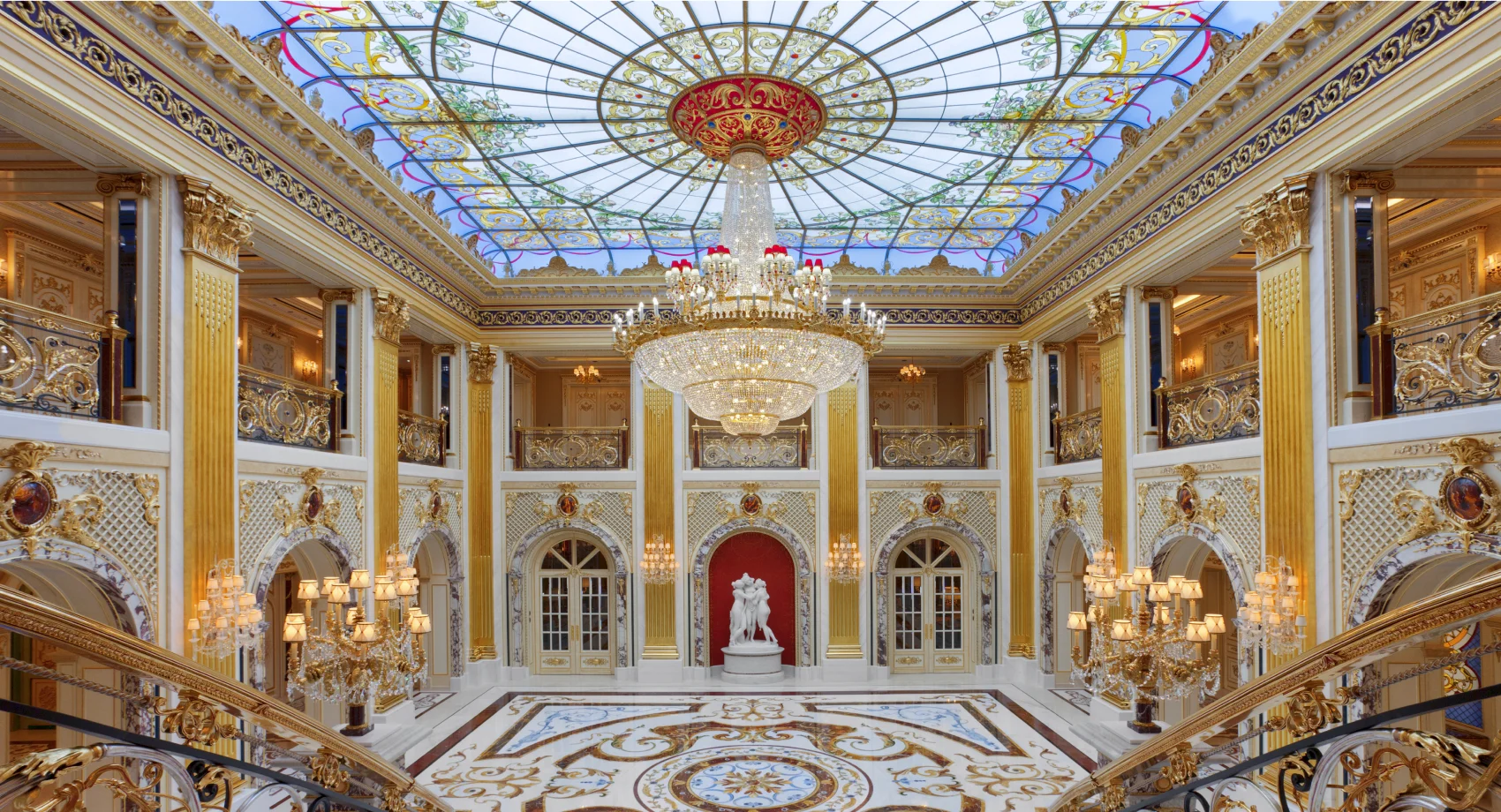
Every luxury home contains dozens of integrated home systems, but not all of them serve the same purpose. After building some of Israel’s most expensive residences over the past 25 years — including a 6,000 sqm Hermitage-style mansion — Marshanski Build has identified a critical distinction that most builders overlook: there are systems that elevate your daily comfort, and there are systems that actively protect your long-term health. Understanding this distinction before construction begins can fundamentally change how you live in your home for decades to come.
The Two Categories of Home Systems Every Luxury Project Must Address
When planning a high-end home at budget levels of ₪25,000+ per square meter, the conversation around building systems tends to blur into a single, overwhelming list. HVAC, smart home, security, plumbing — they all end up on the same spreadsheet. But the reality is more nuanced than that.
Category 1: Quality-of-Life Systems (Comfort) — These are the systems that make daily living easier, more pleasant, and more luxurious. They include central vacuum, smart home automation, audio-video distribution, lighting control, and motorized shading. They don’t necessarily affect your physical health, but they dramatically improve how you experience your home every single day.
Category 2: Health-Preservation Systems — These are the systems that protect your body over time. They address acoustics, water quality, air quality, and sleep environment. Unlike comfort systems, these directly impact your cardiovascular health, cognitive function, immune response, and sleep quality. Their absence may not be immediately noticeable — but their long-term effects are measurable and significant.
The mistake many homeowners make is investing heavily in Category 1 while treating Category 2 as an afterthought. A truly well-built luxury home needs both — and they need to be planned simultaneously during the design phase, not retrofitted later.
Comfort Systems: Central Vacuum, Smart Home, Audio-Video & Sound
Let’s start with the systems that most people associate with luxury living. These are visible, tangible, and immediately rewarding.
Central Vacuum Systems
A central vacuum system eliminates the need to carry a heavy unit from room to room. More importantly, it vents all dust and allergens outside the living space rather than recirculating them through a filter. In homes above 300 sqm, this system typically costs between ₪15,000 and ₪40,000 depending on the number of inlet valves and the length of piping runs. The convenience factor is obvious, but there’s actually a health crossover here — by removing particulate matter from indoor air, central vacuum systems contribute to better respiratory conditions.
Smart Home Automation & Lighting Control
Modern smart home systems — whether KNX, Crestron, Control4, or Lutron-based — allow homeowners to control lighting, HVAC, shading, and security from a single interface. In a typical Marshanski Build project, smart home integration accounts for roughly 3–5% of the total construction budget. The key advantage isn’t just the “wow factor” of pressing a button to set a scene. It’s the elimination of daily friction: automated morning routines, climate zones that adjust by room occupancy, and shading that responds to sun angle without manual intervention.
Audio-Video & Distributed Sound
Whole-home audio distribution, home cinema rooms, and multi-zone video systems are standard in homes at this level. A well-designed distributed audio system uses in-ceiling or in-wall speakers across 8–15 zones, with a central matrix amplifier. The planning must happen during the structural phase — running speaker cables, conduit for HDMI/fiber, and positioning back-boxes all require coordination with electrical and HVAC consultants before walls are closed. This is one of the reasons why choosing the right consultants early in the project matters so much.
Health Systems: Acoustics — The Most Underrated Factor in Your Home
Acoustics is arguably the most overlooked system in residential construction — and one of the most impactful. Research published in the World Health Organization’s Environmental Noise Guidelines (2018) links chronic exposure to indoor noise levels above 30 dB during sleep to increased risk of cardiovascular disease, cognitive impairment in children, and chronic stress responses.
In a luxury home, acoustic treatment addresses three distinct challenges:
- Airborne sound insulation — preventing noise transfer between rooms (especially between bedrooms, mechanical rooms, and entertainment areas)
- Impact sound insulation — reducing footfall noise from upper floors, which requires specialized underlayment and floating floor assemblies
- Room acoustics — controlling reverberation time within a room so that conversation is clear and background noise doesn’t accumulate
Most standard construction in Israel uses 20 cm concrete block walls with plaster — achieving roughly 45 dB of sound reduction. A well-designed luxury wall assembly, using concrete with isolated drywall layers and acoustic mineral wool, can achieve 60+ dB — which is the difference between hearing your neighbor’s conversation and hearing nothing at all. This directly determines your sleep quality, your stress levels, and ultimately your health over years of living in the home.
Few builders treat acoustics as a dedicated engineering discipline. At Marshanski Build, acoustic planning is integrated from the schematic design phase, not applied as a patch after construction.
Water Quality: What Comes Out of Your Tap Isn’t What You Think
Municipal water in Israel meets safety standards — but “safe” and “optimal” are not the same thing. Tap water typically contains chlorine (0.1–0.5 mg/L), varying levels of calcium and magnesium (hardness levels of 150–300 mg/L in many regions), and trace amounts of heavy metals from aging infrastructure.
A comprehensive water system in a luxury home typically includes multiple layers:
- Whole-house filtration — sediment and carbon filters at the main entry point
- Water softening — ion exchange systems that reduce hardness, protecting fixtures, appliances, and skin
- Point-of-use reverse osmosis — for drinking water with up to 99% removal of dissolved solids
- Water quality monitoring — smart sensors that continuously measure TDS (total dissolved solids), pH, and chlorine levels
More advanced systems include Living Water technology — structured water systems that use vortex generators or mineral cartridges to restructure water molecules, claiming to restore the energetic properties of natural spring water. While the scientific evidence on structured water remains debated, the demand among high-end homeowners is growing, and the infrastructure to support these systems must be planned during the plumbing rough-in phase.
The total investment for a multi-stage water system in a 400–800 sqm home ranges from ₪30,000 to ₪120,000, depending on complexity and whether monitoring systems are integrated into the smart home platform.
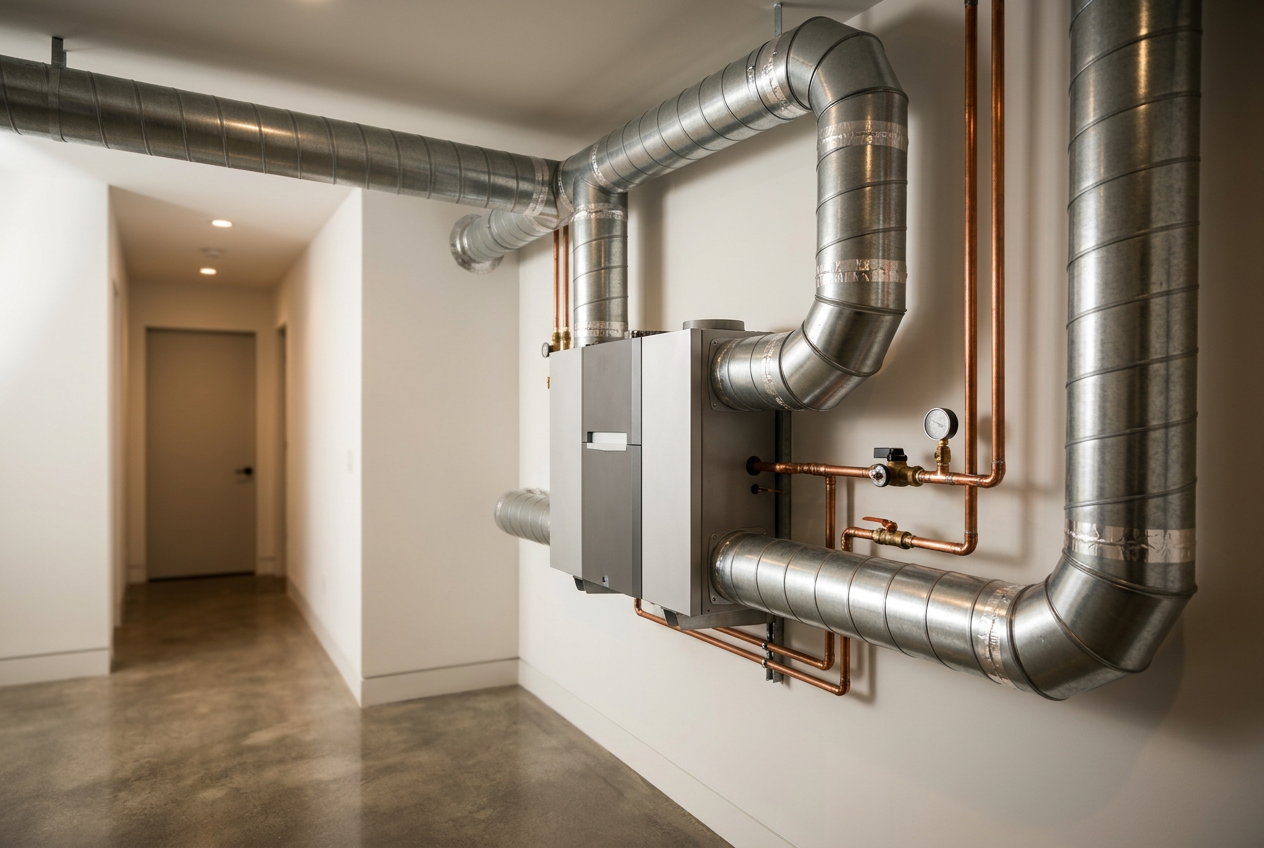
Air Quality: You Spend 90% of Your Time Breathing Indoor Air
According to the EPA, indoor air can be 2–5 times more polluted than outdoor air. In a sealed, well-insulated luxury home — where windows are often triple-glazed and walls are vapor-sealed — this problem intensifies. Without active ventilation, CO₂ levels in a bedroom can exceed 2,000 ppm by morning (the recommended maximum is 1,000 ppm), leading to headaches, poor concentration, and disrupted sleep cycles.
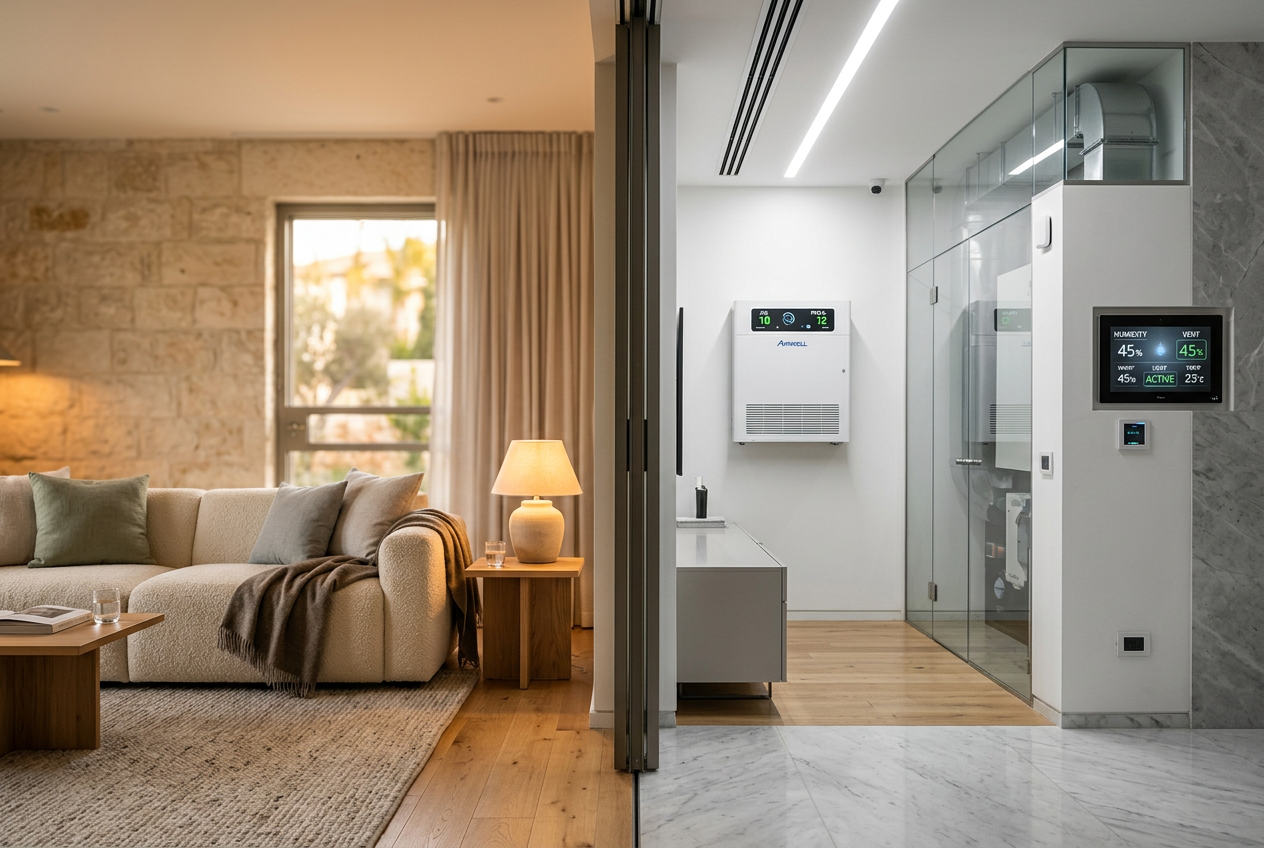
Fresh air systems — also known as ERV (Energy Recovery Ventilation) or HRV (Heat Recovery Ventilation) units — solve this by continuously introducing filtered outdoor air while recovering up to 85% of the heating or cooling energy from the exhaust stream. This means you breathe clean, oxygen-rich air without wasting energy.
Marshanski Build has written extensively about why fresh air systems are the critical feature most Israeli homes don’t have. In every project the company manages, fresh air ducting is coordinated with the HVAC layout during the early design stages — because retrofitting these systems after construction is extremely expensive and architecturally disruptive.
The Sleep Environment: Where All Systems Converge
Your bedroom is where comfort systems and health systems intersect most powerfully. Consider what happens during 7–8 hours of sleep:
- Acoustics determine whether external noise wakes you during light sleep phases
- Air quality determines your oxygen saturation and whether you wake up refreshed or groggy
- Light control — motorized blackout shading and smart lighting scenes ensure complete darkness for melatonin production, then simulate gradual sunrise for natural waking
- The mattress itself — while not a “building system” in the traditional sense, the sleep surface is a health investment that should be considered during bedroom design (recessed bed platforms, electrical outlets for adjustable bases, and HVAC register placement all affect mattress selection)
- Climate control — bedroom temperature between 18–20°C is clinically proven to optimize sleep quality, which requires zoned HVAC with independent bedroom control
When these five factors are engineered together — rather than addressed separately — the result is a sleep environment that genuinely improves your health year after year. This kind of integrated thinking is what separates a truly luxurious home from one that merely looks expensive.

Why System Integration Must Happen During Design — Not After
The single biggest mistake in luxury home construction is treating each system as an independent line item. When the acoustic consultant doesn’t coordinate with the HVAC engineer, you get noisy ductwork running through bedroom ceilings. When the water system isn’t planned alongside the smart home, you lose the ability to monitor quality in real time. When fresh air ducting conflicts with audio speaker placement, someone has to compromise — and usually it’s the health system that loses.
Marshanski Build, specializing in luxury residential construction across Israel’s most prestigious neighborhoods, manages this synchronization as a core part of its project methodology. With over 25 years of experience coordinating 40+ building systems simultaneously — from structural waterproofing to home automation — the company’s approach ensures that both comfort and health systems receive equal priority from day one. You can explore the complete list of 40+ systems in luxury home construction to understand the full scope of what goes into a high-end project.
This integration capability — the ability to source specialized subcontractors and suppliers both domestically and internationally, and to synchronize their work into a coherent building — is what defines genuinely premium construction.
Frequently Asked Questions
What is the difference between comfort systems and health systems in a luxury home?
Comfort systems — such as smart home automation, central vacuum, and audio-video distribution — make daily life more convenient and pleasant. Health systems — including acoustics, water purification, fresh air ventilation, and sleep environment engineering — directly protect your physical well-being over time. Both categories require planning during the design phase.
How much does a whole-home water quality system cost in Israel?
A comprehensive water system for a luxury home (400–800 sqm) including whole-house filtration, softening, reverse osmosis, and smart monitoring typically costs between ₪30,000 and ₪120,000, depending on the technology level and smart home integration requirements.
Why is acoustics so important in residential construction?
The WHO links chronic indoor noise above 30 dB during sleep to cardiovascular disease and cognitive impairment. Proper acoustic design — using isolated wall assemblies, impact-sound underlayment, and room treatment — can achieve 60+ dB of sound reduction compared to roughly 45 dB in standard Israeli construction. This directly improves sleep quality and reduces stress.
Can fresh air systems be added after construction is complete?
Technically yes, but it’s extremely expensive and architecturally disruptive. Fresh air (ERV/HRV) systems require dedicated ductwork routed through ceilings and walls, which must be coordinated with HVAC, electrical, and structural systems during the design phase. Retrofitting typically costs 2–3 times more than original installation.
What indoor CO₂ level is considered safe for bedrooms?
The recommended maximum is 1,000 ppm. Without active fresh air ventilation, a sealed bedroom with two occupants can exceed 2,000 ppm by morning — leading to headaches, poor concentration, and disrupted sleep. ERV systems maintain levels below 800 ppm throughout the night.
Build a Home That Protects You — Not Just Impresses You
A luxury home should do more than showcase beautiful materials and impressive spaces. It should actively make you healthier — through the air you breathe, the water you drink, the silence that lets you sleep deeply, and the invisible systems working behind every wall. If you’re planning a high-end residential project and want both comfort and health systems engineered from the start, contact Marshanski Build to discuss how 25 years of luxury construction expertise can be applied to your home.