

Luxury home construction requires the coordination of 15 to 25 separate building systems — from low-voltage smart-home wiring and central HVAC to underfloor heating and pool automation — compared to just 5 or 6 core trades a few decades ago. This dramatic increase in complexity is the single biggest reason high-end residential projects demand specialist contractors, meticulous pre-planning, and significantly larger budgets. Marshanski Build, specializing in building systems in luxury homes across Israel’s most prestigious neighborhoods, manages this complexity daily.
How Building Systems Luxury Homes Require Today Evolved from Simple Construction
Rewind 30 or 40 years and the recipe for building a home was remarkably straightforward: structural frame, plaster, floor tiles, paint, windows, and basic electrical. A general contractor could manage the project with a handful of subcontractors, and the coordination effort was minimal.
Plumbing meant copper or galvanized pipes running to a few fixtures. Electrical work was limited to lighting circuits, outlets, and maybe a phone line. Air conditioning — if it existed at all — was a window unit. There was no category called “low-voltage systems” because there was essentially nothing to integrate.
This simplicity also kept costs predictable. The building envelope itself represented the vast majority of the budget, with finishing materials and MEP (mechanical, electrical, plumbing) accounting for a relatively modest share.
The Explosion of Building Systems in Modern Luxury Homes
A luxury home built today in Israel is essentially a technology platform wrapped in architecture. The number of specialized building systems in luxury homes that need to be embedded inside the walls, floors, and ceilings — before any finishing work begins — is staggering. Here is what a typical high-end project now includes:
High-Voltage Electrical Systems in Luxury Residential Construction
- Main electrical panel with smart load management
- Dedicated circuits for EV chargers, pool equipment, elevators
- Backup generator integration and automatic transfer switches
- Solar PV array and inverter infrastructure
Low-Voltage and Smart-Home Building Systems
- Structured cabling (Cat 6A / fiber optic) to every room
- KNX, Crestron, or Control4 home-automation bus wiring
- Multi-zone audio and video distribution
- CCTV, access control, and perimeter security
- Motorized shading and curtain tracks with integrated controls
- Intercom and IP-based video door stations
In many luxury projects, the low-voltage cabling alone requires over 8 kilometers of cable running through the structure — all of which must be planned before the first wall is plastered.

HVAC Building Systems: Far Beyond a Simple Air Conditioner
Climate control in a luxury residence is no longer a single split unit on the wall. Modern high-end homes integrate multiple HVAC layers, making HVAC one of the most complex building systems in luxury homes:
- Central air conditioning — VRF or chiller-based systems with concealed ducting, often zoned per room.
- Fresh air ventilation (ERV/HRV) — mechanical ventilation with energy recovery to maintain indoor air quality without opening windows.
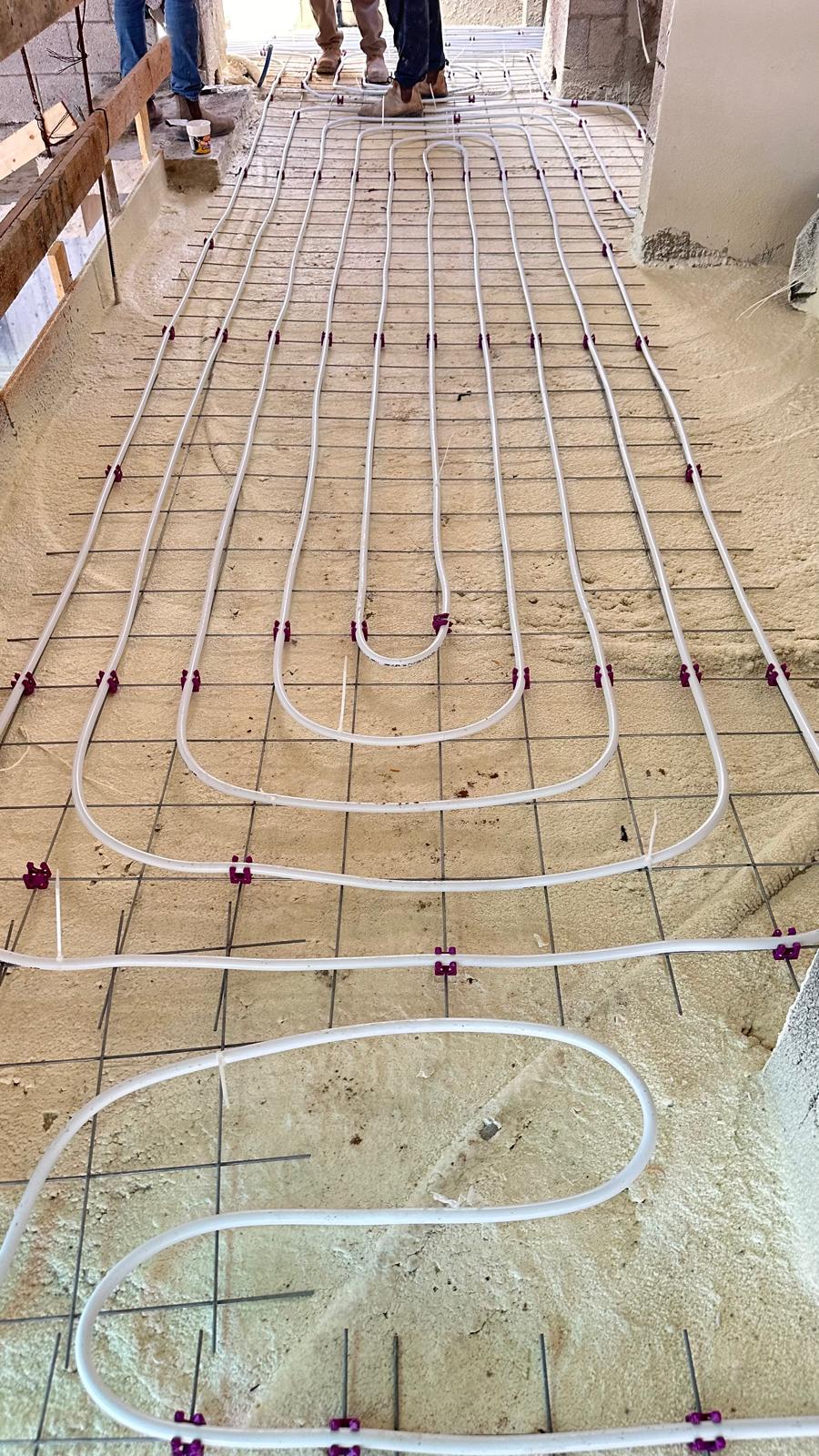
- Underfloor heating — hydronic loops embedded in the screed, connected to a dedicated boiler or heat pump, with per-room thermostat control.
- Radiant cooling ceilings — increasingly popular in premium builds for silent, draft-free cooling.
Coordinating these four climate layers requires precise planning of pipe routes, duct sizing, control wiring, and ceiling voids — typically consuming 12–18% of the total construction budget in a luxury build.
Luxury Swimming Pool Systems: No Longer Just a Hole with Water
A luxury swimming pool in 2025 is a self-contained engineering project and one of the most demanding building systems in luxury homes. Beyond the structural shell and waterproofing, today’s high-end pools incorporate:
- Variable-speed pump systems with smart scheduling
- Salt chlorination or UV/ozone sanitation
- Heated pool water via heat pump or solar thermal
- Automated chemical dosing and water-level sensors
- LED color-changing underwater lighting
- Infinity edge or perimeter overflow engineering
- Counter-current swim jets and integrated spa zones
- Pool cover automation (hidden below the coping)
Each of these features adds its own set of pipes, cables, controllers, and coordination requirements. A fully specified luxury pool can involve over 40 individual penetrations through the pool shell — every one of which must be waterproofed flawlessly.
Why Coordinating Building Systems in Luxury Homes Is the Real Challenge
The difficulty isn’t any single system in isolation. It’s the fact that all of these building systems in luxury homes must coexist within the same walls, floors, and ceiling cavities — and they must be installed in a very specific sequence. Run the underfloor heating loops before the plumber finishes his manifold connections, and you’ll be ripping up screed. Forget to pre-wire the automation bus before plastering, and you’re chasing walls that were already finished.
At Marshanski Build, we typically manage 18–22 specialized subcontractors on a single luxury home project. Each one needs a precise installation window, detailed coordination drawings (often produced in BIM software), and real-time scheduling adjustments. This is a fundamentally different discipline than traditional construction management.
The Cost of Getting Building System Coordination Wrong
Mistakes in system coordination are exponentially more expensive to fix after the fact. Relocating a concealed duct run after ceilings are closed can cost tens of thousands of shekels and delay the project by weeks. This is why experienced luxury builders invest heavily in pre-construction planning — detailed MEP coordination, clash detection, and full system integration maps — before a single pipe is laid.
For a deeper understanding of what drives these budgets, see our detailed cost breakdown and budget planning guide for luxury homes in Israel.

Luxury Home Finishing Materials: Another Layer of System Complexity
Even the finishing stage has grown dramatically in complexity. Where builders once chose between a few tile options and standard paint, the building systems in luxury homes now extend to advanced finishing materials:
- Book-matched natural stone slabs requiring laser-templating
- Engineered hardwood with underfloor-heating compatibility
- Custom millwork with integrated lighting and concealed hardware
- Floor-to-ceiling glass systems with minimal framing
- Specialty plaster finishes (Venetian, microcement, tadelakt)
Each material category has its own lead times, installation tolerances, and subcontractor specializations. Coordinating luxury flooring materials like marble, wood, and stone with embedded heating systems and structural requirements is a prime example of this layered complexity.
Building Systems in Luxury Homes: The Numbers Tell the Story
To put the evolution of building systems in luxury homes in perspective:
- 1980s standard home: ~5 trade categories, ~500 meters of total cabling, 3–4 month build timeline.
- 2025 luxury home: 20+ trade categories, 8,000+ meters of cabling, 14–24 month build timeline depending on size and specification.
- Systems budget share: In a luxury project, MEP and technology systems can represent 30–40% of the total build cost — up from roughly 10–15% in a basic build.
Understanding these timelines and cost dynamics is essential for planning. Our timeline and cost comparison for building vs. renovating in Israel provides additional context for homeowners weighing their options.
What to Look for in a Luxury Home Builder Who Manages Complex Systems
Given the complexity of building systems in luxury homes, choosing the right construction partner is arguably the most important decision in the entire project. Key criteria include:
- Integrated project management — the builder should coordinate all trades in-house, not leave it to the homeowner.
- Pre-construction MEP planning — detailed system coordination before construction starts.
- Established subcontractor network — long-term relationships with top-tier specialists in every system category.
- Transparent budgeting — clear allocation for every system, so there are no surprises at the integration stage.
- Quality control protocols — pressure testing pipes, megger testing cables, and commissioning every system before handover.
Frequently Asked Questions About Building Systems in Luxury Homes
How many building systems does a luxury home typically require?
A modern luxury home in Israel typically integrates 15 to 25 separate building systems, including high-voltage electrical, low-voltage smart-home cabling, HVAC, underfloor heating, fresh air ventilation, security, audio/video, and pool automation. Each system requires its own specialist installer and careful coordination.
What percentage of a luxury home budget goes to MEP and technology systems?
In a high-end residential build, mechanical, electrical, plumbing, and technology systems typically account for 30–40% of the total construction budget. This is roughly double or triple the share these systems represent in standard construction.
Why is pre-construction planning so critical for building systems in luxury homes?
With over 8,000 meters of cabling and dozens of system penetrations running through walls, floors, and ceilings, any coordination error discovered after construction has progressed can cost tens of thousands of shekels to fix. Detailed BIM coordination and clash detection before building begins prevents these costly rework scenarios.
How long does it take to build a luxury home in Israel?
Depending on the size and specification level, a luxury home in Israel typically takes 14 to 24 months to complete — roughly 3 to 6 times longer than a basic build. The extended timeline is driven primarily by system complexity, material lead times, and the need for sequential specialist installations.
Does Marshanski Build handle all building systems in luxury homes?
Marshanski Build manages the full scope of luxury residential construction, coordinating 18–22 specialized subcontractors per project through integrated project management. This includes all MEP systems, smart-home technology, pool construction, and finishing trades — ensuring seamless coordination from foundation to final commissioning.
Build Complex — with the Right Team
The evolution of building systems in luxury homes from a straightforward building exercise to a multi-system integration challenge is irreversible. Every year, new technologies, comfort expectations, and building standards add further layers of complexity. The difference between a successful luxury project and a costly nightmare comes down to one thing: who manages the complexity.
Marshanski Build has the experience, the specialist network, and the project management discipline to deliver high-end homes where every building system works flawlessly — and where you never have to coordinate between 20 subcontractors yourself. Contact us today to discuss your luxury home project and see how we approach system integration from day one.