


Luxury construction is defined not by the price of the land beneath it, but by the quality of architectural planning, the scale and complexity of building systems, premium kitchen design, amenities like swimming pools, and advanced climate control — including underfloor heating and central air conditioning. These five pillars separate a standard home from a truly high-end residence, and each one demands specialized expertise that only experienced luxury builders can deliver.
1. Architectural Planning: The Foundation of Luxury
The single biggest difference between standard construction and luxury building starts long before the first foundation is poured — it begins with the architect. A standard home might use a stock floor plan or a relatively generic design. A luxury home, by contrast, is shaped by a top-tier architect who tailors every room, sightline, ceiling height, and transition space to the homeowner’s lifestyle.
In high-end residential projects, architectural fees alone can range from 8% to 15% of total construction costs, compared to just 3–5% for standard builds. That premium buys something money can’t shortcut: obsessive attention to detail. We’re talking about custom-designed entrance sequences, precisely calculated natural light angles, integrated indoor-outdoor living spaces, and millwork details that appear in every doorframe and built-in element.
Marshanski Build, specializing in luxury home construction across Israel’s most prestigious neighborhoods — Kfar Shmaryahu, Savyon, Herzliya Pituach, and Caesarea — works exclusively with leading architects who understand that luxury isn’t a style; it’s a standard of precision. The architectural brief for a high-end home typically runs 200–400 pages of drawings and specifications, compared to 40–80 pages for a standard project.
What to Look for in Luxury Architectural Design
- Proportional harmony: Room dimensions, ceiling heights (often 3.2m–4.5m vs. standard 2.7m), and corridor widths are carefully calibrated.
- Custom solutions: Every storage niche, lighting cove, and mechanical chase is pre-planned — nothing is an afterthought.
- Material integration: The architect specifies exact stone, wood, and metal finishes during the design phase, not after construction begins.
- Landscape-architecture continuity: The building and its surroundings are designed as one unified composition.
2. Building Scale and System Complexity
Luxury homes are not just larger — they are fundamentally more complex. A standard Israeli home might be 150–200 square meters with basic electrical, plumbing, and HVAC. A high-end home frequently exceeds 400–800 square meters of built area and incorporates systems that a standard home simply doesn’t need.
Consider the infrastructure alone: a luxury home may include a home automation system (smart home), a whole-house audio system, a security network with 20+ cameras, an elevator, a backup generator, a water treatment system, and a dedicated server room. The electrical panel in a luxury home can contain 60–100+ circuits, versus 20–30 in a standard build. Each of these systems requires coordination during the planning phase, specialized subcontractors during construction, and ongoing maintenance after handover.

Systems That Separate Luxury from Standard
- Smart home integration: Lighting, shading, climate, security, and entertainment controlled from a single interface.
- Structural engineering: Larger spans, cantilevers, and floor-to-ceiling glazing require advanced structural solutions.
- Acoustic insulation: Dedicated home cinemas, music rooms, or offices with professional-grade soundproofing.
- Dedicated mechanical rooms: Housing water heaters, filtration systems, pool equipment, and HVAC machinery.
For a detailed breakdown of what these systems cost in Israel, see our guide on cost of building a luxury home in Israel.
3. Kitchen Design: The Heart of a Luxury Home
Nothing reveals the gap between standard and luxury construction faster than the kitchen. A standard kitchen in Israel uses locally manufactured cabinetry, laminate or basic stone countertops, and off-the-shelf appliances. A luxury kitchen is an entirely different category.
High-end kitchens feature brands like Bulthaup, SieMatic, or custom Italian cabinetry, paired with professional-grade appliances from Sub-Zero, Wolf, Gaggenau, or Miele. Countertops are crafted from book-matched natural stone — Calacatta marble, quartzite, or granite — with slabs hand-selected at the quarry. A luxury kitchen installation in Israel typically costs between ₪250,000 and ₪800,000+, compared to ₪40,000–₪100,000 for a standard kitchen.
Beyond the visible surfaces, luxury kitchens include integrated wine storage, secondary prep kitchens (“dirty kitchens”), built-in coffee stations, and custom pantry systems. The cabinetry hardware alone — soft-close hinges, motorized shelving, interior LED lighting — represents an investment that exceeds the total cost of many standard kitchens.
4. Swimming Pool: The Defining Luxury Amenity
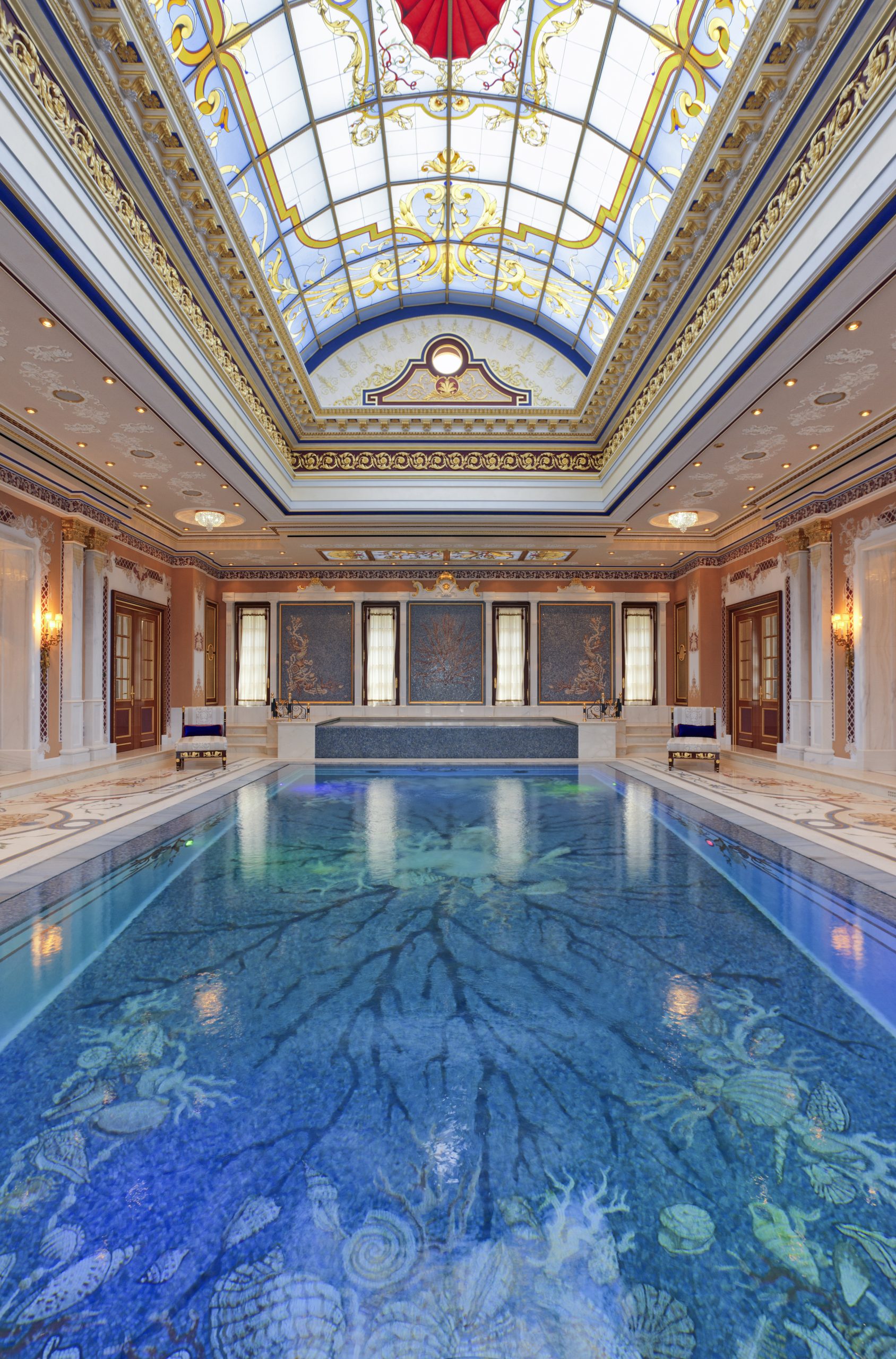
A private swimming pool is one of the clearest markers distinguishing luxury homes from standard residential construction. Approximately 85% of luxury homes in Israel’s premium neighborhoods include a pool, whether outdoor, indoor, or both. Standard homes rarely include this feature due to the significant construction, engineering, and maintenance requirements.
A luxury pool goes far beyond a concrete shell filled with water. It involves architectural integration with the home’s design, infinity edges, heating systems, automated chemical balancing, underwater lighting, and often an adjacent pool house with changing facilities and outdoor kitchen. Indoor pools add another layer of complexity: dehumidification systems, specialized ventilation, and vapor barriers to protect the building structure.
5. Climate Control: Underfloor Heating and Central Air Conditioning
Climate comfort in a luxury home is invisible — and that’s exactly the point. Standard Israeli homes rely on wall-mounted split air conditioning units in each room. Luxury homes use central HVAC systems with zone control, often combined with underfloor heating (hydronic radiant systems) that deliver even warmth without visible radiators or noisy units.
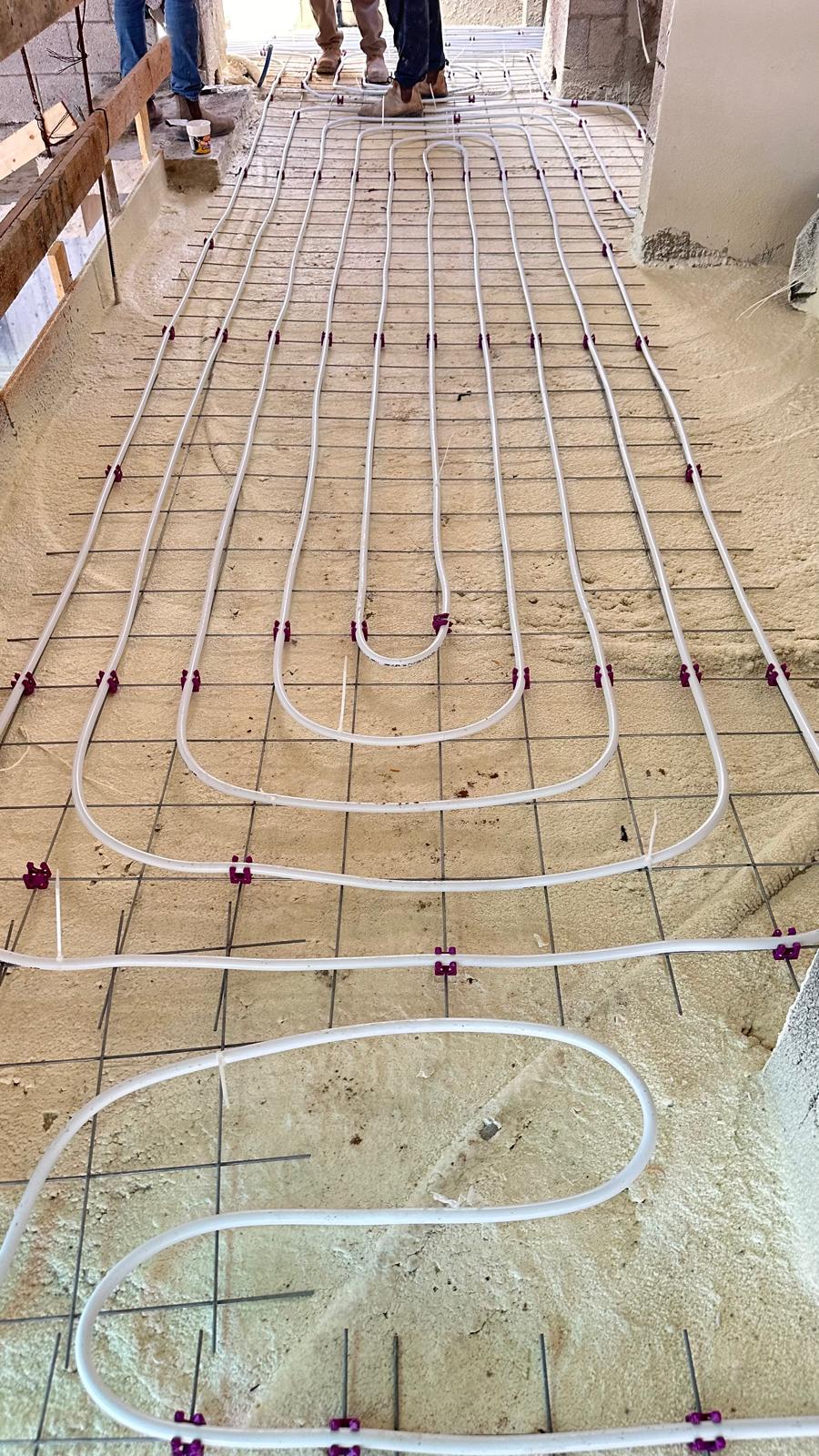
Underfloor heating runs warm water through a network of pipes embedded in the floor slab, providing consistent temperature across the entire surface. This system pairs perfectly with premium flooring materials like marble and natural stone, which conduct heat efficiently and feel warm underfoot during Israel’s cooler months.
Climate Systems in Luxury vs. Standard Homes
- Standard: Individual split AC units, no central heating, manual temperature control per room.
- Luxury: Ducted central air conditioning, underfloor hydronic heating, smart thermostats with zone control, whole-house ventilation with air filtration, and sometimes radiant ceiling cooling.
The difference in daily comfort is dramatic. In a luxury home, you never see an AC unit, never hear a compressor kick on in the room where you’re sleeping, and the temperature is uniform from floor to ceiling. For homeowners comparing the full scope of building decisions, our article on building new versus renovating in Israel covers how these system choices affect both timeline and budget.
The Cumulative Effect: Why Each Element Matters
No single feature makes a home luxurious. It is the cumulative integration of world-class architecture, generous scale, premium kitchens, resort-level amenities, and invisible climate comfort that creates the experience. Remove one element, and the gap becomes noticeable. A stunning kitchen in a poorly planned layout feels wasted. A pool without proper heating sits unused for half the year. Underfloor heating beneath cheap tile defeats its purpose.
This is why choosing the right builder matters as much as choosing the right architect. Marshanski Build coordinates all five dimensions — design, systems, finishes, amenities, and climate — under a single management umbrella, ensuring every element works together seamlessly from blueprint to move-in day.
Frequently Asked Questions
What is the main difference between luxury and standard construction?
The main difference lies in the depth of architectural planning, the complexity and number of integrated building systems, premium material selection, and the inclusion of amenities like pools and advanced climate control. It is about holistic quality, not just size or location.
How much more does a luxury kitchen cost compared to a standard one in Israel?
A luxury kitchen in Israel typically costs ₪250,000–₪800,000+, while a standard kitchen ranges from ₪40,000–₪100,000. The difference comes from custom cabinetry, professional-grade appliances, and natural stone countertops selected specifically for the project.
Is underfloor heating worth the investment in Israel’s climate?
Yes. Israel’s winters — especially in central and northern regions — last 3–5 months with indoor temperatures dropping below comfort levels. Underfloor hydronic heating provides silent, even warmth that pairs perfectly with stone and marble flooring, eliminating the need for visible radiators.
Do all luxury homes in Israel include a swimming pool?
Approximately 85% of luxury homes in Israel’s premium neighborhoods include a private pool. While not mandatory, a pool is considered a defining amenity in high-end residential construction and significantly impacts property value and lifestyle quality.
How do I choose the right architect for a luxury home?
Look for architects with a proven portfolio of completed luxury residences, not just commercial or standard residential work. The architect should produce detailed specifications (200+ pages of drawings) and collaborate closely with the builder from day one to ensure design intent translates into built reality.
Ready to build a home that meets true luxury standards? Marshanski Build brings decades of experience in high-end residential construction across Israel’s most exclusive communities. Contact us today to discuss your project with our team and discover what’s possible when every detail is done right.