
Choosing luxury flooring materials in Israel is one of the most consequential design decisions you’ll make when building or renovating a high-end home. The floor is quite literally the foundation of every room’s aesthetic — it sets the tone for furniture, lighting, and architectural details. In Israel’s unique climate, where summers push 35°C and coastal humidity is a constant factor, your flooring choice also has serious practical implications. This guide breaks down the three most popular premium options — marble, natural wood, and stone — so you can make an informed investment.
Why Flooring Matters More Than You Think in Luxury Construction
Flooring typically accounts for 8–12% of a luxury home’s total construction budget in Israel. On a ₪5 million build, that translates to ₪400,000–₪600,000 for materials and installation alone. Beyond cost, the material you choose affects thermal comfort, acoustics, resale value, and daily maintenance. A poorly chosen floor can crack in Israel’s dry winters, warp during humid summers, or simply age badly within a decade.
At Marshanski Build, we’ve installed every type of premium flooring across projects in Kfar Shmaryahu, Savyon, and Herzliya Pituach. The insights below come from real-world experience, not just manufacturer brochures.

Marble Flooring: The Timeless Statement
Why Homeowners Choose Marble
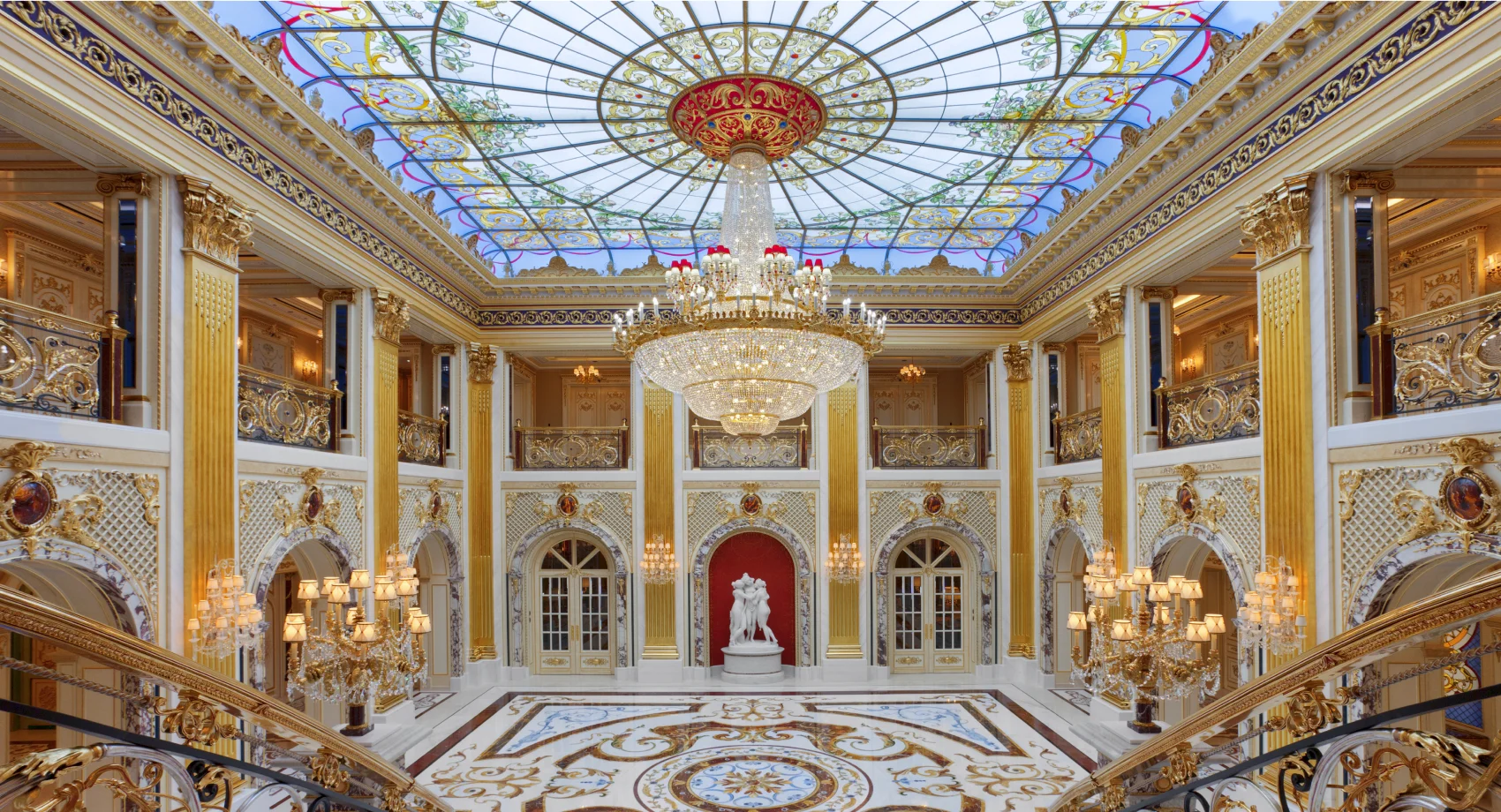
Marble has been a symbol of opulence for millennia, and it remains the top choice for grand entrance halls, living rooms, and bathrooms in Israeli luxury homes. Italian Carrara, Calacatta, and Statuario varieties dominate the market, though Turkish and Greek marbles offer excellent alternatives at a lower price point.
- Price range in Israel: ₪350–₪1,800 per sqm (material only), depending on origin and veining quality
- Installation cost: ₪150–₪350 per sqm for expert-level laying with leveling and sealing
- Lifespan: 50+ years with proper maintenance
Performance in Israel’s Climate
Marble stays naturally cool underfoot — a genuine advantage during Israel’s long summers. It pairs well with underfloor radiant heating systems, which are increasingly standard in luxury Israeli homes. However, marble is porous. Without professional sealing (and resealing every 1–2 years), it absorbs moisture, stains, and can develop etching from acidic spills like lemon juice or wine.
Considerations
Marble requires commitment. It scratches more easily than granite or porcelain, and it demands consistent care. For families with young children or heavy foot traffic, consider honed finishes over polished — they hide wear more gracefully. If you’re planning a full luxury build, understanding cost breakdowns and budget planning for luxury homes in Israel will help you allocate appropriately for premium marble.
Natural Hardwood Flooring: Warmth and Character
Popular Species for Israeli Homes
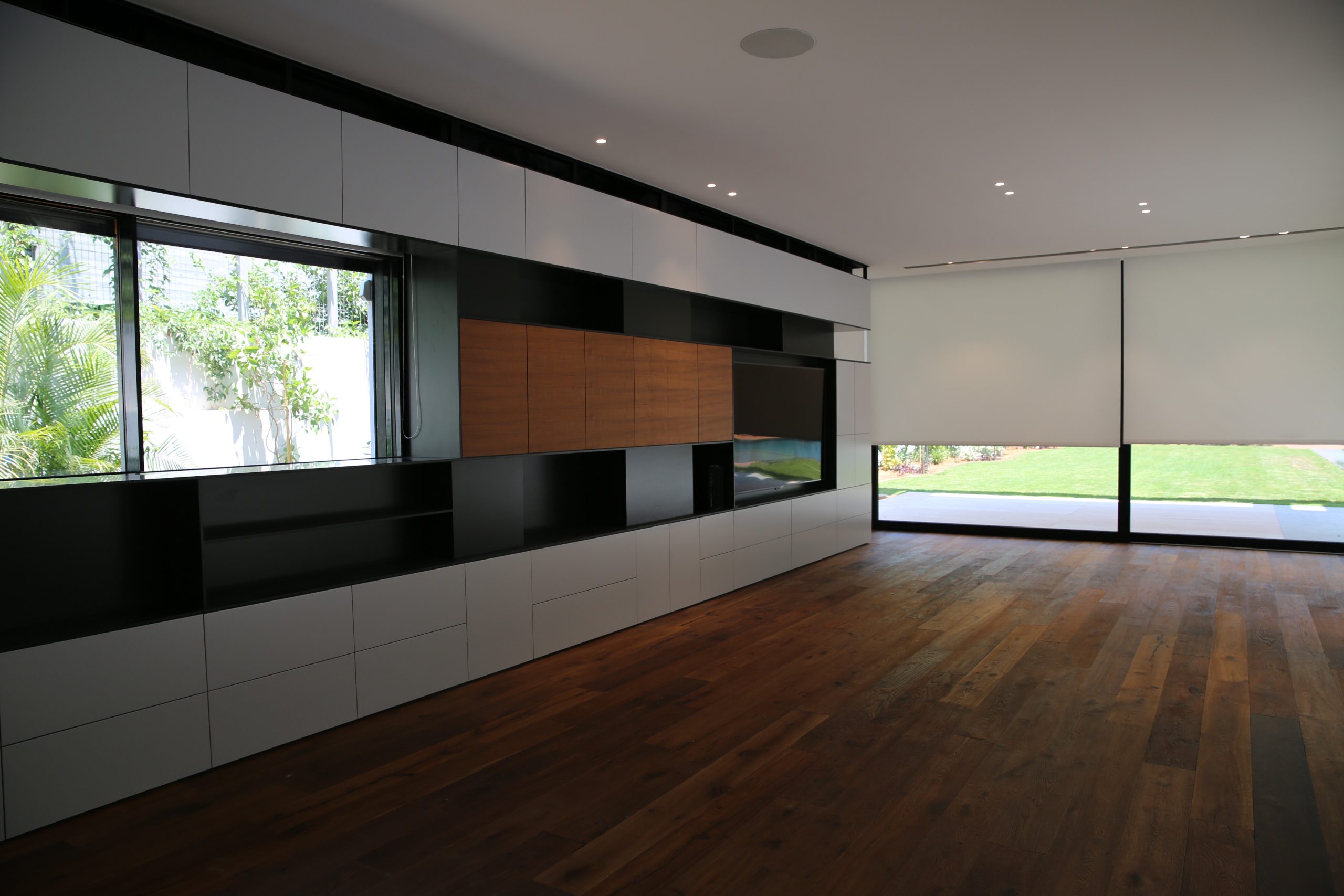
European oak remains the most specified hardwood for luxury residences in Israel, followed by walnut, teak, and iroko. Engineered hardwood (a real wood top layer bonded to a plywood base) has largely replaced solid planks in the Israeli market — and for good reason. Engineered boards handle temperature fluctuations and humidity swings far better than solid wood.

- Price range: ₪250–₪900 per sqm for quality engineered oak; exotic species can exceed ₪1,200 per sqm
- Installation cost: ₪100–₪250 per sqm (glue-down installation is preferred for luxury projects)
- Lifespan: 25–40 years; can be sanded and refinished 2–4 times depending on top-layer thickness
Climate Challenges and Solutions
Israel’s relative humidity ranges from 40% in the Negev to 80%+ along the coast. Wood expands and contracts with moisture changes, which can cause cupping, gapping, or buckling. The solution is straightforward: specify engineered boards with a minimum 4mm real-wood top layer, ensure subfloor moisture testing before installation, and maintain indoor humidity between 40–60% using climate control systems.
Hardwood brings an irreplaceable warmth and acoustic softness that stone and marble cannot replicate. Bedrooms, libraries, and living rooms benefit enormously from timber floors. They’re also the easiest luxury flooring material to repair and refinish over time.
Sustainability Note
Sourcing matters. FSC-certified European oak has a significantly lower environmental footprint than tropical hardwoods. Many Israeli importers now stock certified options, and responsible builders prioritize traceable supply chains.
Natural Stone Flooring: Durability Meets Earthy Elegance
Beyond Marble: Limestone, Travertine, and Granite
When people say “stone flooring,” marble often gets grouped in — but there’s a wide world of natural stone beyond it. For luxury Israeli homes, the most popular non-marble stones are:
- Jerusalem limestone: Locally quarried, golden-toned, and deeply connected to Israeli architectural heritage. ₪200–₪500 per sqm.
- Travertine: Imported primarily from Turkey and Italy. Its natural pitting gives it a rustic-luxury character. ₪300–₪700 per sqm.
- Granite: Extremely hard and virtually scratch-proof. Ideal for kitchens and high-traffic zones. ₪400–₪1,000 per sqm.
- Basalt: Dark, dramatic, and excellent for contemporary designs. Locally available from the Golan Heights region.

Why Stone Excels in Israeli Conditions
Natural stone handles Israel’s climate exceptionally well. Limestone and granite are far less porous than marble, making them more forgiving in high-humidity environments. Stone floors paired with underfloor heating provide a perfect balance — cool in summer, warm in winter. Granite in particular is nearly indestructible, resisting scratches, stains, and heavy impacts that would damage marble or wood.
For outdoor-to-indoor transitions — common in Israeli luxury homes with large terraces and pool areas — stone creates a seamless visual flow. The same Jerusalem limestone used on an exterior patio can continue into the living room, blurring the boundary between inside and out.
Head-to-Head Comparison: Marble vs. Wood vs. Stone
| Factor | Marble | Hardwood | Natural Stone |
|---|---|---|---|
| Cost (per sqm) | ₪500–₪2,150 | ₪350–₪1,150 | ₪350–₪1,350 |
| Durability | High (scratch-prone) | Medium (refinishable) | Very High |
| Maintenance | High | Medium | Low–Medium |
| Climate Suitability | Excellent (cool) | Good (with precautions) | Excellent |
| Resale Value | Very High | High | High |
| Best Rooms | Entries, bathrooms, living | Bedrooms, studies, living | Kitchens, terraces, throughout |
Mixing Materials: The Expert Approach
The most impressive luxury homes in Israel rarely use a single flooring material throughout. A skilled builder and architect will zone flooring by function and feel. A common approach we implement at Marshanski Build:
- Entry and formal living: Calacatta marble with bookmatched veining
- Bedrooms and private quarters: Wide-plank engineered European oak
- Kitchen and utility areas: Honed granite or limestone for durability
- Outdoor terraces and pool surrounds: Non-slip travertine or local basalt
Transition details matter enormously. Flush thresholds, consistent grout lines, and matching tonal warmth between materials are what separate a luxury home from a house with expensive flooring. This level of coordination is one of the key differences between standard and high-end building in Israel.
Practical Tips for Selecting Luxury Flooring in Israel
- Always view samples in natural light. Israeli sunlight is intense. A marble that looks subtle in a showroom can appear washed out at home — or stunning. Visit the site with large-format samples.
- Budget for installation, not just material. Expert installation with proper subfloor preparation can cost 30–50% of the material price. Cutting corners here voids the investment.
- Plan for underfloor heating early. Retrofitting radiant heating is expensive and disruptive. If you’re building from scratch, integrate it into the design phase. Learn more about planning construction costs in our guide to building new vs. renovating existing homes in Israel.
- Request slip-resistance ratings. For any floor near water — bathrooms, pool areas, kitchens — specify R10 or R11 anti-slip finishes.
- Think long-term. A ₪800/sqm granite floor that lasts 50 years with zero refinishing costs less per year than a ₪400/sqm wood floor that needs sanding every 8 years.
Making the Right Choice for Your Home
There’s no universally “best” luxury flooring material — only the best material for your specific home, lifestyle, and location in Israel. A beachfront villa in Caesarea faces different challenges than a hilltop estate in Jerusalem. What matters is matching the material to the conditions and executing the installation flawlessly.
Luxury flooring materials in Israel represent a significant investment, but when selected and installed correctly, they define the character of your home for decades. The key is working with a builder who understands not just construction, but the nuances of material performance in Israel’s specific environment.
Ready to discuss flooring options for your luxury home project? Marshanski Build specializes in high-end residential construction across Israel’s most prestigious neighborhoods. Contact our team for a personalized consultation — we’ll help you choose materials that match your vision and stand the test of time.